Comics and New York City–A Beautiful Friendship
Last weekend I was privileged to attend a great event celebrating the comic arts, graphic novels, and New York City for PW Comics World, the online comics home of Publishers Weekly. The event was called Comic NY-A Symposium and my article, “Comics, New York City And History at Columbia’s Low Library,” has now been published at the PW website. If you love the comic arts and graphic novels, enjoyed watching Paul Giamatti play Harvey Pekar in “American Splendor,” or ever chuckled over MAD magazine, I invite you to read my piece at the PW site or here on my blog. FYI–the rendition below is illustrated with photos of mine that do not appear on the PW site, which has other, excellent pictures.
—
Comics, New York City And History At Columbia’s Low Library
by Philip Turner, Mar 29, 2012
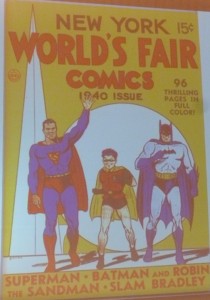
Are the creators of comics and graphic works storyteller-artists inspired by the drive to imagine the urban landscape? Or are they journalists, motivated by an impulse to document the cities where they live? As considered by a bevy of comic talent at Columbia University, the answer is they are both—imaginative artists and chroniclers reimagining and reflecting their worlds—and more. The scene for these dynamic discussions was Columbia University’s Low Library where “Comic New York-A Symposium” was held March 24-25. With thirty panelists participating in six panels, plus a keynote discussion with acclaimed X-men writer and collector Chris Claremont, more than 250 comics fans were treated to in-depth conversations about how the comic arts have been influenced by New York City and how the metropolis has absorbed the influence of the comics. Claremont was honored for donating his archive to Columbia University’s Rare Book and Manuscript Library.
The opening panel, “New York, Real and Imagined,” began with Kent Worcester, co-editor of A Comic Studies Reader, sharing five comics images that showcased New York’s tremendous verticality; in “Gasoline Alley,” where Skeezix and Walt ride on a magic carpet high above the city, and in Superman, when the Man of Steel dangles a villain over a yawning chasm between skyscrapers. Along with the verticality the city has lent to comics, Worcester also asked his audience to consider Manhattan’s street grid, a visual analog to the panel format of comic books. Molly Crapabble, illustrator, cartoonist, denizen of New York’s downtown art scene, conceded she’s an outsider to the comics world and said that she makes frequent reference to Thomas Nast and Heironymous Bosch for the crowded scenes of ribaldry she draws. Asked about New York’s underground life, she observed that the subway is “the hair shirt” of the city, contrasted with “the sparkly, silver Babylon” above ground. John Romita, Sr., who drew Spider Man with Stan Lee, said he made New York a veritable “co-star” with the web-spinner, while his son, John Jr., aka JRJR, who drew Daredevil, spoke of the dark and “moody” look he deliberately brought to the series. TV writer and autobiographical comics artist Ariel Schrag told an improbably hilarious story about a brawl at a gay prom she attended at Columbia, events she chronicles in her coming-of-age graphic memoirs. / / read more with many pictures . . .


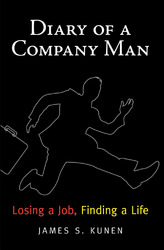 #FridayReads–DIARY OF A COMPANY MAN: Losing a Job, Finding a Life by James S. Kunen, whose Strawberry Statement: Notes of a College Revolutionary was a key 1960s text. After he was laid off from his corporate job in February 2008, Kunen describes himself as too young to retire, too old to hire. I’m still reading that first section of the book, over the weekend I’ll read how he weathers the storm of disemployment and comes out somewhere on the other side. Having experienced my own layoff, Kunen’s is a pitch-perfect rendering of the experience.
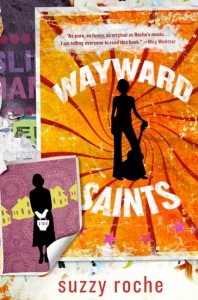 I’ve also now finished Suzzy Roche’s novel and found it to be an infectiously readable treat. I really loved it. It’s filled with wonderful characters spanning the generations and memorable situations. While Roche undoubtedly drew on her years as a traveling musician to flesh out the story, it doesn’t read as if it’s merely a novel about rock ‘n roll written by a musician; it’s a truly satisfying novel by a real writer, clearly not something that was just tossed off. Among the most striking features of it was the relationship between the musician protagonist, Mary Saint, and her mother Jean, from whom she’s long been separated. They learn how to forgive each other for past injuries. The second was the friendship between Mary Saint and her roommate Thaddeus, who becomes her confidant and motivator, able to push her to see what she’s still capable of doing.