Jeremy Fisher, True Troubador

Jeremy Fisher isn’t a big person, but the singer-songwriter sure makes a big sound. It’d be hard to imagine more music coming from any other solo player. Along with his voice, his primary instrument is a weathered Gibson LG-2 guitar from which he punches out a great, full sound. His bright singing voice offers a lot of welcome contrast with that percussive Gibson, since I suspect it falls somewhere between the tenor and alto range. The lyrics he sings are deeply felt declarations that carry a personal, even existential quality.

I highly recommend all of Jeremy’s music, and particularly, his latest album, “Mint Juleps,”  a recording with five originals written by Jeremy and  covers of seven songs by such artists as Gordon Lightfoot, John Hiatt, and Greg Brown. Fisher makes each song his own in such a way that until I studied the album sleeve, I wasn’t sure which songs were his and which were the covers. “Spin, Spin, Spin” is a rare Gordon Lightfoot song, in that it hasn’t been sung by lots of other artists already. In a recent phone interview, Jeremy told me that was one of the reasons he chose it for the record. He said he wanted songs to which he knew he could add something new. That is certainly the case with Greg Brown’s ode to the bounty of summer, “Canned Goods,” about the pickles, tomatoes, and fruits his dear grandma put up for canning when he was a boy.

One of the highlights of attending the North by Northeast (NXNE) festival in Toronto in June was finally hearing Jeremy perform live. I had heard him on CBC Radio 3 many times, enjoying such songs as “Shine a Little Light” and “Jolene” (not Dolly Parton’s song of the same name) but I was unprepared for how bright, funny, and charismatic he is as a live performer. That week I heard him play at the Dakota Tavern showcase** hosted by his label Hidden Pony, and at the picnic hosted by CBC Radio 3 host and author Grant Lawrence, where I took this outdoor photo.

The title of the new album is not meant to remind listeners of the Kentucky Derby, or anything about America’s Old South. This Canadian composer wanted to evoke lazy summer days, or as he told me, “the kind of record I’d like to listen to while making brunch on a Sunday morning, or having a drink on a Friday afternoon.” He said he’s been playing other people’s songs ever since he started joining bands as a kid, playing songs by Canadian super-groups Blue Rodeo and the Tragically Hip. and later Beatles and Motown covers. They were the “starting point” for him as a songwriter. For the new album he played solo versions of the songs he’d decided to record and emailed the sound files to the musicians he’d asked to accompany him. This group included such standout Canadian musicians as Joey Wright, whose 2011 album “Hatch” I enjoy a lot. Adding a nice tough here, Wright plays guitar, mandolin, and tenor guitar. Based on his rough work-up, Jeremy told his musical recruits, “this is the feel I want, but I want fresh ideas every take. . . . I wanted the personalities of the players to shine through.”

The new album was engineered my Mark Ouimet, who also plays percussion and sings on several numbers. Among many favorite songs on the album, I’m especially enjoying “If It’s Alright With You,’ written by Gene MacClellan, which sports a great harmonica riff played by Jeremy himself. Listening to Jeremy Fisher’s latest recording of his favorite songs during this sweltering summer of 2012 one is left with an unmistakable impression of hearing a latter day Buddy Holly, a forgotten sibling to the Everly Brothers, or maybe Paul Simon. Even with all those classic rock and pop associations, which are not a stretch, Jeremy’s an original talent with a great feel for song–I recommend you listen to him for yourself.

**That Dakota showcase where I heard Jeremy Fisher also featured Erin Passmore, the Danks, Elephant Stone, and Rah Rah, each also clients of Hidden Pony. All five acts–including Jeremy who followed Erin–played great that night. Click here to view 15 of the photos I took during the showcase.

5 Key Analyses of Mitt’s VP Pick

I’m sure there will be lots more important columns to read as the process of vetting Paul Ryan moves forward, but this is where I recommend we begin. Dear readers, if you have faves of your own, please let me know what they are.

1) Greg Sargent’s take at the Plum Line on Mitt’s choice to double down on economic radicalism; 

2) Benjy Sarlin’s TPM piece, Democrats Can’t Wait to Run Against Paul Ryan’s Budget;

3) Also at TPM, Evan McMorris-Santoro reports that (incredibly, but typically and absurdly) Mitt’s already trying to distance himself from the Ryan Budget;

4) At the WonkBlog, Ezra Klein writes about what he believes the Ryan pick means, with a helpful 10 point list;

5) At NY magazine, Jonathan Chait explains It’s Paul Ryan’s Party: With Romney VP Pick, Movement Conservatives Openly Control GOP At Last.

Another Wealthy Friend of Mitt’s (This One Lives in a House Like a Spaceship)

Earlier I noted the strange AP photo of Mitt looking lost in a cornfield. Turns out there is a reason why Mitt was in the field with the two men, and as is usually true with Mitt it has to do with wealth. The figure on the left is Lemar Koethe, and according to a post by Stephen Lacey on ThinkProgress, Koethe is the owner of the spaceship-like house in the second photo here. (Photo: Debra Jane Seltzer via Roadside Architecture)

Lacey writes,

“In an attempt to show his concern for farmers hit by the devastating drought that has swept 78 percent of the country, Romney had a photo-op with Iowa ‘farmer’ Lemar Koethe. However, Koethe isn’t exactly the rugged down-home farmer struggling to keep his operation going that you might expect. Or should I say operations — 54 of them. Yes, according to the Des Moines Register, Koethe owns 54 soy and corn farms. And that’s just one of his jobs. In previous reports on his activity over the years from the Des Moines Register, Koethe is also a described as a millionaire, a real estate mogul, and a former concert promoter who booked acts like Slipknot at his 24,000 square foot event center. Like a lot of people in the agricultural sector, Koethe says the drought is hurting some of his crops. Ultimately, when it comes to voicing his concerns, it shouldn’t matter if the man owns one farm, 10 farms, or 54 farms — he’s taking a hit like everyone else. But really, Romney? Out of the hundreds of thousands of farmers being impacted by the drought — many of them family farmers struggling to keep their heads above water — you had to meet the millionaire real estate mogul who lives in a spaceship house with an underground car wash and recreation center?”

What Mitt Thinks is Funny

Courtesy of TPM, from an interview by Josh Tyrangiel with Romney in Bloomberg Businessweek, he’s asked about the emblematic photo of him with his Bain colleagues:

“When you look at it now, does that photo of you and your Bain colleagues posing with money in your pinstripe suits make you laugh or make you cringe?”
“Oh, that was a moment of humor as we had just done what we thought was impossible. We had raised $37 million from other people and institutions who entrusted us with their funds, and we thought it was a miracle that our group had been able to be so successful in fundraising. And ultimately we were able to yield for them a very attractive return by such investments as Staples (SPLS), which was in our very first fund.”

Hilarious, right?

Also worth noting from the full interview, is this softball question, which elicits only an utterly unresponsive response:

“On the subject of leadership, why does Mormonism produce such a disproportionate number of political and business leaders?”
“I don’t know that I have an answer for you on that. I believe that people of faith by and large have a great interest in the institution of family and that a family is a great place to learn leadership skills. I’m sure I benefited by having a Mom and Dad, both of whom were actively involved in the community and in various enterprises. And by watching them interact with other people, I learned the kinds of lessons which serve me well. I presume that’s true for people of faith, if their faith, like mine, draws you to your family.”

Clearly, Mitt doesn’t want to say anything substantive about being Mormon or his Mormonism. Reading Jon Krakauer’s Under the Banner of Heaven: A Story of Violent Faith, which I am currently making my way through, I can see why. Like many religions, this is a movement with a blood-soaked history, and a bizarre theology–including so-called posthumous baptisms– that adherents to the faith nowadays would just as soon not discuss in public.

Finally, Mitt also slips the knot when Tyrangiel asks him about his tax returns:

“Let’s frame the issue around your tax returns in a slightly different way. If you’re an investor and you’re looking at a company, and that company says that its great strength is wise management and fiscal know-how, wouldn’t you want to see the previous, say, five years’ worth of its financials?”
“I’m not a business. We have a process in this country, which was established by law, which provides for the transparency which candidates are required to meet. I have met with that requirement with full financial disclosure of all my investments, but in addition have provided and will provide a full two years of tax returns. This happens to be exactly the same as with John McCain when he ran for office four years ago. And the Obama team had no difficulty with that circumstance. The difference between then and now is that President Obama has a failed economic record and is trying to find any issue he can to deflect from the failure of his record. Thanks, guys. Goodbye.”

The thing here that caught my eye is the “I’m not a business” statement. As Aaron Blake put it this afternoon in The Fix,”The man who once said ‘corporations are people’ apparently doesn’t believe the inverse.” Truth, or what Romney says, is all about what’s convenient at the moment, not what he really believes. This photo of Mitt lost in a cornfield accompanied Blake’s Washington Post story. Now that’s funny!

Mitt’s Lucrative Severance from Bain Capital

Although this Boston Globe story on Mitt’s departure and severance negotations from Bain Capital was likely overshadowed today by the tragic shootings in Colorado, there are important revelations in it and it should be widely read. The reporting establishes that even while Romney wangled the most lucrative possible deal he could get for himself from the managers remaining at the company, he continued to be involved in many Bain duties. The last three paragraphs of the article make this clear:

“While Romney continued negotiating the terms of the severance deal, he referred to himself as CEO. In July 1999, five months after he had left for Utah, he provided a quote for a press release issued by Rehnert and Wolpow, who had left Bain to start their own firm, Audax. He was referred to as “Bain Capital CEO W. Mitt Romney, currently on a part-time leave of absence.”
In that release, Romney said of the departing partners, ‘While we will miss them, we wish them well and look forward to working with them as they build their firm.’
Those did not sound like the words of someone who had severed his ties to Bain Capital. To the contrary, it implied that Romney was still a part of Bain and its future. Two and a half years after leaving to run the Olympics, Romney finally signed his severance agreement in August 2001. Still, Romney’s name continued to appear as CEO and owner on dozens of Bain fund documents filed with the Securities and Exchange Commission until January 2002. No one would succeed Romney as CEO of Bain Capital. To this day, Bain is run by a management committee.”

Another aspect of this story that has gotten less attention than it should is the fact that while the Romney camp claims to have released one year’s full tax returns, for 2010, and that they supposedly plan to release the 2011 return at some point–a paltry response to the growing demand that he release his returns for a substantial number of years–there is a key element missing from even the 2010 paperwork. This was reported by Zach Carter and Ryan Grim in a Huffington Post story earlier this week, and then analyzed insightfully by Josh Marshall at TPM. The missing item is a report on the value of Mitt’s Swiss bank account. It is very likely that he did file it with the IRS–to have included the Swiss bank account on his tax return and then fail to submit the foreign holdings form, known as an FBAR, would have likely led to a hefty IRS fine. However, the release of tax documents the campaign made reluctantly during the Republican primary did not include the FBAR, and Josh Marshall wonders why so few news organizations have been asking the campaign about this missing element.

Josh also speculates on the possibility that Romney may have in 2009 taken advantage of a tax amnesty program whereby UBS account holders were offered the chance to pay their back income taxes and all penalties owed, without criminal sanction. This could explain their reluctance to share the FBAR, but until the media begin asking about this more aggressively, we aren’t going to learn more even about 2010, the year that Mitt had supposedly with the press and the public.


A Vanished Young Chess Master

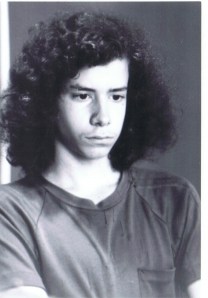
Last winter, publishing reporter Sarah Weinman–who works for PublishersMarketplace.com and who writes for a number of other publications–asked me if I would try to help her with a story she was working on. Having learned that I attended Franconia College in the 70s, Sarah wondered if I had ever known fellow FC student, Peter Winston. he began in ’75, I began in ’73. His name didn’t ring a bell for me, but Sarah continued and told me about more him, ultimately asking if I would put the word out among the old College community for anyone who might’ve known him. I agreed readily. Sadly, there was a dark and tragic background to her queries, and to the story. She explained that Winston, for a time a promising talent in competitive chess, burdened with a history of mental health problems, had in 1978 simply vanished, never to have been seen since. Foul play or misadventure were of course suspected by his family and authorities, but no trace or record of him has ever been found. He was a kind of modern-day Judge Crater.

I put the word out on the Franconia College Facebook page, a 366-member strong group of former students, faculty and extended community members. Unfortunately, my request for information yielded not a single lead, which I told Sarah last March. She thanked me for trying to help, and went back to reporting the story through other means, and I made a mental note to watch her byline for the piece on Peter Winston. Yesterday, the result of her efforts appeared in the New York Observer, a fascinating 3,000 word article that was the last thing I read before falling asleep last night. Sarah also’s blogged about the writing of the piece on her excellent tumblr, Off On a Tangent. The Observer article is haunting and sad–kind of a nonfiction counterpart to Queen’s Gambit, the novel by Walter Tevis*, whose protagonist is a troubled female chess prodigy. Though Sarah’s piece can answer few questions about Winston’s disappearance, it asks many and is compelling reading, folding in a portrait of the chess scene in NY in the 70s, the milieu that produced Winston, and a character sketch of him. Publication of the piece may also produce some leads for Sarah, so I’m recommending that you read her story and share it widely among your contacts. Any Franconia College people who may not have seen my earlier call for information, please take note. If you knew Peter, or remember him, please let me know and I will put you in touch with Sarah.

I must say now as I keep looking at this photo, I believe I must have seen him at the College, his face and demeanor are somehow familiar, but I know I never spoke with him.

* Tevis clearly had a gift for writing about troubled, alienated protagonists, sometimes young. In addition to the chess novel, his last book, he also wrote the SF novels, The Man Who Fell to Earth (a classic film with David Bowie) and The Steps of the Sun (which I happened to publish in 1989), and the pool hall novels The Hustler and The Color of Money, also great movies with Paul Newman in both, and Jackie Gleason in the first. In 1983, when Tevis was on tour for Queen’s Gambit he happened to stop in my Cleveland bookstore, Undercover Books and my brother and sister and I talked with him for an hour, on a blizzardy day. He died just a year later, in 1984. The Peter Winston mystery is one to which he would have definitely related–had it been reported in local news outlets, but according to Sarah Weinman, Winston’s disappearance barely registered in local media, or even with NYPD, who she writes have “no record of anyone by his name disappearing from the city.” Records for her piece were very sparse, with open requests to police and city authorities officially unanswered at this point.