
On the Imperative of Publishing Whistleblowers
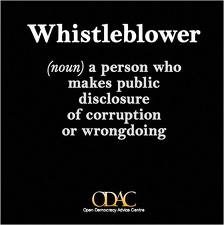
Neal Maillet, editorial director of Berrett-Koehler Publishers, has published a good opinion piece in Publishing Perspectives on what he sees as the imperative of publishing books by whistleblowers, and the dynamics that prevail when working with these authors and their books. In 2004 Berrett-Koehler published the breakthrough book on vulture capitalism, Confessions of an Economic Hitman, a mega-hit by John Perkins that was licensed to Plume for trade paperback for whom it was also a bestseller. More recently, he writes that B-K has published Confessions of a Microfinance Heretic, on the little-known darker side of what we like to think of as progressive measures to facilitate economic progress in the developing world.

For my part, when I describe the imperatives and mandates that impel my personal publishing choices I have long placed “whistleblowers, truthtellers, muckrakers, and revisionist historians” highest on my list, and refer to this on the two business-oriented pages at the top of this website, Philip Turner Book Productions and Philip Turner. Quoting from the latter page, I’ve written “As an editor and publisher I have always felt impelled to publish books by and about singular witnesses–whistleblowers, truthellers, muckrakers, revisionist historians–people who’ve passed through some crucible of experience that’s left them with elevated author-ity, and the only person who could write the book in question, or about whom it could be written. Whether told in the first person by an author who has passed through some crucible of experience that leaves him or her uniquely qualified to tell the tale or in the third person by a reporter or scholar who has pursued a story or historical episode with single-minded passion, I am devoted to publishing imperative nonfiction, books that really matter in people’s lives.”

My definition of an imperative book is not limited to books by corporate and government whistleblowers, though it certainly includes them. The list of relevant books I’ve acquired and/or published over the past decade and a half includes these ten titles:

1) DEAD RUN: The Shocking Story of Dennis Stockton and Life on Death Row in America (1999), a nonfiction narrative by reporters Joe Jackson and Bill Burke with an Introduction by William Styron, chronicling an innocent man on Death Row in Virginia and the only mass escape from Death Row in U.S. history. The condemned convict, Dennis Stockton, wasn’t among the escapees, but he kept a whistleblowing diary detailing corruption in the penitentiary that he later with the reporters;
2) IBM & THE HOLOCAUST: The Strategic Alliance Between Nazi Germany and America’s Most Powerful Corporation (2001), an investigative tour de force by Edwin Black showing how one of the world’s most successful technology companies lent its technology to the Third Reich’s killing machinery;
3) THE WOMAN WHO WOULDN’T TALK: Why I Refused to Testify Against the Clintons and What I Learned in Jail (2002) by Susan MacDougal, a New York Times bestseller. Susan served 18 months in jail for civil contempt when she wouldn’t give Special Prosecutor Kenneth Starr the testimony he wanted from her.

4) THE POLITICS OF TRUTH: Inside the Lies that Put the White House on Trial and Betrayed My Wife’s CIA Identity (2004) by Ambassador Joseph Wilson, which later became the basis in part for the film, “Fair Game,” a New York Times and Publishers Weekly bestseller;
5) AHMAD’S WAR, AHMAD’S PEACE: Surviving Under Saddam, Dying in the New Iraq (2005) by Michael Goldfarb. A longtime NPR correspondent, this is Goldfarb’s tribute to Kurd Ahmad Shawkat, his translator during the U.S. invasion of Iraq, who started a newspaper in the months after Saddam’s fall, only to be assassinated for his editorials critical of intolerance. A New York Times Notable Book.

To the books by these authors, I would also add my writers, the late Edward Robb Ellis, the most prolific diarist in the history of American letters, and 100-year oldRuth Gruber, award-winning photojournalist–each of them singular eyewitnesses to history. Over the years I have published four and six books by them, respectively.

Among my professional roles nowadays is that of independent editor and consultant to authors on book development in which I continue seeking out unique individuals with stories like these to tell. That’s also why I enjoy working with Speakerfile, the company that connects conference organizers with authors who do public speaking. Thanks to Neal Maillett and Berrett-Koehler Publishers for reminding me and all readers of the vital role publishers play in helping us hear the voices of whistleblowers and truthtellers. H/t to Mike Shatzkin for alerting me to Mr. Maillett’s article. Also, thanks to the Open Democracy Action Center (ODAC) for use of their whistleblower graphic.

Please click through to the complete post to read about the last five books from the above list and see many of the book jackets.

An Outrageous Health Care Premium Rate Increase Request

We can hardly believe that on the eve of the Supreme Court ruling on the Affordable Care Act, Kyle’s had to draft a letter to the New York State Superintendent of Financial Services about the 2013 rate increase requested by United Healthcare, our health insurer, which I’m now adding to.

  • The amount of their requested rate increase?
  • A staggering 18.1%.
  • The total compensation of United Healthcare CEO Stephen Hemsley in 2010 and 2011?
  • A staggering $101.96 million in 2010 and $48 million in 2011, making him the highest paid CEO in the entire healthcare field, and one of the highest-paid executives in any American industry.

I don’t know what the Court ruling will be when it’s announced tomorrow morning at 10:00 AM, but I do know the system sucks when a CEO can make money like that. There is an insidious dynamic at work here: Hemlsey’s compensation and the rate increase request are diabolically inter-related–he makes more money when the company is more profitable, and the company is more profitable the more they charge their policyholders.

We’ll finish the letter tomorrow and mail it off to Albany, by which time we’ll know how the Court has ruled. It’s going to an interesting, historic, stressful day.

A New York Times Talk w/Nora Ephron & Other Guests

In early September 2010, I saw an announcement that Ambassador Joseph Wilson–whose book The Politics of Truth: Inside the Lies that Led to War and Betrayed My Wife’s CIA Identity, I had edited and published with him in 2004–would be appearing in a September 16 forum at the New York Times Center to mark the 40th anniversary of the NYT‘s Op-Ed page, which would be observed with a special section of the paper on Sunday, September 25. The moderator of this event, Op-Ed page editor at the time David Shipley, had invited Joe because his July 6 2003 op-ed What I Didn’t Find in Africa had been one of the most historically significant columns the newspaper published that decade, leading to the outing of Joe’s wife Valerie Plame as a CIA official and years of Bush administration denials that they had doctored the intelligence that fueled their claims about Iraqi WMDs.

I got a hold of Joe and he invited me to be his guest that evening. We hadn’t seen each other in a couple years, and so met an hour beforehand to catch each other up on our lives, after which we entered the green room just off the stage at the Times Center. There Joe generously introduced me as his editor and publisher to the other panelists–Roy Blount Jr., Garrison Keillor, Anna Deavere Smith, and Nora Ephron. They all seemed genuinely interested in one another, and conversed briefly among themselves before going out on stage. Blount was funny, in a low-key way, Keillor was diffident and the only one who wasn’t talkative, Smith told stories about her one-woman shows, and Ephron was funny and self-deprecating. I went out and talk a seat in the auditorium. Once on stage, Shipley asked each of them to speak about how they came to write their Op-Ed. Ephron spoke about her stint as a White House intern in the 1960s, which she turned into a 2003 Op-Ed. The fascinating program went by in a flash.

Afterward there was a reception, and books signed by each panelist for interested members of the public to purchase. The paperback of The Politics of Truth was on hand and I was proud to see Joe inscribe quite a few copies for eager readers who lined up to meet him. During a lull in the signings, I approached Nora Ephron and thanked for her remarks during the program, when she’d praised the Times columnist Russell Baker, who retired from the paper several years earlier, and who seems to me too little remembered by readers nowadays. This was in response to Shipley, who’d asked her if she particularly recalled any contributors to the Op-Ed pages. She brought up Baker and in praising him conceded that he didn’t qualify since he was a Times staffer, and not a guest contributor, which those who write Op-Eds are by definition. Still, she said, Baker was too special to go unremarked. I had also long admired Baker’s style and told her I was glad she’d mentioned him, whether he qualified or not. A few days later, eager to make a connection with this witty woman, I sent her a letter, a screen shot of which is produced below. I didn’t get a reply, but I hadn’t asked for one, and remain very glad to have simply met her.

With the news yesterday of Nora Ephron’s passing, I recalled meeting her and writing the letter. I’m sure I wasn’t the only person to have enjoyed meeting her in person, so I’m glad I can share my recollections in this space. Just before putting up this post, I discovered a ten-minute video from that evening, almost entirely featuring Nora Ephron. Click on this link and look for “Op-Ed at 40: Voices of the Times” to view it:  Times Talks with Nora Ephron, Ambassador Joseph Wilson, Anna Deavere Smith, Roy Blount Jr., Garrison Keillor

To Share or Not to Share

Interesting piece by book publicist Brian Feinblum* of public relations firm Media Connect, on what makes people want to share content online, and what makes them decline to do so. The riddle he’s trying to solve is a key one in the Internet age, and one that strikes me as analogous to a question I often pondered when I ran my bookstore, Undercover Books: what makes browsers apt to pick up a book and put it back down again, or what makes a customer walk to the cash register with a firm resolve to buy the book. I haven’t worked in retail since 1985, but I still think about consumer behavior, and nowadays, online behavior. The analogy isn’t an equivalent one, because sharing online doesn’t cost money, but clicking the share button does represent an investment of one’s prestige or reputation. Feinblum must be doing something right, because I decided to share his link and word of his article.

* Full disclosure: I’m on Feinblum’s email list and received a message from him where he asked his subscribers to consider sharing the above article. After reading it, I decided I would because I could stand behind its content as offering something valuable to my readers too.

Announcing My Collaboration with Speakerfile

June 25, 2012–Shelf Awareness, the e-newsletter for booksellers and librarians and others in the book trade, has run a generous announcement on the collaboration I announced last week with Speakerfile. It was in the email they sent out to their subscribers this morning and at this link. If you don’t already subscribe to their emails, I recommend them–there’s a professional one for the book trade that comes out every workday and one for readers that’s published twice a week–they are grouped together at this link.

Last Friday, the day the release below hit the wires, the daily e-newsletter Publishers Lunch also covered the news, with a piece at this link.
— 
June 22, 2012–Today I am announcing a business collaboration with Speakerfile–the Toronto-based company I’ve been writing about a lot on this blog over the past month. I’ll be representing their robust online platform that connects conference organizers and meeting planners with authors and thought leaders to publishers, authors, agents, and publicists. This press release on PR Newswire announces the arrangement. I’ve also pasted it in below, for your convenience. If you are an author, or you work with authors who want to do more public speaking, please read the release and follow the links to learn more about this engine of discovery that has the potential to put authors in front of audiences and drive book sales. You’ll also find a promo for Speakerfile near the upper right-hand corner of this website, which you can click on to go directly to Speakerfile’s site. Please let me know directly of any questions you may have, or if you’d like to sign up for Speakerfile.

Click on the link above for the press release or click through here for the release copied & pasted-in.

My Letter to the Dept. of Justice in the Agency Model Ebook Case

With Monday June 25 as the last day for public comment in the Agency Model and ebook pricing case now before the DOJ I submitted a comment today. This is what I sent in an email to John Read at the Dept. of Justice:

June 23, 2012

Mr. John Read
United States Department of Justice
Washington, D.C.

Dear John Read,

I believe a competitive book market for authors, publishers, and readers is essential to the cultural and commercial well-being of our country. Because of the public good that a competitive marketplace conveys, I urge you to turn away from any course of action in this matter that would have the perverse effect of boosting Amazon.com and permitting them to continue predatory conduct that they have shown a predilection to practice.

While I know that the government’s investigation has been about allegedly improper conduct on the part of some publishers, I hope you can find a remedy here that does not deliver a new competitive advantage for Amazon.com, one that, given current trends, could surely lead to a less healthy, less competitive book and publishing marketplace, one that would over time lead to fewer titles coming from publishers; less income for creators; and less choice for consumers.

I write with respect for the difficulties you and your office must face in dealing with this matter. But as a longtime retail bookseller, editor and publisher, I know that our industry is balanced on a perilous edge where your decision could lead to a more competitive and fairer book marketplace, or when where a very few players dominate the commercial and cultural space. I hope you will not let that occur.

Sincerely, Philip Turner
Philip Turner Book Productions
New York, NY
www.philipsturner.com

Click through to see screenshot of my email to the DOJ