Desmond Morris, Bestselling Author on Primate Behavior, RIP
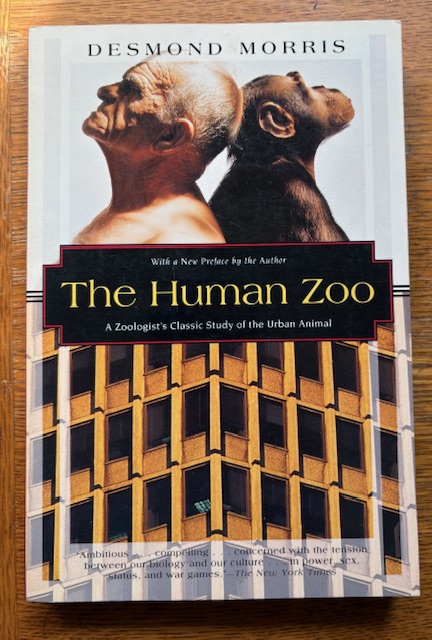 In turning to the NY Times’ Obituary section today, I see that a bestselling author for many decades, Desmond Morris, has died, age 98. Douglas Martin has written an excellent obituary headlined, “Desmond Morris, 98, Dies; Explored Humans’ Animal Instincts in ‘The Naked Ape,’” linked to here (no paywall).
My wife Kyle Gallup and I had the good fortune to meet Mr. Morris in Oxford, England, in 1991, when I was republishing two of his most popular books, The Human Zoo and The Naked Ape as part of the Kodansha Globe nonfiction trade paperback imprint, a series I headed up, which focused on books of natural history, cross-cultural studies, anthropology, adventure, and beyond. It was a sort of nonfiction precursor to the NYRB series of today.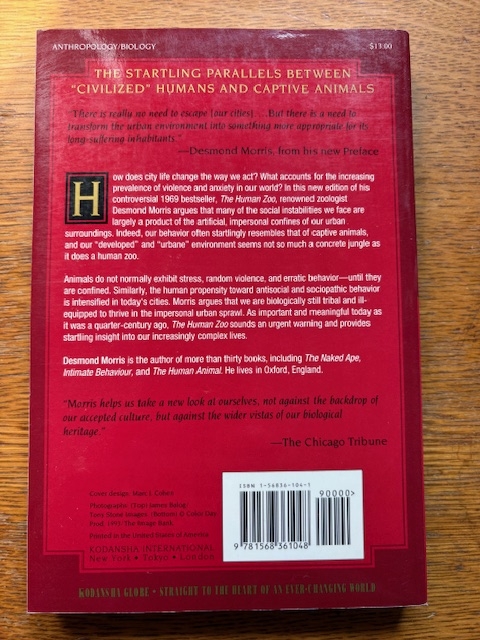
Kyle and I happened to be visiting Britain and traveled from London to see Morris in Oxford, where we also were meeting a librarian I knew at the famous university, A. J. Flavell. After Mr Flavell gave us a fascinating tour of the Bodleian Library, including its many stacks below ground level, we met up with Desmond, who offered to drive us around Oxford’s picturesque environs in a cream-colored Rolls Royce he owned. He was a very gracious host.
Douglas Martin reports that Morris “graduated with highest honors in zoology from the University of Birmingham in 1951. By the early 1950s, he was selling his surrealist paintings in London and Belgium and had directed two surrealist films. Dr. Morris subsequently attended the University of Oxford, where he studied under the animal behaviorists and future Nobel laureates Nikolaas Tinbergen, Karl von Frisch and Konrad Lorenz [Kodansha Globe would also publish Lorenz’s book Man Meets Dog]. Dr. Morris received a doctorate in 1954 with a thesis titled “The Reproductive Behavior of the Ten-Spined Stickleback.” Martin adds that Morris became curator of mammals at the London Zoo in 1959. Though he became a popularizer of serious science, he definitely had the full academic background to go with it.
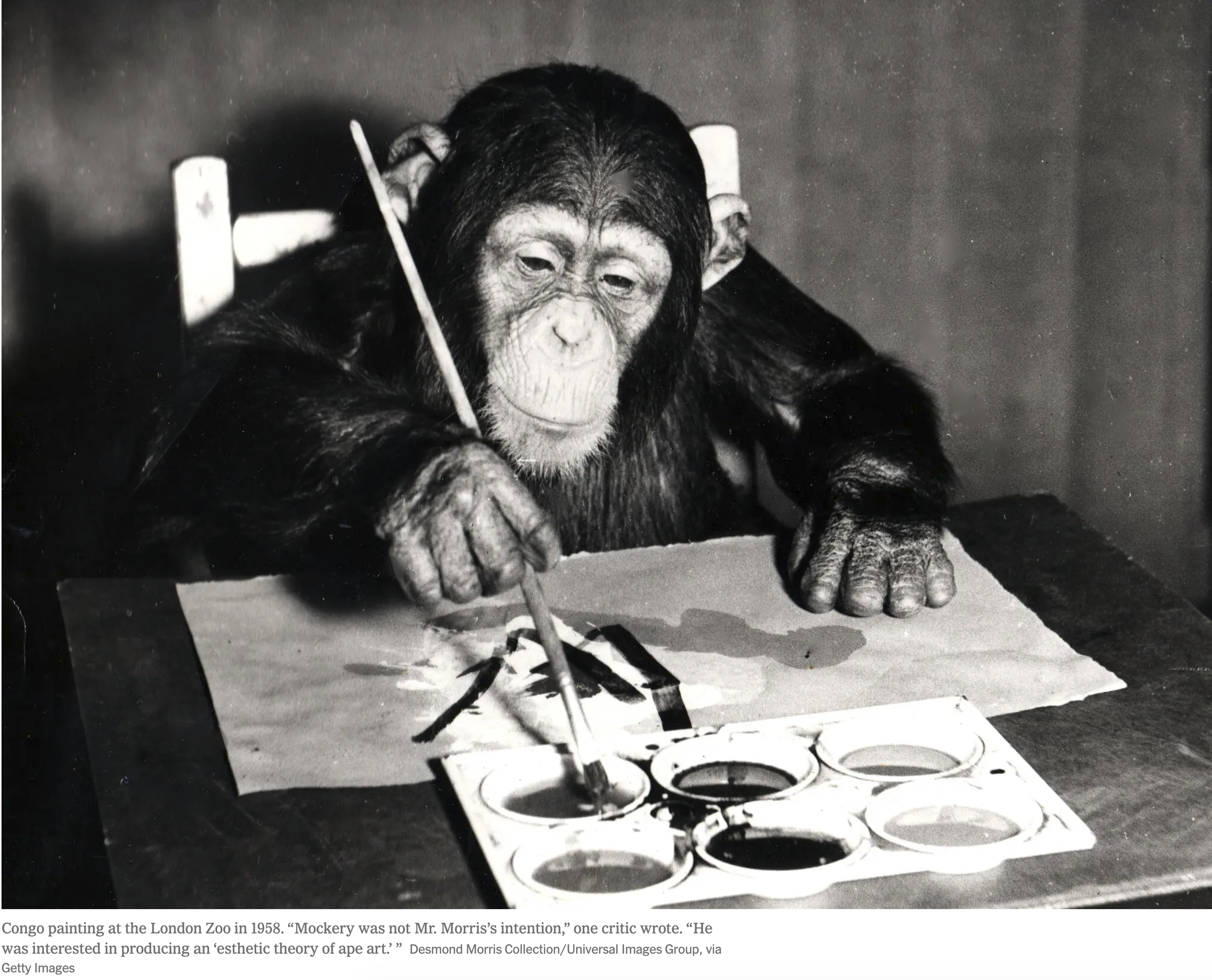 Arguably, his books mainstreamed the study of animal and human behavior like no writer before him had done. As mentioned, he also was a painter and also made a study of the question of possible picture-making among non-human primates. In 2018, he returned to art, publishing a book titled The Lives of the Surrealists. I was privileged to work with him back in the day.