
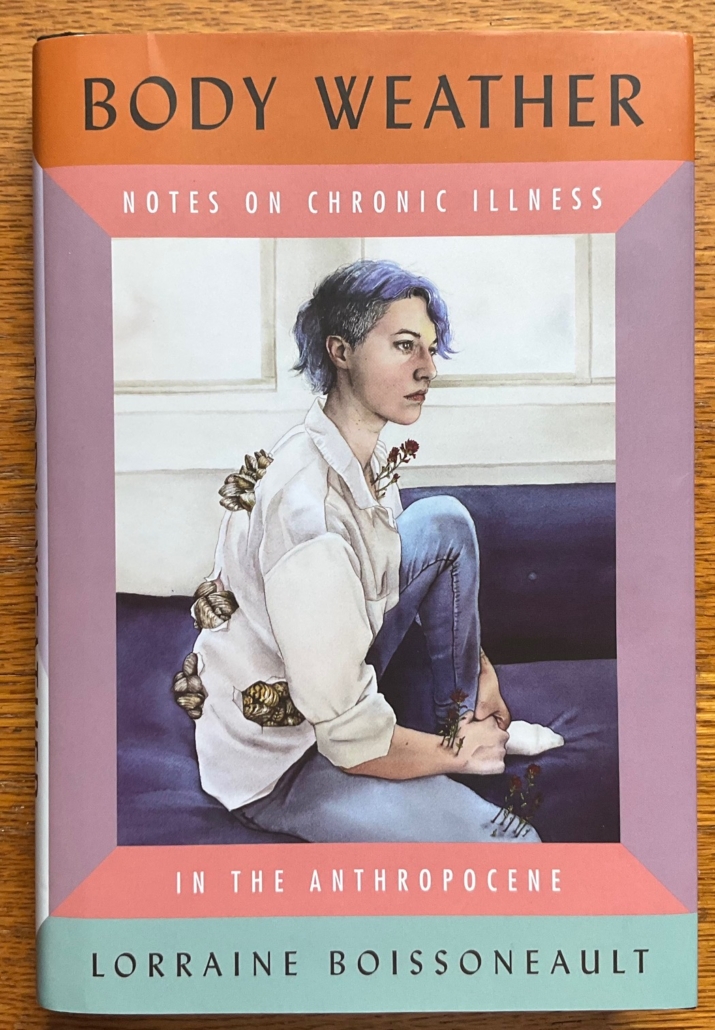
Celebrating Publication of “Body Weather: Notes on Chronic Illness in the Anthropecene” and Remembering Dr. Paul Epstein’s “Changing Planet, Changing Health”
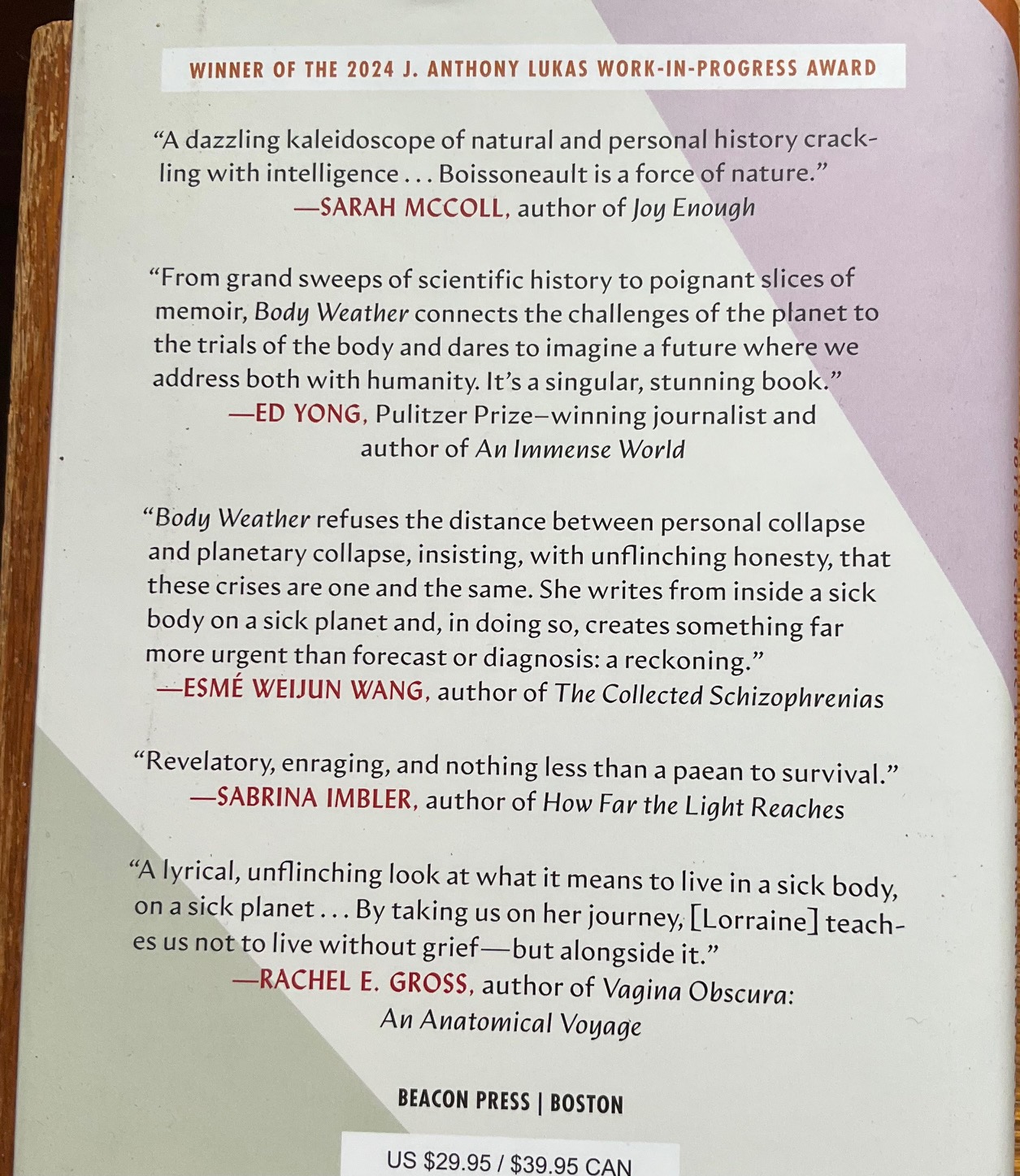
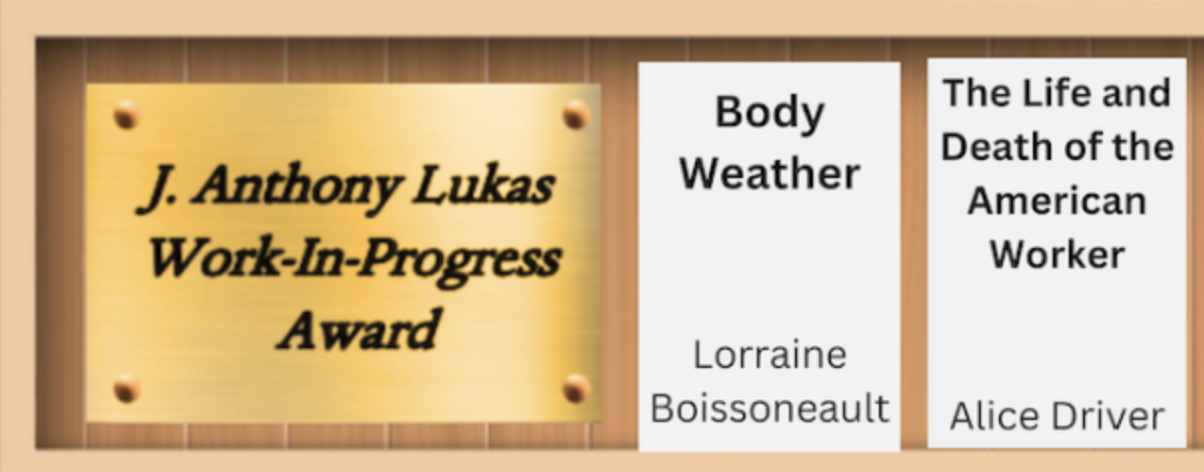 In 2024, I was invited to serve as a juror on a three-judge panel that evaluated 99 entries for the Works-in-Progress Awards of the J. Anthony Lukas Prizes, sponsored by the Columbia Journalism School and the Nieman Foundation for Journalism at Harvard. After months of reading the book proposals and sample chapters, and many Zoom discussions among the three panelists, we announced a shortlist of fifteen works-in-progress; then following more discussion, we chose two works-in-progress as the finalists, whose authors would each receive $25,000. The works-in-progress awardees were Body Weather: Notes on Illness in the Anthropocene by Lorraine Boissoneault (to be published by Beacon Press), which was my favorite among all the entries, and The Life and Death of the American Worker: The Immigrants Taking on America’s Largest Meatpacking Company by Alice Driver (forthcoming from One Signal, Atria).
We drafted a citation for Body Weather, which was a product of me and my fellow panelists, Chris Jackson, Publisher and Editor-in-Chief, One World Publishing, Penguin Random House, and Erika Hayasaki, Professor at the University of California, Irvine, in the Literary Journalism Program, and author of Somewhere Sisters: A Story of Adoption, Identity and the Meaning of Family:
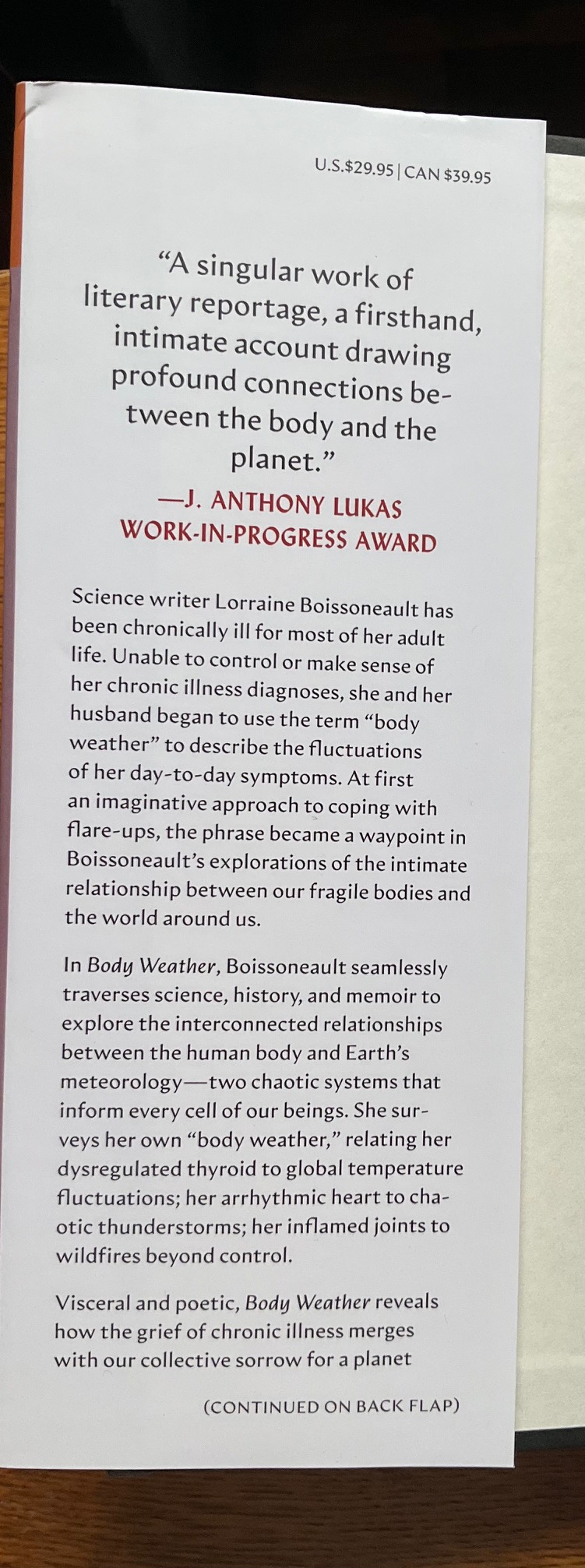
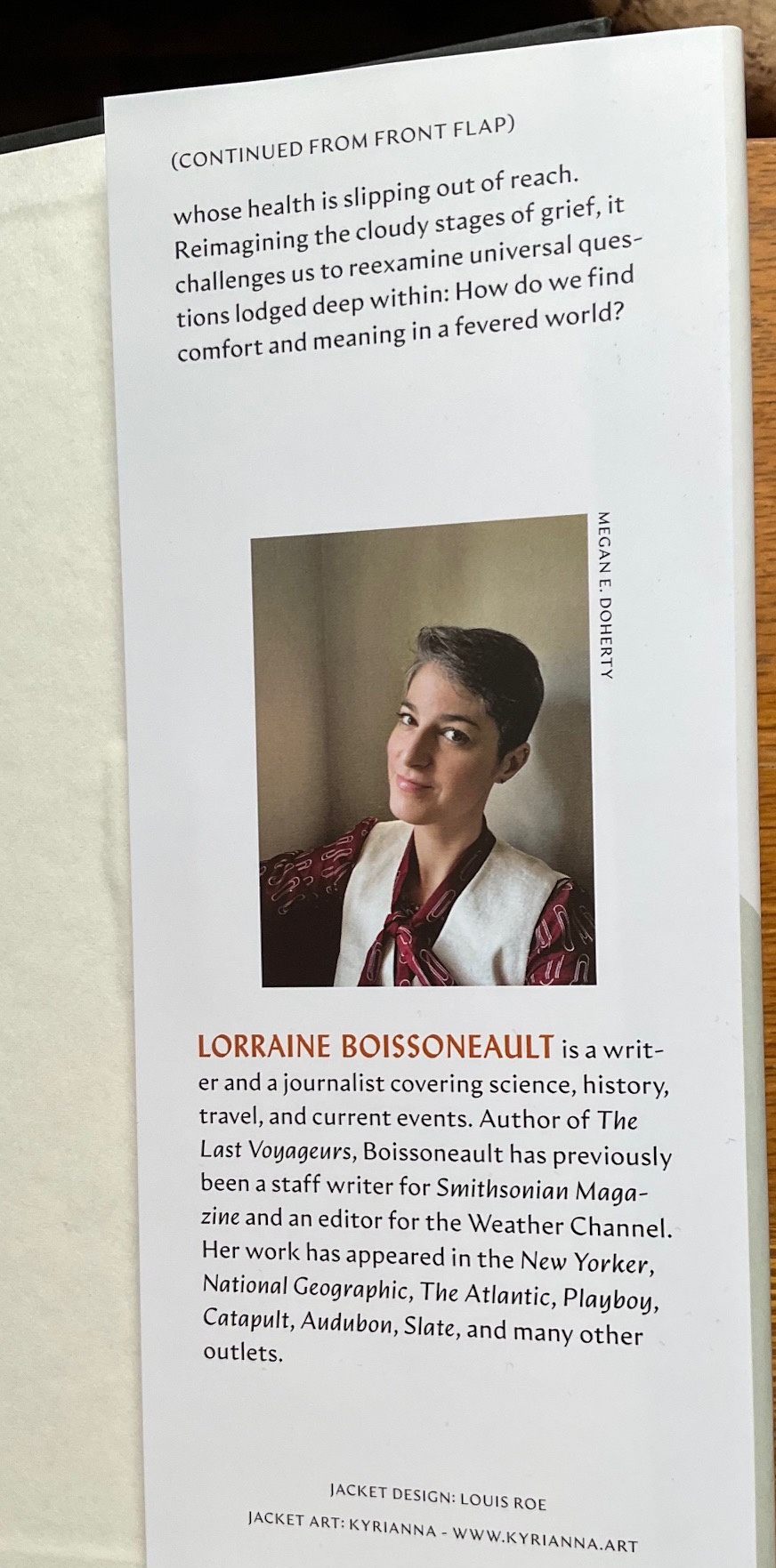
Body Weather is a visceral work of reported essays, masterfully braided with narrative research. Lorraine Boissoneault tells the story of living with chronic illness at a time when the planet is in a state of dire suffering. Climate change is bringing more hurricanes, lightning, tornadoes, fires and landslides. How will a distressed planet affect stressed, ill or disabled bodies? In poetic and haunting prose, Boissoneault unearths intersections between her unique experience living with illness, while also illuminating universal questions lodged within all of us: How do we learn to live with discomfort? “How do we seek refuge from our own bodies, from weather that wraps itself around the world?” The Lukas Prize will enable the author to travel from her home base in Chicago to the Saguenay fjord in northern Quebec, to Death Valley in California and to Australia’s outback to complete reporting for the book. Body Weather is a singular work of literary reportage, a firsthand, intimate account drawing profound connections between the body and the planet.
We were originally scheduled to present the awards in a ceremony at Columbia in May 2024, but due to months of strife on the school’s campus on the upper west side of Manhattan following the Hamas attack in Israel on October 7, 2023, and the war that followed by Israel, the event was postponed. It was finally held a year later, in conjunction with the 2025 honorees, when I was excited to finally meet Lorraine Boissoneault. It was a thrill to introduce myself to her, and tell her I’d been a Lukas Prize juror and explain that her proposed book had first landed in my tranche of thirty-three proposals that I was to read and assess. She had traveled to NYC from Illinois. I found her a charming, soft-spoken person with a friendly twinkle in her eye. She told me that though her manuscript was still unfinished, she was confident of completing it, and that the monetary award was helping with the process, which made me very glad. 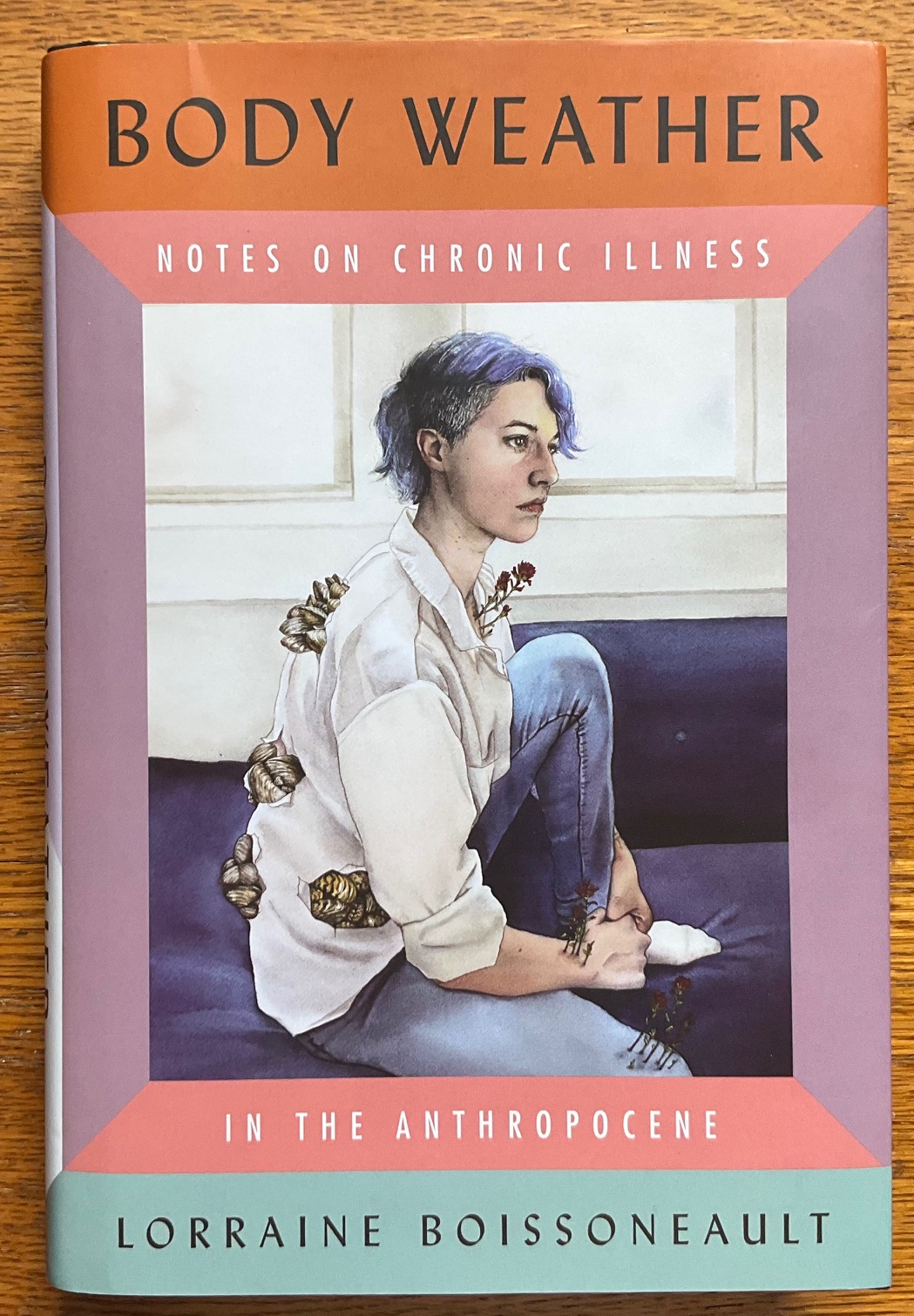
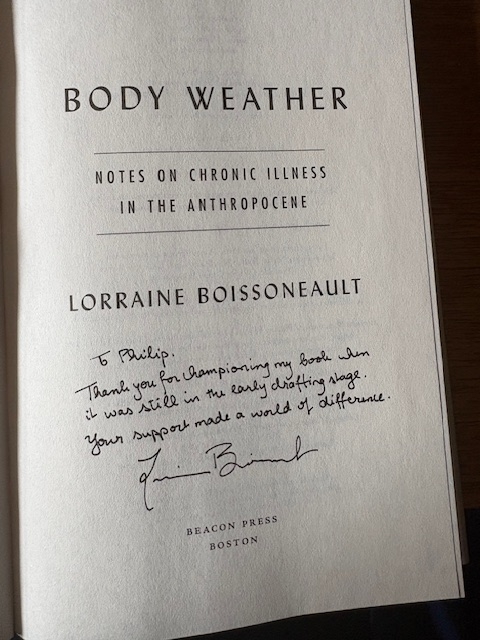
A few weeks ago I was delighted to get a message from Ms Boissoneault who informed me that she had indeed completed her book, and Beacon Press would be publishing it on April 21 of this year. She offered to send me a copy, which arrived a few days ago, with a lovely inscription from her. I’ve begun reading it and am finding it as evocative and insightful as the book proposal and sample chapters were. The final structure of the book, which had been hinted at in the sample material, has proven to be ingenious as it oscillates deftly from personal prose about her own health and conditions to reporting on the wider environment as it affects the health of the world’s population. Divided into five parts—Temperature-Thyroid-Denial is Part One—her first chapter is “When the Weather Has Teeth.” I was intrigued to learn she was born in Toledo, Ohio, a city know well, as I grew up in Cleveland, and had a set of grandparents and other relatives there. Her sentences convey a sense of reality lived with the weather as a factor influencing one’s life. Body Weather is a significant achievement, a rare memoir that is also a carefully reported book on personal, public, and planetary health.
An Earlier Imperative Book on Public and Planetary Health
Twenty years ago—when I was working as an editorial executive for Carroll & Graf Publishers, and always on the search for truth-tellers who might be the right person to write a book on an urgent topic—I listened to an interview by Terry Gross on “Fresh Air” with a doctor/scientist whose outlook on the environment and impending changes in earth’s climate began to alter the way I view the planet. I was transfixed and shocked by what her guest, Paul Epstein, MD, MPH, discussed with her. He told her about emerging effects of climate change on people’s health. With three examples, he described the advent of unprecedented conditions:
- 1)-Malarial mosquitoes populating at high elevations in Africa, where they were not previously known to breed;
- 2)-Ticks occurring at latitudes where they also were not known before, fueling the growth of Lyme disease and West Nile virus;
- 3)-Petroleum particulates attaching to ragweed that was proliferating because of increased CO2 in the atmosphere, which lodged in the airways of populations proximate to gas- and diesel-powered vehicles, making many people, including children, chronically asthmatic.
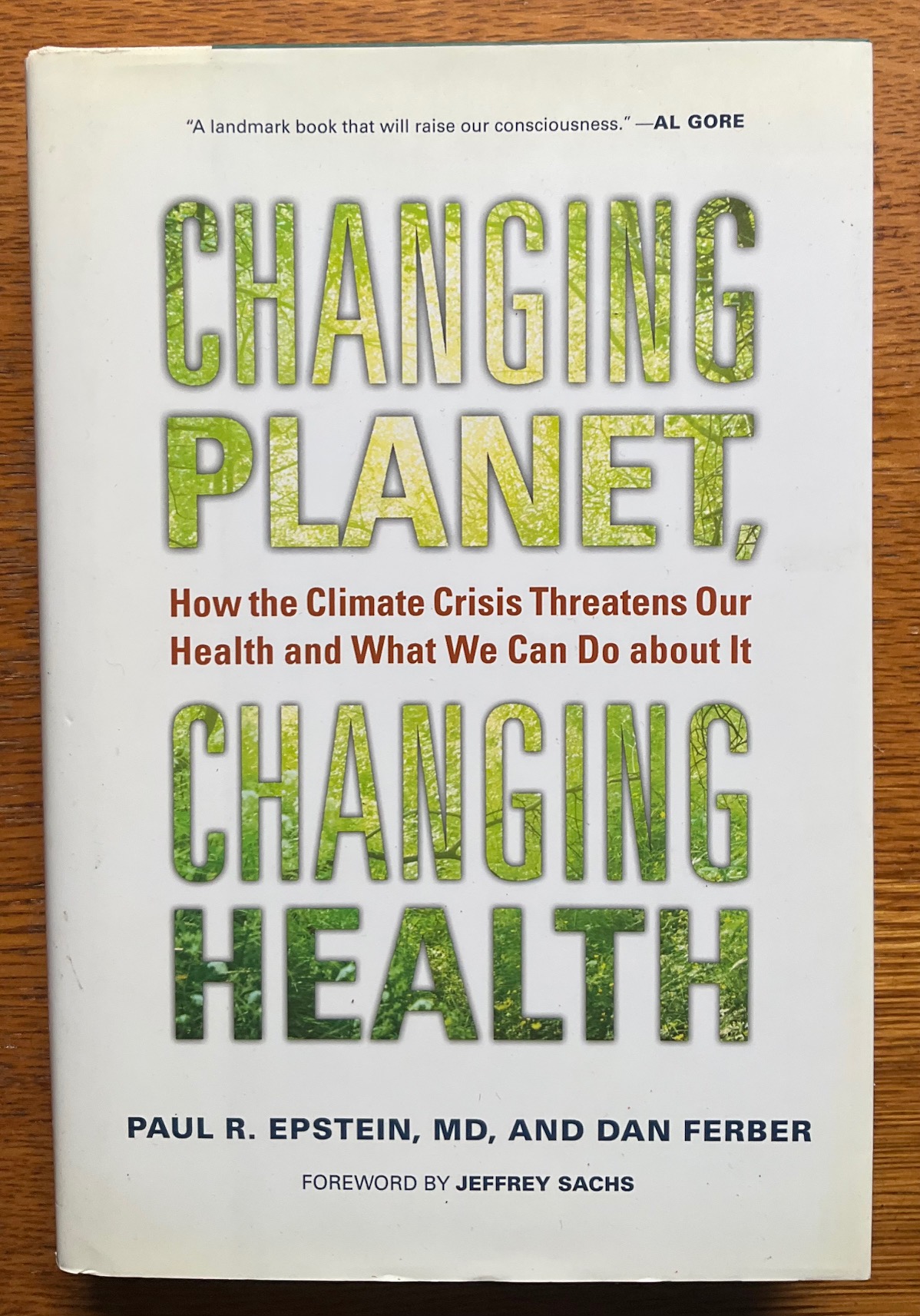
I quickly decided to contact Dr Epstein and see if he wanted to write a book on this imperative subject and his trailblazing research. When I called him in his office at Harvard, he was very open to speaking with me, though he couldn’t have known for certain I was legit, and he didn’t have a literary agent. It would take a couple years, and a job change for me to a new company, Union Square Press at Sterling Publishing, but I finally paired him with a co-author, science writer Dan Ferber, and commissioned a book that would be titled Changing Planet, Changing Health: How the Climate Crisis Threatens Our Health and What We Can Do About It.
At some point, we met up when Paul was in New York for meetings with officers at foundations, and executives who worked in a subset of the insurance industry; this was a field, also new to me called “re-insurance.” These were hugely-capitalized insurers that themselves insure all the major insurance companies, backstopping the policies the insurers must sometimes pay on, especially after natural disasters when claims can run up to tens and hundreds of millions of dollars. Beginning in the 1990s-early 2000s, Paul who had an analytical mind, had already seen that a future of devastating storms, floods, and wildfires was going to place the balance sheets of insurers under major stress, and even pose a major threat to the future world economy, where insurability undergirds many aspects of modern commercial society—real estate and home ownership in this country, for one. Swiss Re Group was one of the companies whose officers he met with in Manhattan. His advocacy was intended to make them work ever harder to communicate to all levels of the corporate world that preventative measures must be taken to undercut climate change and the surging growth of mega-storms.
We met at a restaurant in Chelsea and sat wrapt while he told me about the places he’d worked as a doctor, including Angola and Mozambique, and the granting institutions and foundations he was enlisting to donate to climate initiatives. He held a position as Associate Director of the Center for Health and the Global Environment of the Harvard Medical School; earlier he had worked as a physician trained in tropical health. As one capstone to his career, he also worked with the UN’s International Panel on Climate Change (IPCC), which was awarded the Nobel Prize in 2007.
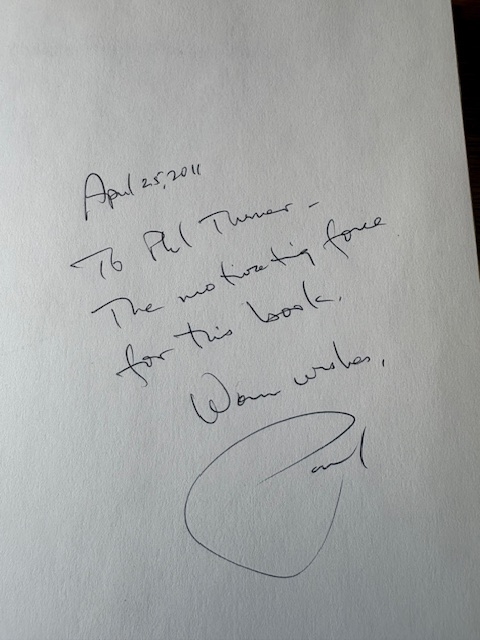
In late 2008, Paul and Dan had delivered virtually the entire manuscript, and I’d nearly completed my full edit of it, when at the nadir of the recession in 2009, Sterling closed Union Square Press, my job was eliminated, the imprint shuttered, and their book contract canceled. Fortunately, Ferber’s agent was able to resell the book and it was finally published in April 2011 by the University of California Press, with endorsements from Dr Paul Farmer (RIP), Al Gore, Bill McKibben, and Elizabeth Kolbert. Paul sent me a copy with a personal inscription that I’m proud to share below. I sent him congratulations and we shared the satisfaction of knowing that after five years the book was at last making its way into the world.
Sadly, I learned soon after this that Paul had been ill for some time. I learned of his death, age 67, on November 20, 2011, in Cambridge, MA. I am still so sorry for the loss of Paul but so grateful for the chance to have known him and worked with him. It was a personal loss, and a global one. The path toward the signing of the Paris Climate Change Accord was well underway when he died, as it was then signed in 2015, with the USA a signatory to it, as well, which was the last year of President Obama’s second term. Many corporations, even companies associated with oil, were beginning to shift their priorities toward management of climate change risk, mitigation of public health harms from climate disruption seemed an attainable goal, and renewable energy was emerging. Lamentably, Obama’s immediate successor would peremptorily pull our country out of the Paris agreement and in his second term is doing even more to reverse progress. Paul would be deeply disappointed to know of that. And yet, his many humanistic contributions to our society endure. His exemplary life was chronicled in a New York Times obituary, in a Toledo Blade column by Tom Henry, and in this message from Physicians for Human Rights, which concluded with these words:
“For several generations of medical students and young professionals, [Paul Epstein] was a model of the physician activist, caring for the individual, one patient at a time, and at the same time crusading for the world so that we might leave behind us a chance for the health and well-being of entire populations and of the planet itself. His knowledgeable and daring voice inspired countless health professionals and activists to campaign for basic human rights, to ban landmines, to prevent disease, and to preserve the planet. We will always remember opening up the paper and reading yet another important piece from Paul—he will be sorely missed.”
It was a privilege to work with one pioneer for public health, Paul Epstein, and help him to develop his book, and equally an honor to discover the work of Lorraine Boissoneault, disability advocate and environment journalist, and also help her on her path to publication.
-

- Part of the Lukas Prize citation
-

- Lorraine Boissenault
-

- Lorraine’s inscription
-

- Endorsements for Body Weather
-

- Changing Planet, Changing Health
-

- Bios and pics for Paul Epstein and Dan Ferber

-

- Paul’s inscription

Leave a Reply
Want to join the discussion?Feel free to contribute!