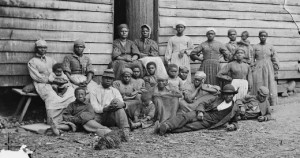
 On the Upper West Side of Manhattan where I’ve lived for 20 years I used to see this big man with a scratchy looking goatee. He seemed somehow familiar, and interesting, like if each of us hadn’t been hurrying we could’ve had a good conversation at a neighborhood diner. Eventually, a neighbor pointed to me who he was–“That’s Alan Lomax, the song collector.” Of course, that’s why I recognized him.
Before I moved to New York, I ran Undercover Books, a Cleveland, Ohio bookstore that also sold recorded music. We used to handle albums from such venerable labels as Folkways, Nonesuch, and Rounder. I had seen Lomax’s picture on the liner notes, as he had for decades been recording field hands, convicts, laborers, and other bearers and keepers of musical traditions. Leadbelly was only one of his great discoveries. I admired Lomax, just as I admired the Englishman Ralph Vaughan Williams, who earlier in the 20th century, even before he would become a brilliant composer of orchestral music, had ventured into the fields, docks, and sheep-shearing paddocks with early recording equipment to hear and record the tunes of local folk.
I never did get to have that sit-down with Alan Lomax, who died in 2002. But I was delighted to read tonight, via this article in the New York Times, that the vast archive he left behind is soon going to be accessible in a digital storehouse that will be widely accessible to scholars, musicians, and the public. Hooray for Alan Lomax, and the Association for Cultural Equity, the project under the hands of his daughter Anna Lomax Wood that is making these treasures available. When you read the Times article, don’t miss the interactive feature with recordings of Mississippi Fred McDowell, Bessie Jones, and other greats.


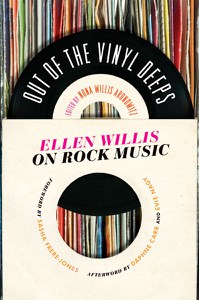 #fridayreads ‘Out of the Vinyl Deeps: Ellen Willis on Rock Music,’ a finalist for the National Book Critics Circle (NBCC) annual award in criticism–I’m always good for some rockin’ music essays. Also, ‘The Disposable Man,’ one of Archer Mayor’s superb Joe Gunther police novels set in Brattleboro, VT. Great cop, great story.