In May 2001, Avalon Publishing Group–the Berkeley, California company I worked for as an editorial executive with Carroll & Graf Publishers–moved all its New York employees to new offices on 161 William Street in lower Manhattan, near City Hall Park, behind Park Row and the J&R Music World stores, 2-3 blocks east of the World Trade Center. I had enjoyed our original space on W. 21st Street, and didn’t appreciate the longer commute from the Upper West Side of Manhattan, but soon got used to the new neighborhood, new restaurants, new sights and sounds.
On the morning of September 11, 2001, I rode the train downtown and emerged from the Fulton Street subway station, at the corner of William and Fulton, with a customary single earbud stuck in one ear, tuned in to local public radio station WNYC, alert to what might be going on at street level. I detected uncharacteristic alarm from the on-air voices of host Brian Lehrer and correspondent Beth Fertig. Before I could comprehend the source of their concern, my gaze turned west and up in to the air toward the World Trace Center towers, startled to see flames, smoke, and debris pouring from the structures, against a backdrop of a California-type deep blue sky. The air around me was palpably hot, a weird sensation I couldn’t account for, even after seeing the flames above me in the sky.
What in the world?
Turning the corner and hurrying toward my office building, I focused again on the radio voices, hearing something about an airplane having crashed into one of the towers, and then, that a second such crash had occurred only moments before I came out of the subway. Lehrer’s and Fertig’s alarm was in real time. Any idea I had momentarily entertained, associating this incident with the incident in the 1940s when the Empire State Building was struck by a light plane, was dashed. I ran in to 161 William, took the elevator to our upper floor and found a handful of Avalon colleagues who’d arrived before me. I hustled over to the western side of the floor, joining them as we all took in a clear view of the twin towers, with a valley of lower buildings below and between us and the conflagration. The volume of flame, smoke, and debris were all much greater than when I’d first seen them downstairs. The debris included a fluttering cascade of myriad loose sheets of white paper. Midway between our building and the two towers, I noticed a lone man on a rooftop across the way and below our floor. The figure seemed to be in a prayerful pose, kneeling on a rug, wearing a white skullcap. I never learned what he was doing there, and have in the years since pondered it with colleagues such as Keith Wallman who also saw the man that morning.
In those days, neither my wife nor I owned a cell phone. I rushed into my office, on the east side of the building, and used my phone there to call Kyle. The lines worked the first time I tried our home line. She’d just gotten in from taking our son Ewan to kindergarten; on her way home she’d heard about the events downtown. I told her what I’d seen and she said she had TV on and warned me to leave the office building right away. I said, yes, but I don’t know what’s going on at street level. What if the buildings fall, and topple in the eastern direction? What if people are panicked or trampling each other? Maybe I’d be safer upstairs. These were some of my thoughts. Kyle said she was going to go out and get cash and drinking water for our apartment, then go back to school and bring Ewan home. We talked a few minutes more and I told her I was going to go back to the other side of the floor to see the latest developments. I stayed a few minutes and finally decided, yes, it’s time to leave. I tried my home line again but now couldn’t get a call through. I would’ve left a message, telling Kyle I was leaving and that I would try to call her again later, but couldn’t get through at all. A colleague and I decided to descend in the elevator together, and then make a run for it when we got out on William Street. My companion was my fellow editor Tina Pohlman. As we were rushing from the western windows in to the open elevator car–I know now it was at 9:59 AM–we heard one of the weirdest sounds I’ve ever experienced, made by the collapse of the first tower. First, came a deeply guttural bass sound, created probably by the tremendous downdraft of air from the vertical collapse–something almost felt more than heard. The next instant, I registered a high, trebly, tinkling noise made up, I think, of breaking glass and splintering metal.
Tina and I descended without incident and saw out the lobby’s revolving door hundreds of people running past our building front, engulfed in a dusty, smoky cloud. Without hesitating more than a few seconds, we pushed out the door and joined the massing throng pushing north and east, toward the Brooklyn Bridge. Tina hoped to head over to the lower East Side, where she lived, if permitted by police. My direction was uptown, all the way to West 102nd Street, my home. We were immediately surrounded by the cloud, a murk that wasn’t pure gray or black, examples that TV footage would later show; this cloud actually had some shafts of sunlight in it. It was more ochre than gray. Still, it was pretty opaque and a specific fear registered that if debris were flying in it, we might not even see it heading at us. We made a right turn on Beekman Street, past New York Downtown Hospital, and turned left on Pearl Street, running together for several blocks until we ran under the Brooklyn Bridge.
Though still surrounded by the blanket of dust, and impelled to keep running till I was clear of it, I was beginning to fear that I couldn’t keep up the pace. I wasn’t so much out of breath–the problem was the shoes I had worn that morning: a pair of newish ankle-high boots. With the beautiful fall weather that morning, I had considered them appropriately autumnal and so decided to don them. But I hadn’t broken them in yet, and they proved terrible to try to run in, or even to try walking fast. I would regret my choice of footwear for many months that followed.
I tried to ignore the nascent pain and resumed my nervous, awkward jog, continually hitching and hauling up the knapsack slung over my shoulder. Surrounded by earnest and fearful strangers, all of us still shrouded by the murk, my route passed through unfamiliar parts of Chinatown. Approaching Canal Street the cloud began to thin a little. Finally, we crossed Canal Street and burst into patches of clear air. Tina and I said goodbye and wished each other well as we headed off in our separate directions. I was relieved to be in clearer air and thought, Now I just have to get home. Problem was, I still had a long way to go. Any city buses that passed were insanely overcrowded, and moving at a crawl anyway. Yellow cabs and livery taxis were also full and barely moving through the dense surface traffic. Continuing to listen to the radio, I learned that the second tower had fallen, at 10:28. With both towers now down, I was now confirmed in my horror that thousands of people had died this day. Meantime, the subways had been halted, and it was unknown when they would resume operation. I had no choice but to walk all the way home, about 8 miles.
I pushed up Broadway, through Soho, past Union Square, the Flatiron Building, Madison Square, Times Square, the Theater District, Central Park, Columbus Circle, and Lincoln Center. Every now and then on this odyssey I’d stop and try Kyle on a pay phone. The lines were all dead. She didn’t know when or even for sure if I had left my office. At last, I hit 72nd Street and was on the Upper West Side. It felt good to be back uptown, but I still had thirty blocks to go. I kept pushing, increasingly hobbled, eventually ringing our bell and announcing I was home. It was around 3PM, about five hours since I’d left William Street. Kyle and Ewan were waiting for me and I collapsed into their open arms. I sat down and removed my shoes and socks. Both feet were raw and blistered, from ankles to toes. I tuned in to TV for the first time all day and saw with my eyes the enormity of the loss that everyone else had been viewing all day via the visual medium. Not wanting to disturb Ewan any more than he might be already, we shut off the set until he went to bed.
Avalon’s offices would remain closed for about a week and a half. I tried to stay off my feet and let them heal, but the need to be ambulatory prevailed and I resumed walking around. Unfortunately, my gait was much altered by what I’d endured, which led to a series of foot, ankle, calf, hamstring, and leg injuries over the next couple years. Damage to the #1, 2, and 3 subway lines in lower Manhattan was so serious that my longer commute was lengthened further; a trip that used to take 30-40 minutes often ran to 90 minutes or longer. It was a horrible burden every day to come to work in the same neighborhood with the toxic brew a few blocks west that was already making recovery workers on the pile ill. For some reason, cold air seemed to magnify the odor that drifted eastward in the neighborhood. On winter evenings, I would leave the office and rush down in to the subway station, covering my mouth with a handkerchief to cut the horrible, vile crippling smell that I knew contained a mix of plastics, circuit boards, burnt upholstery, carpets and human remains.
A new normal kind of took over, but nothing really seemed normal anymore. I read about and followed the 9/11 Commission and was appalled at what had been the Bush administration’s failure to heed urgent warnings from counter-terrorism officials, as we were reminded again this morning with Kurt Eichenwald’s NY Times Op-Ed, The Deafness Before the Storm. I was deeply and personally offended when Bush held his 2004 convention in NYC, using the still-healing city as a backdrop for his bogus triumphalism. He and Dick Cheney claimed to have kept us safe–except I always hastened to add–when they had failed, big time. I was enormously relieved when Avalon moved offices again, back into Chelsea, a welcome removal from the still-stricken neighborhood downtown.
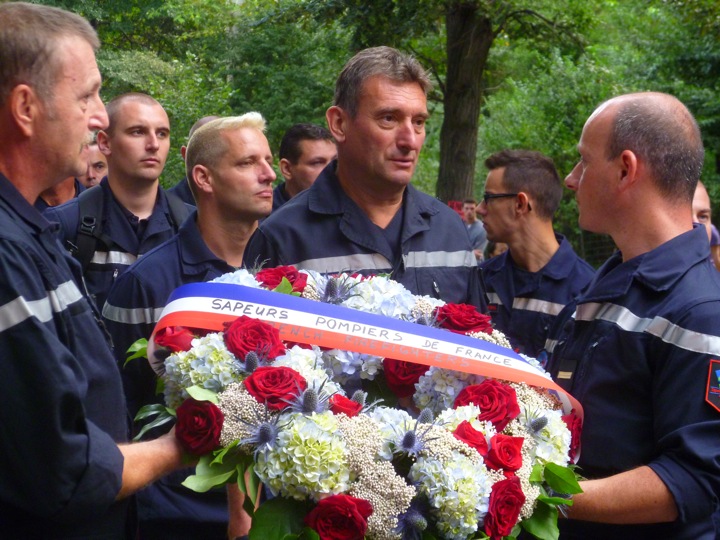
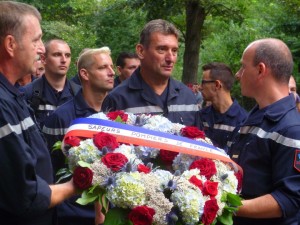
Each year on 9/11 our UWS neighborhood welcomes mourners, firefighters, police, and families to the Fireman’s Memorial on Riverside Drive at 100th Street. Last year, on the tenth anniversary, the day’s observances drew firefighter crews from all over the U.S., anglophone and francophone Canada, Scotland, France, and Australia. I’ll conclude this personal remembrance of September 11, 2001, and its aftermath by sharing nine of the photographs Kyle and I took at the special day last year. I will close by saying I hope your 9/11 anniversary this year, 2012, has been a soothing day. Shalom.
Please click through to read entire post and see all photos . . . //more//

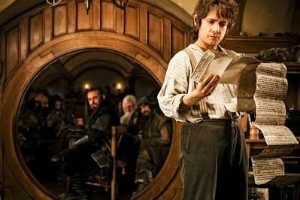 Some readers of this blog may recall that I happen to share a birthday with J.R.R. Tolkien’s hobbit protagonists Bilbo and Frodo Baggins, having written about that literary link in a piece on this site labeled Personal History. Since my teens I’ve been a fan of Tolkien’s work and then enjoyed Peter Jackson’s “Lord of the Rings” film trilogy. My wife and son and I already have tickets to see “The Hobbit: An Unexpected Journey” when it opens late next week. I’ve seen a trailer or two for the film but have steered clear of reading much about it, not wanting to have the element of surprise hijacked by reading details I don’t need to know yet. Still, I crossed paths today with a very encouraging Hobbit teaser on Nerdist.com, the website of Chris Hardwick, ebullient host of “The Talking Dead” fan show that is boradcast on AMC TV after the zombie-apocalypse program “The Walking Dead.”