
Tag Archive for: New York Times

Taste of Persia, Flavorful New Restaurant Near Union Square

A few weeks ago I read a restaurant review of A Taste of Persia, a new eating spot near Union Square in Manhattan. The review was by Ligaya Mishan, who writes a NY Times column called Hungry City. The piece was delightful, with paragraphs like this:

“For two decades, Mr. [Saeed] Pourkay, a Tehrani émigré, ran a print shop across the street from the pizzeria. After cashing out his share in the business a few years ago (to go “searching for my happiness,” he said), he started selling ash reshteh, a wondrous, wintry, outrageously thick Persian soup, at the Union Square Holiday Market. Fans clamored. Happiness was found. This past March, he returned to 18th Street and set up under his former neighbor’s roof. Here, in an imposing vat, is the justly fabled ash reshteh, a result of the eight-hour communion of five kinds of beans, a riot of herbs and onion cooked down to a sweet density. Dark and luxuriant, it has no broth and only a trace of oil. Broken strands of linguine snake through it. Fenugreek lurks, faint but insistently bittersweet, underscoring cinnamon, cardamom and ginger. But it is the garnishes that turn it into poetry: caramelized, verging-on-burned garlic; dried mint flicked in a pan; crispy fried onion; and a swirl of kashk, a Persian whey more sour than yogurt, with a bite like feta.”

This was a chef whose food I really wanted to taste.

Last Sunday, which happened to be my birthday, Kyle and I headed out to the Brooklyn Book Festival. We had a great time at this event which for us has replaced BEA as the most enjoyable book event on our literary calendar. I’ll post some pictures from the fair later, and meantime here’s just one of the shots that Kyle took.Reader

After nearly 3 hours in Brooklyn, enjoying the crisp autumn air, blue skies, bright sunshine, and many serendipitous encounters with friendly bookpeople, we took the subway back in to Manhattan and walked over to 18th Street for our first meal at A Taste of Persia.

Not as spicy as some overly familiar Indian fare, the dishes we tried were distinctive and different from any similar food we’ve encountered in the city. The tastes and textures left no doubt that the dishes had simmered for hours. There was a smoothness and total mingling of flavors that only comes from slow and patient cooking. We met Chef Pourkay, as genial and hospitable as any maitre’d you’ll ever be greeted by in a four-star hotel dining room. He exudes genuine warmth and takes great pride in serving this food. Even after we’d finished our angus beef stew with celery and a chick pea dish cooked with tomato and cilantro, he offered us a gratis take-away sample of a lamb stew he’d just finished preparing.

We met two other diners, one of whom said he works in the fashion industry. These Iranian New Yorkers were breaking up pieces of a soft flatbread and dunking them in a savory soup. Chatting with them while Chef Pourkay readied our take-away, I told them that I enjoy listening to Iranian-Canadian Jian Ghomeshi, host of CBC Radio’s daily culture and current affairs program “Q”, which is carried in New York City on WNYC FM weeknights at 10 PM. I told them and Chef Pourkay that I will urge Jian to visit A Taste of Persia the next time he comes to NY for a live taping of “Q.” I’m sure he’ll love the food. Below are photos Kyle and I took during our visit to the restaurant. What a great way to spend my birthday!

How is the NFL like Big Tobacco?


I find the NFL’s conduct in this matter more and more like that of the Big Tobacco executives who in the 1990s lied to Congress and denied there had long been knowledge within their companies that nicotine in cigarettes was addictive. Among several issues that league execs should answer for is whether they have for many years known that injured players risked longterm disability and shortened life expectancy from competing too soon after having suffered concussions. I find their behavior obnoxious but unsurprising. But for ESPN, I have I think even more scorn. They’re happy to be thought of as an influential media player, committing journalism and keeping an eye on organized sports’ tendency toward corruption and malpractice when it serves their reputation-building purposes, but then they readily revert to being a commercial player, with Disney corporatism holding the whip hand once the league turns on the heat full blast.

Maybe the lesson is we should not show trust for the journalism put out by ESPN. A pity, because I know there are many capable reporters and correspondents working for the network, including the brother reporting team of Mark Fainaru-Wada and Steve Fainaru, authors of the forthcoming  League of Denial: The NFL, Concussions and the Battle for Truth, the book accompanying “League of Denial: The NFL’s Concussion Crisis,” the PBS Frontline documentary that the NY Times article suggests Disney forced ESPN to back out of sharing in ownership of and credit for, even after the network and the authors had spent months working on it alongside producers at Frontline.

Below is the trailer for the program that according to the Times became a major point of contention at the recent midtown Manhattan lunch meeting between NFL and ESPN execs. The book, with nearly the same title as the program, will go on sale a few days before it is first broadcast. Another item of interest is the online statement Frontline producers put out, regretting ESPN’s decision and promising their viewers “The two-hour documentary and accompanying digital reporting will honor FRONTLINE’s rigorous standards of fairness, accuracy, transparency and depth.”

Watch “League of Denial: The NFL’s Concussion Crisis” preview on PBS. See more from FRONTLINE.

Still More to Learn about Corporations’ Complicity with the Third Reich

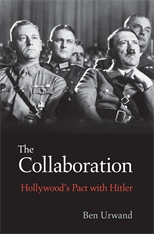
July 3 Update: Owing to the NY Times article I cited on first publication of this post, Publishers Weekly reports today that Harvard University Press has moved up by two weeks the release date of The Collaboration: Hollywood’s Pact with Hitler. I’m pleased to see so much early momentum gathering for this important book.

In 2000, while an editor at Crown Publishing, I acquired a book that later became an international sensation and a bestseller in the US. It was IBM and the Holocaust: The Strategic Alliance Between Nazi Germany and America’s Most Powerful Corporation by Edwin Black. I believed it was imperative that the book be published because it documented hitherto unknown revelations such as the fact that IBM’s punch card tabulation system was licensed to the Third Reich which then used the technology to catalog and keep track of Jews and others under its rule they deemed undesirables. Turned out that corporate complicity with Hitler was as American as cherry pie.IBM

In the years since Black’s book was published, I’ve seen a lot of other histories of the Third Reich, but few have struck me as packing the same historical punch as the book on IBM. Until today, that is. Reading the NY Times on the web, I saw this headline, “Scholar Asserts That Hollywood Avidly Aided Nazis,” tipping an article about a forthcoming book,  The Collaboration: Hollywood’s Pact with Hitler, by Ben Urwand, a 35-year old historian from Australia. The story by Jennifer Schuessler reports Urwand has found copious documentation showing how very willing Hollywood executives were to make their movies in ways that would please Nazi officials, including Hitler himself. Some of these execs were Jewish, but they cooperated anyway. The Times reports that in Urwand’s book,

9780674724747“On page after page, he shows studio bosses, many of them Jewish immigrants, cutting films scene by scene to suit Nazi officials; producing material that could be seamlessly repurposed in Nazi propaganda films; and, according to one document, helping to finance the manufacture of German armaments.”

Urwand also found that Jack Warner, of Warner Bros., personally ordered that the word ‘Jew’ be removed from all dialogue in the 1937 film ‘The Life of Emile Zola,’ which focused on Zola’s defense of the persecuted Jewish soldier, Alfred Dreyfus. Mr. Urwand writes that Warner Bros. was the first studio to invite Nazi officials to its Los Angeles headquarters to screen films and suggest cuts. . . . ‘There’s a whole myth that Warner Brothers were crusaders against fascism,’ Mr. Urwand said. ‘But they were the first to try to appease the Nazis in 1933.’”

The cooperation, or as the author insists, collaboration, continued until well after Kristallnacht in November 1938. He found evidence that in December 1938, MGM was financing German armament production as part of a deal to circumvent restrictions on repatriating movie profits, according to the Times, which adds, “Urwand said that he found nearly 20 films intended for American audiences that German officials significantly altered or squelched. Perhaps more important, he added, Jewish characters were all but eliminated from Hollywood movies.”

I’m eager to read Urwand’s book when it comes out in October from Harvard University Press, and in the meantime I recommend you read Schuessler’s story. There’s also been early coverage of Urwand’s book in Tablet magazine in an article by David Mikics. And here’s video of Urwand talking about his book:

A Deranged Shooter, a Blues-loving Author, and Reflections on Aesop–3 Great Reads in Sunday’s NY Times

After reading three terrific and interesting pieces in the NY Times this morning, I tweeted about them and so as night falls now want to share them here too. I’ll add a bit more about each story below the original tweets.


The ballplayer Waitkus was a member of the 1948 Philadelphia Phillies; he recovered, though spent several months in a wheelchair after the deranged shooter wounded him. Steinhagen had never met him till that day, and had become weirdly fixated on him. She was institutionalized for some years afterward, but never went to prison, and was then released. She outlived all her relatives, and just died in Chicago last December. The Times obit by Bruce Weber explains her death would have gone unreported had not it been discovered in the course of unrelated reporting. Weber suggests that Bernard Malamud was aware of the incident when he published his novel The Natural in 1952, in which protagonist Roy Hobbs (Robert Redford in the 1984 movie) is shot by a female fan.


Hamid, author of the new novel How to Get Filthy Rich in Rising Asia, is very worldly, and his responses in the Times’ weekly feature, ‘Download’ about what he’s currently reading, listening to, following, watching, and appreciating, are very interesting, with good recommendations. I had not heard of online cultural aggregator 3quarksdaily, and it looks cool. I was delighted to see he’s a big fan of the blues and had not thought about denizens of river cities being especially susceptible to the charms of the American music.


Hoagland’s essay is not only important, in a planetary sense, it also has some of the most surprising and interesting linguistic invention and wordplay I’ve encountered in a long time. There’s a lightness to the way it’s written that reminded me of E.B. White. Hoagland lives in Vermont’s Northeast Kingdom, also home to writer Howard Frank Mosher, author of the great novel of the region, Disappearances, and while it’s not White’s Maine, Hoagland and Mosher are also writers steeped in a powerful sense of New England place.

A Tired Meme Rears its Head at the NY Times–Obama as Too Cool to Care

Count on the NY Times to be dickish the day before President Obama’s 2nd Inaugural. The article leading off today’s Week in Review is a familiar litany of complaint from someone–David Rothkopf is who, please?–poking darts this time at Barack Obama’s management style. I read the whole column and found nothing about it persuasive as a critique. The presidency isn’t a business, and management isn’t necessarily the only goal, or holy grail, of leadership.

The opinion expressed in the column is unsurprising, even overly familiar but I have an even bigger beef with the illustration accompanying it. The artist, Mark Ulriksen–perhaps at the suggestion of Times op-art editors, or at least with their final approval–has created an aloof Obama in baseball uni with a bunch of dropped balls all around him, as one floats in the air above his hand. It seems to say, “Will he drop this one, too? Meanwhile, the caricatured president has his nose stuck up in the air striking an arrogant pose. I instantly found it offensive, perpetuating a meme of the president as unfeeling, uncaring, even a bit lazy, as if he can’t be bothered to catch the balls tossed his way. I’m sick of these portrayals of the president. Would anyone unfeeling have gone so gray in four years and often appear so careworn, even while his smile does still break out like a sunbeam, as in the official White House photo unveiled last week?Barack Obama portrait

I want to add that I’m not the only blogger to find this column odd, at the least. At TPM, Josh Marshall has asked people to read it and send him their thoughts on it. I’ll send my take to Josh.

There are times when I hate the NY Times, among other things for its smugness, its know-it-all air, and its attempts at coining the establishment line and minting conventional wisdom. This is one of those times. They’re the arrogant party here, not the president. Here’s a screenshot of the column as presented online, and the drawing on its own. Please let me know what you think, especially if you see it differently than me, or agree, and see aspects of the unfortunate meme that I’ve overlooked. For instance, maybe the subtext of the drawing is even more overtly racial than I suggested above. Could be. Obama drawing onlyObama column&drawing

Chuck Hagel is Kryptonite to Shamed Neocons


The debate over President Obama’s nomination of Chuck Hagel as Secretary of Defense is prompting unpleasant reminders of the worst of the Reagan and Bush years, with discredited right-wingers attacking Hagel over matters they were catastrophically wrong about only a decade ago. Steve Benen, of the MaddowBlog, read the same James Rutenberg article in the NY Times that I had tweeted about above. He ends his post with this observation:

“Or put another way, the decorated combat veteran [Hagel] who’s reluctant to launch new invasions is being lectured on war-avoidance by the same ‘chicken hawks’ who left their credibility in Iraq–and most of the GOP doesn’t find this odd.
I’m reminded of an on-air conversation Rachel [Maddow] had with Chris Hayes last April about the neocons’ failures: ‘No one [on the right] has ever had to face up to what happened, this sort of magnitude of the error is just completely erased by history. It’s like those old Stalinist books where they just get rid of the people that were disappeared.’
At the time, Chris was talking about folks like Dan Senor taking a leading role in the Romney campaign, despite his role in ‘the worst period of American foreign policy in 100 years, quite plausibly.’ But the problem obviously continues.”

It’s easy to see why hopeless characters like Richard Perle, Elliott Abrams, and Bill Kristol are showing such an aversion to Chuck Hagel. He didn’t hesitate to call them out for their  specious arguments justifying the invasion of Iraq, and they can’t get over it. Oh, well, the bigger the pig poked the louder it squeals.