Tag Archive for: Edward Robb Ellis

Romare Bearden and Albert Murray Enjoying a Harlem Afternoon

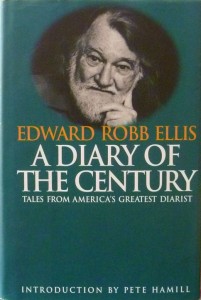
The important African-American artist Romare Bearden was at one time good friends with my late author, Edward Robb Ellis, author of A Diary of the Century: Tales from American’s Greatest Diarist (1995). Ellis wrote at length about their friendship in that book, which reflected on Bearden’s upbringing in Pittsburgh, and the life he lived that led to his distinctive style of collage-making and painting. In the years since I worked  with Eddie, whenever I read about Bearden, I feel I almost know him, from Eddie’s fulsome recollections. When the writer and critic Albert Murray died last August, he was eulogized in many venues, most memorably for me by Paul Devlin in Slate, where I was delighted to be reminded that Bearden and Murray had also been very close, as friends, and indeed as frequent collaborators (when Bearden needed something written, Murray often wrote it). Typifying their relationship is the revealing video I tweeted out earlier tonight, and which I’m eager to share here, too.

Remembering Edward Robb Ellis, Feb. 22, 1911-Labor Day, 1998

[Editor’s Note, Feb. 22, 2013: The post below is a revised version of a piece I published on Feb. 22, 2012, the last anniversary of Edward Robb Ellis’s birthday.]

Book business friends who’ve known me for some years may recall that I’ve been extremely fortunate in working with remarkable authors of advanced age. There’s the distinguished photojournalist Ruth Gruber, who turned 102 on her last birthday, with whom I’ve had the privilege of publishing six books over the past decade and a half, including Virginia Woolf: The Will to Create as a Woman–a republication of Ruth’s 1931 seminal thesis on Woolf, the first feminist reading of the author, written before she’d become an international icon–and Exodus 1947: The Ship that Launched a Nation and Ahead of Time: My Early Years as a Foreign Correspondent. Ruth’s still going strong, with a bio-documentary out on her, also called “Ahead of Time.”

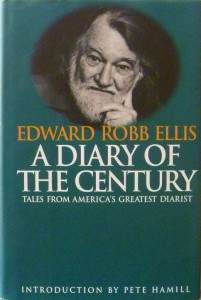
Another author I began working with who was then in their eighties was Edward Robb Ellis, who like Ruth Gruber, was born in 1911. In 1985, Ellis was recognized by the Guinness Book of World Records as the most prolific diarist in the history of American letters. By the time I met Eddie in the early 90s he had already published tremendously readable narrative histories, A Nation in Torment: The Great American Depression, 1929-39; Echoes of Distant Thunder: Life in the United States, 1914-1918; and one his adopted hometown, The Epic of New York City**. In 1995 I published his magnum opus, A Diary of the Century: Tales from American’s Greatest Diarist, with an Introduction by Pete Hamill, based on the diary Eddie began keeping in 1927 at age sixteen, which he kept faithfully until the year of his death seventy-one years later. This is part of the flap copy I wrote for a 2008 reissue of the book:

Press credentials granted the eagle-eyed Ellis a front-row seat to many major events of the twentieth century, and he captures them with candor and verve, in a vivid pictorial style–whether covering politicians like Huey Long, move stars and performers such as Grace Kelly and Paul Robeson, or history-making news events, including the creation of of the United Nations. He recounts his encounter with the legendarily witty Mae West–whose press agent turns out to be feeding lines to her. He chronicles a new Orleans jazz joint where he interviews a talented young trumpeter named Louis Armstrong. He writes of taking long strolls with Harry Truman, and of observing Senator Joseph McCarthy for the first time (“His mouth is thin and long, like a knife-gash in a melon.”).
Born in Kewanee, Illinois (“Hog Capitol of the World”), Ellis moved to New York City in 1947, and lovingly documents the city’s cosmopolitanism and post-war ebullience. The sparkle in Ellis’s writing comes not solely from his meetings with the rich and famous, but from his attentiveness to, and enjoyment of, everyday life. In Ellis’s own words, this is “not a record of world deeds, mighty achievements, conquests” but “the drama of the unfolding life of one individual, day after day after day.”

When I published the book with Eddie on Labor Day in 1995, we scored a rare kind of hat trick, booking interviews on all three network morning shows. Matt Lauer interviewed him on the TODAY Show, Cokie Roberts on “Good Morning America,” and Harry Smith on CBS’s “Early Show.” It was clear that Eddie’s status as a reporter from journalism’s golden age–or at least what morning show hosts and producers believed had been a golden age–had endeared him to them. I have videos of those appearances, but unfortunately haven’t transferred them to the Web and they are not on youtube. Picture Eddie wearing a red neckerchief with a khaki safari jacket and looking very dashing on TV.

In the 2008 reissue of A Diary of the Century I included an Editor’s Note explaining that at even 200,000 words and more than 600 pages, the book had constituted less than 1% of the entire Ellis Diary. A reference book aficionado, Eddie was fond of saying that his whole diary clocked in at more than 20,000,000 words, or roughly half the length of the Encyclopedia Brittanica. My Note explained that in his later years Eddie arranged for the Ellis Diary to find

“a permanent home with the Fales Library of New York University. Indeed, even before the last day of his life–which arrived on Labor Day 1998, so fitting for a man who always called himself a ‘working stiff’–more than five dozen oversize bound volumes, were hauled from his Chelsea apartment to the Greenwich Village campus of NYU. . . . It was my privilege to read into those bound volumes of the Ellis Diary, and I promise the reader that I found no dross there. With this revival, on behalf of Eddie’s literary executor Peter Skinner and literary representative Rita Rosenkranz, I take this opportunity to state that it is our intention to revive interest in A Diary of the Century, and then go on to create new books drawn from the Ellis Diary.”

With the possibilities afforded by the Internet clearer than ever, the above goal remains high among my personal priorities. Though Eddie was suspicious of new technology, and the World Wide Web was still new when he died, A Diary of the Century, with every entry  bearing the date he wrote it, will lend itself beautifully to blogging someday; in fact, it’d be fair to say that Eddie was a kind of proto-blogger before the term was known. In addition to this recollection of Eddie, I have posted a selection of readings from his diary, and here’s a link to a recent story I wrote about Eddie’s work with Letts of London, the diary publisher who’ve been selling blank journals since 1796.

** After publishing A Diary of the Century in 1995 I also republished the three backlist books by Ellis named above. The Epic of New York City has had more than ten printings since then.


Readings from “A Diary of the Century” by Edward Robb Ellis

[Editor’s Note, Feb. 22, 2013: The post below is a revised version of a piece I published on Feb. 22, 2012, the last anniversary of Edward Robb Ellis’s birthday.]

Entries from A Diary of the Century by Edward Robb Ellis, about whom I blogged earlier today, on the occasion of what would have been his 102nd birthday, February 22.

Monday, October 5, 1931 This morning I got a letter from Mother saying that the First National Bank of Kewanee has closed. That’s the bank that has every cent I own. Mother also said that Grandpa Robb had all of his money there, and now Grandma is worried to death. Many of the people in Kewanee stood in front of the closed doors of the bank, weeping and cursing. One of Mother’s women friends ran up and down our street, bewailing the fact that her family has lost everything. . . . Here I am at age 20–absolutely penniless.

University of Missouri, Sunday, January 3, 1932 Today I saw my first bread line–200 starving men forming a gray line as they waited for food. The sight of them disturbed me.

Saturday, January 9. 1932 Nace Strickland is the best room mate one could have. Today he told me something that happened when he was a child. Raised in St. Louis, he didn’t know much about country life, so he was excited when two of his aunts took him for a drive on back roads. In one pasture he saw a bull mounting a cow, whereupon Nace exclaimed: “Hey, I didn’t know those things could milk themselves.”

Kewanee, Illinois, Saturday, June 11, 1932 Last night I dreamed I held my diary under a shower and was delighted when the words did not wash off. Does this mean I think my diary may make me “immortal?”

Monday, February 19, 1934 Some of my favorite songs: My Silent Love . . . Lullaby of the Leaves . . . I’ve Got the South in My Soul . . . Time on My Hands . . . Old Rockin’ Chair . . . Piccalo Pete . . . Harmonica Harry . . . I Kiss Your Hand, Madame . . . Somebody Loves Me . . . I Surrender, Dear . . . Body and Soul . . . All of Me . . . You’re My Everything . . . Mona Lisa . . . The Man I Love . . . What Wouldn’t I Do That for Man . . . Mood Indigo. / / more . . .

Excited with a New Assignment–Helping Protect the Freedom to Read

ABFFE logoI’m pleased to have a new consulting client, the American Booksellers Foundation for Free Expression (ABFFE), a non-profit organization that acts as the voice that independent booksellers and the book community raise in opposition to censorship and book banning. I’ll be working with them on fundraising and marketing, and over time, I hope their social networking. The funds ABFFE raises support programs promoting free expression, like their signature initiative, Banned Books Week. ABFFE also advocates for bookstore customer privacy. This has become a flashpoint several times over the past couple decades.

In the 1990s, Whitewater Special Prosecutor Kenneth Starr subpoenaed the bookstore purchase records of Monica Lewinsky. Kramer Books & Afterwords in Washington D.C., was the target of Starr’s efforts. At a Book Expo America during the 1990s I recall picking up a t-shirt emblazoned with the message “Subpoenaed for Bookselling” that I wore for several years afterward.  Then, after 9/11 the Bush administration, in enforcing the Patriot Act, demanded that Denver’s Tattered Cover bookstore and several public libraries hand over the purchase records and circulation history of some of their customers and patrons. ABFFE was in the trenches throughout these instances, helping booksellers and librarians resist the demands.

The first assignment I’m working on with ABFFE is the expansion of their affiliate program. Under this banner, companies that sell sidelines to bookstores, such as their  newest partner Filofax, contribute to ABFFE a percentage of the sales they make to American Booksellers Association (ABA) member bookstores. Sidelines from Filofax include journals,  and planners, as well as Lamy pens and pencils and diaries from Letts of London. Other affiliate partners supply bookstores with such items as reading glasses and bookmarks. I’ve drafted a press release announcing ABFFE’s new partnership with Filofax, which also mentions my new work with the foundation. The release, posted on the news portion of ABFFE’s website, is being circulated to book industry news outlets and bookstores around the country. I will be reaching out to sideline companies to recruit them for the program, and to booksellers, asking them who their best sideline suppliers are. If you’re interested in ABFFE’s work, I encourage you to follow them on Twitter where their handle is @freadom, or to like their Facebook page.

This is a particularly welcome assignment for me, having started out in the book business as a retail bookseller. Undercover Books, which I ran with my sibling and our parents, was an active member store in the ABA. My late brother Joel served as an ABA board member. We were activist booksellers, and Joel especially relished working on issues like those that ABFFE often confronts. In 2000 he ran for Congress as a Libertarian party candidate, placing reader privacy high on the list of issues he campaigned on. When Joel died in 2009, my sister Pamela and I made ABFFE one of the organizations that friends of the family and longtime Undercover customers were encouraged to donate to in his memory.

Happily, yet another personal connection pertains here. Readers of this blog may recall my longtime association with author and notable diarist Edward Robb Ellis (1911-98), who stands still as the writer remembered for having kept a diary longer than anyone else in American history, from 1927 until the year of his death. Between 1995-98, I edited and published four of Ellis’s books, including  A Diary of the Century: Tales From America’s Greatest Diarist, with an Introduction by Pete Hamill, and The Epic of New York City, both of which are still in print today.

Eddie, as all his friends called him, was a passionate advocate and ambassador of diary-keeping, so much so that after the Guinness Book of World Records recognized him and his diary in their 1981 edition for his achievement in American letters, the aforementioned Letts of London, in the business of making diaries since 1796, arranged with Eddie to publish “The Ellis Diary,” a handsome red leatherette bound, gold-ribbon bookmarked blank diary. You can imagine then how tickled I was when as part of this new assignment I scanned the catalogs and materials ABFFE director Chris Finan gave me to read up on Filofax’s business, happily discovering their association with the venerable Letts of London. Moreover, when I called and introduced myself to Filofax USA’s Paul Brusser, I learned that Letts of London is actually now Filofax’s parent company–it’s clear this long-living British company is still going strong. I wonder if anyone with Letts of London today remembers Eddie Ellis and “The Ellis Diary.” One of the nice things about this new gig is it may offer me the chance to find out! Below you’ll find some artifacts illustrating my work with Eddie Ellis, and his relationship with Letts of London. Click here to see photos.

#FridayReads, Nov. 23–“The Double Game” and “Gotham”

This week, more of a #FridayRe-Reads than a #FridayReads

#FridayReads, Nov. 23–The Double Game, Dan Fesperman’s brilliant riff on the spy novel genre, and Gotham: A History of New York City to 1898 by Edwin Burrows and Mike Wallace.  It may be the distractions of the holiday week–I’ve just been re-reading a couple of favorites. Last summer I blogged about Fesperman’s novel, and found it so irresistible I’ve picked it up again. The author ingeniously embeds plot points and clues in his story from books by giants of the genre–Le Carre, Ambler, Greene, Buchan, Childers, and others–actual volumes that are in the personal library of the novel’s narrator. It’s a true tour de force, and so good I find myself challenged to say something truly intelligent about it. It was published last August, and I’ve been a bit disappointed to see that it seems to have been published without the notice it deserves.

Gotham, published by Oxford University Press in 1999, is a rare book written by scholars in that it is as readable as any novel or potboiler. Although the narrative proceeds chronologically from the establishment of New Amsterdam through the incorporation of the five boroughs in to one great city, there are tremendous set pieces in it–on the electrification of the metropolis; the Draft Riots; the rise of a national publishing scene from Manhattan, and many others. A second volume, bringing the history of the city up to the present, is due to be published at some future point. Meantime, I relish this initial volume, so good on so many aspects of New York City history. Before publication it was praised by the late Edward Robb Ellis, about whom I blogged on the latest anniversary of his birthday. I published four books by Ellis, including his worthy predecessor to Gotham, The Epic of New York City. Eddie blurbed Burrows’ and Wallace’s book, saying, “Gotham is a masterpiece. It is the best history of New York ever written. It will be read a century from now.”

This week I’ve also read and savored writer Nick Paumgarten’s thorough examination of the Grateful Dead’s library of in-concert live recordings that’s running in the current New Yorker. I actually disagree with some of his dismissive conclusions about the Dead’s music, but am appreciative of the effort he went to in listening to these many hours of music, as well as visiting with the archivists and band members such as Phil Lesh.

Senator Sherrod Brown ♥s “Rust Belt Chic”

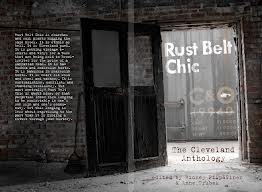
So glad to be one of the 35 contributors to Rust Belt Chic: A Cleveland Anthology, with my essay, “Remembering Mr. Stress, Live at the Euclid Tavern,” on a venerable bluesman I followed avidly for years when I lived in Cleveland. Among the writers in the book is Connie Schultz, the Pulitzer Prize-winning columnist who for many years worked at the Cleveland Plain Dealer. She has recently left the paper while her husband, Sherrod Brown, runs for re-election to the US Senate from the State of Ohio. Today, on the Rust Belt Chic Facebook page, I saw this, a note from Ms. Schultz:

“Sherrod didn’t get home until after midnight last night, but as soon as he saw my newly arrived stack of ‘Rust Belt Chic: The Cleveland Anthology,’ he had to pick up a book and take a look. ‘Wow,’ he said, over and over, as he recognized one writer’s name after another, read aloud some of the titles and marveled at the photos.”

Nice, huh?
—-

At the time of Rust Belt Chic’s publication earlier this month, I cross-posted my essay on Mr. Stress and wrote these paragraphs to introduce the book to readers. Allow me to quote myself:

As a sign of just how community-oriented the book really is, editors Trubek and Piiparinen asked all the contributors, in the event that the book sells well enough to make back its expenses and reaches into profitability, would we want an honorarium payment, or would we choose to plow our earnings into another indie project to be chosen first from among book ideas presented by us contributors, with one (or if we’re really fortunate, more than one) project being chosen for funding. I have a ready book idea–a new volume to be culled from the Guinness Book of World Records-recognized diary of Edward Robb Ellis, whose A Diary of the Century: Tales from America’s Greatest Diarist, I edited and published in 1995. I was happy to choose the second option offered.

With all that said, I’ll continue this preamble by saying I hope you buy the book as a print or a digital edition, or one of each, not because of charitable intentions (though that’s okay too) but because it offers more than fifty fine examples of narrative journalism, chronicling a distinctive part of the country that is too often overlooked on the literary and cultural map. I also urge you to follow the book’s Twitter feed, @rust-belt-chic. On my own Twitter feed, @philipsturner, I’ve started a hashtag, #MrStress. You may also ‘like’ the Rust Belt Chic Facebook page. Thank you in advance for supporting this exciting experiment in cultural urban renewal.
—-
Thanks for your support of Rust Belt Chic: A Cleveland Anthology, and I hope you enjoy reading my essay on Mr. Stress, cross-posted here on The Great Gray Bridge.