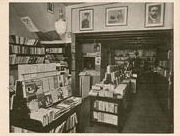
My formative experience in the book business was running the chain of independent bookstores, Undercover Books, which I founded with my siblings and our parents in Cleveland, Ohio. During my seven years with the stores I served as a personal bookseller to thousands of readers and customers. Following bookselling, I’ve worked in publishing almost forty years. Through it all, I remain a bookselling-oriented editor, passionately devoted to helping authors connect with readers.
I am an editorial advocate for writer and reader. I edit with the author perched on one shoulder, the reader on the other, fostering a virtual dialogue between the two and creating mutual benefit for each. I am a hands-on line editor, of both brief and lengthy texts, with a generous feel for what a writer is trying to convey, and an intuitive sense of how to help them communicate their ideas as efficiently and memorably as possible. I welcome queries from new and experienced authors, predominantly in nonfiction, and some fiction, with fees quoted upon receipt and consideration of material.
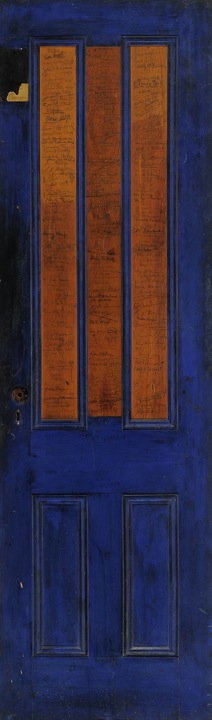
Literary, social and cultural history are all fascinatingly preserved in an old wooden door from a 1920s Greenwich Village bookstore. In Frank Shay’s Bookshop at 4 Christopher Street the proprietor was surprised one day in 1921 when writer Hedrik Willem Van Loon, an author with the publishing house of Boni & Liveright, signed his name to the door and for good measure added a little drawing to his contribution. Soon, Shay began routinely asking visiting writers and other cultural notables to sign the door. Ultimately, it would bear hundreds of signatures, including such figures of the day as John Dos Passos, Theodore Dreiser, Sinclair Lewis, Upton Sinclair, Sherwood Anderson, Heywood Broun, Christopher Morley, Edward Arlington Robinson, Frank Conroy, artist John Sloan, explorer Vilhalmur Stefansson, poet Don Marquis (creator of “The Adventures of Archy & Mehitabel”), and Henry Seidel Canby (editor, Saturday Review of Literature).
When the shop closed in 1925, the door was removed from the premises before the contents were auctioned to pay creditors. In subsequent decades its value as a cultural artifact became evident, with this advertisement appearing thirty-five years later: “Mrs. Frank Leon Smith has a door for sale. On the door are the autographs of about sixty people who in the early Twenties were important, famous, talented, unusual. Im [sic] telling you, this is a fabulous door….Want a door? Ask Mrs. Smith at 321 East 52nd Street, New York 22. —’Trade Winds’ in the Saturday Review, 1960”. Note that money would evidently not have been required to become custodian of the door.
Eventually, by steps unknown, the door reached the Ransom Center at the University of Texas in Austin, where it is housed today. Organizers there have created a terrific website devoted to it, to the shop, to Greenwich Village, and the period that produced it. Jennifer Scheussler’s New York Times Book Reviewarticle in September, with a neat slideshow, alerted me to the door’s colorful history and I’ve visited the Ransom website many times since. I love that Van Loon’s spontaneous signature became an inspiration for hundreds of contemporaries, all eager to scribble on a plank of wood, leaving a small imprint of their existence. It’s a veritable time capsule, or even better, a time machine taking us back to bookselling and publishing ninety odd years ago.
#fridayreads Finished ‘The Whore of Akron,’ @scottraab64’s gonzo fete of Cleveland sports history. This old Clevelander loved the fierce takedown of Lebron and Raab’s scalding humor.
Fascinating article about how early Americans regarded the sweeteners they craved in their diet. I had no idea that, as explained here, “The pure, white, crystallized product of sugar cane was still an expensive luxury, imported from plantations in the West Indies. Maple sugar offered an accessible and affordable substitute. These colonists, out on the […]
Heartened to see that New Hampshire’s North Country, where I went to Franconia College, has its own Occupy contingent, seen here in a moving video from Mother Jones, filmed in Littleton, near Bethlehem, Sugar Hill, Easton, and Franconia, where the college was located. Such moving statements here, especially by the man who laments the lack of educational opportunity in the region. He mentions Plymouth State as the nearest college, and it’s south of Franconia Notch, 40 miles over the mountains. Lyndonville State College in Vermont is almost as far.
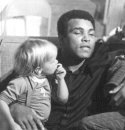
When Franconia College was still hangin’ on, before it folded in January ’78, we started a program called the FRED (Franconia External Degree). It awarded associates’ degrees to people for significant life and work experience–to folks who’d never til then had a shot at any higher education. To draw attention to the FRED, we conferred one on Muhammad Ali and invited him up to receive it. The cool thing was he accepted! We wanted to honor him because of the persecution he’d endured, being prosecuted for claiming conscientious objector status during the Vietnam War, losing his title, being condescended to by columnists like Dick Young in the New York Daily News. He came up to the College in October ’76 or ’77, as I remember it. Biggest thrill of my life to that point, along with meeting Neil Young in 1969, was meeting Ali that day. He’d driven up the night before from New Haven, where he resided then, came with 20-30 people on a bus he drove himself. There were women, other big men, and kids who hung off him like he was the Pied Piper. It felt very much like a large extended family. Shaking his hand was something else—like shaking hands with a pillow—his hand was so big and soft, it enveloped mine. He was very gentle and spoke in a sweet, high voice. As a student member of the college’s board of trustees, I gave a speech that day, and can still see Muhammad up on the riser with me and others. In my address I thanked him for coming all the way up from New Haven to join us. His visit made newspapers the next day, via this AP dispatch * that ran nationally.
Muhammad Ali with Erin, daughter of FC student B Elwin Sherman. (thanks to BES for use of both these pictures)
Erin climbed on Ali’s lap during the commencement.
Franconia College was an avowedly experimental institution as evidence by the role students like me could have as trustees. At this point in the late 70s, the Board had taken the step of aligning the College formally with the fledgling Elderhostel program, which happened to begin in southern New Hampshire. Like FRED, the association with Elderhostel was designed so older students of diverse backgrounds could have access to higher education and degrees, and to create the opportunity for students in their 20s to mix with those in their 50s, 60s, 70s, all being in classes and on campus together. This would have been a true union of the Sixties’ promise of experimental education coupled with lunch-bucket commonsense equal opportunity.
So College staff had written a grant application to the Carter administration’s Dept. of Aging in the old cabinet department of Health, Education, and Welfare (HEW) for funds to support the program; we’d received verbal assurance from agency staffers that they wanted to fund it. Alas, it was not to be. The Manchester Union-Leader, whose arch-conservative publisher William Loeb** had always despised the ‘hippie college in the White Mts.’, printed a false story about the grant. It landed during the long winter break at the beginning of 1978. The campus was empty as classes wouldn’t resume until late January, and I was back at my family home in Cleveland. In December, our enrollment, always so low as to imperil the College’s solvency, was even lower than usual, but we believed the infusion of new students in the coming spring term was going to insure the College’s future. However, the same newspaper that had torpedoed Edmund Muskie’s presidential candidacy in 1972, somehow learned about the program and falsely reported that our grant application was a ruse to fund a sham program, that the money would go right into our general fund. (We never did learn how the newspaper learned about our application, though somewhat wiser now in the ways of Washington, I suspect a Republican holdover from the Nixon or Ford administration who shared Loeb’s resentment of the College told a reporter about it.) The article painted a dark picture of a scheme that would divert money into the College’s general fund, with no noble program being mounted. The Carter administration backed away, the grant died, and the college never reopened for its next term.
Given Franconia College’s perennially parlous state, we might have folded later anyhow, though I’ve always thought the College would finally have reached stability. Seeing this video from Littleton, it saddens me to think how Franconia College could have really become an educational force in the North Country for residents of New Hampshire, and Vermont and Maine, whose border towns weren’t very far from Franconia. All this is a testament to why we need a movement like #OWS more than ever.
* The picture of Ali ran with the AP story linked to above. It reports that Dr Kenneth Clarke, an eminent sociologist of African-American life, also got an honorary degree that day. I learned at the time that Clarke had had a key role in swaying the US Supreme Court to make the Brown v. Board of Education ruling they did, integrating schools, in 1954.
** Loeb was a full-blown renegade, and also pretty careless about printing potentially libelous material. At this time in the late 70s he’d had so many lawsuits filed against him in the state of New Hampshire that he was compelled to live across the border in Massachusetts. If he crossed the state line, he’d invariably be served with liens and summonses to appear in court.
In what I judge to be an interesting assignment by editors at the Los Angeles Times, I read Marcia Adair’s article on the unifying effect that the CBC, Canada’s national broadcaster, has on the country’s civic identity. The story is partly pegged to the fact that “in a delicious twist, it seems that the broadest […]
Media read of the day: Ur-media blogger Jim Romenesko’s tick-tock of why and how he left poynter.org. Warning: Poynter is not wreathed in glory. Judging by how faithfully I used to read him in his longtime home, I bet I’ll be linking a lot to his new site.