
From Philip Turner Book Productions—Looking Back on 2020 and Ahead for 2021
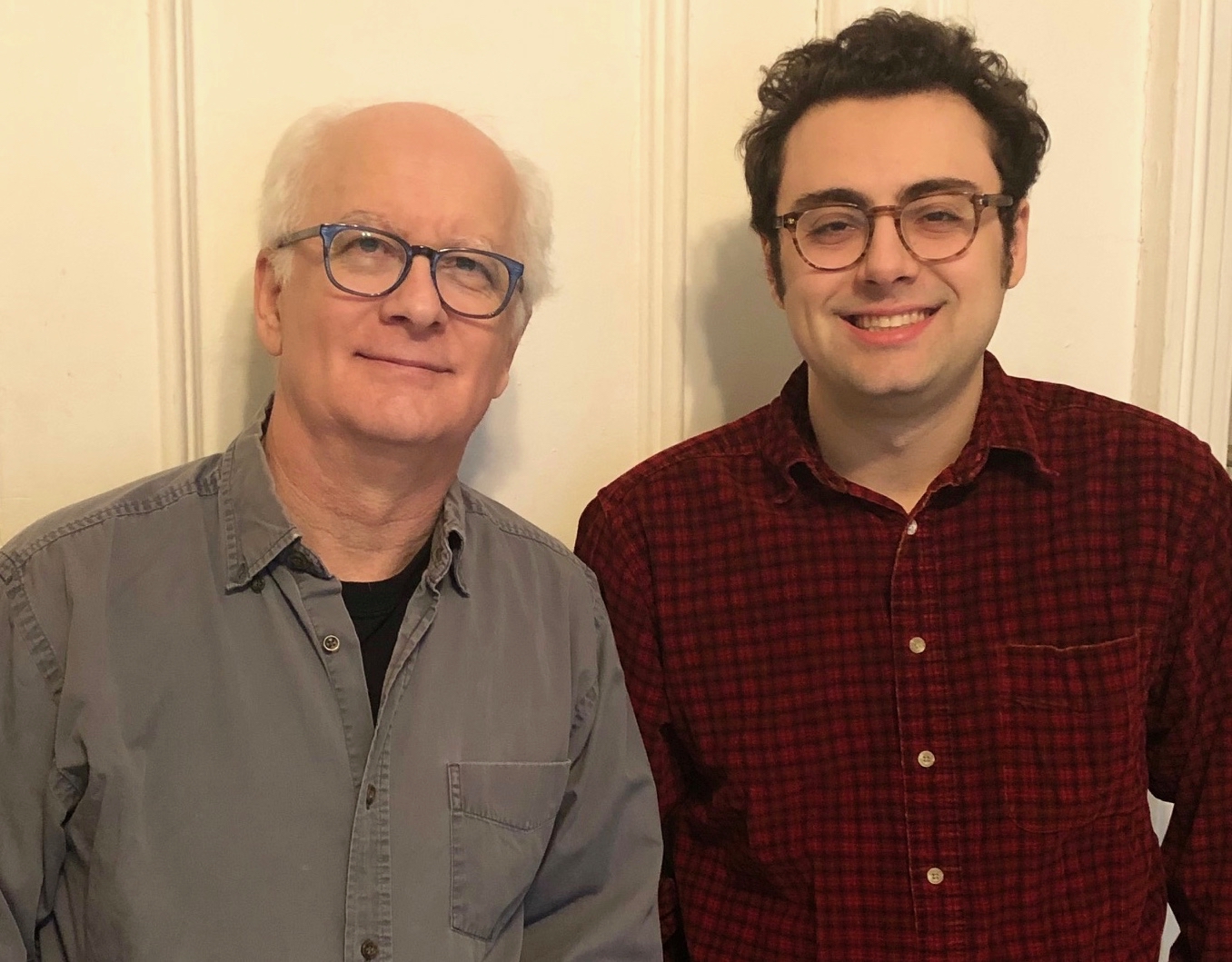
Readers of this blog may recall that last summer I announced here that my adult son Ewan Turner had joined Philip Turner Book Productions as Managing Editor, heading up a new division called New Stories, devoted to cultivating new work, including fiction, narrative nonfiction, and memoir. A BFA graduate of The New School, Ewan is a fiction writer himself, and earlier was the editor of KGB Bar Lit Mag and frequently led readings and open mics at that heralded literary venue. As an editorial assistant, he worked with such writers as playwright Mart Crowley; photojournalist Ruth Gruber; literary scholar Michael Patrick Hearn; and illustrator of the Eloise books, Hilary Knight. He’s also the author of Sotapanna, a poetry chapbook that was featured at KGB Bar and PhotoBookWorks Gallery, Beacon, New York.

Looking back on the year that ended last weekend, I see that in 2020 we:

  • Edited manuscripts and book proposals from seventeen different authors;
  • Sold six new books to publishers and four to audio companies, books that will be published this year and next.

Some of those sales have been noted on this site, such as:

  • Devouring Time: Jim Harrison, a Life , forthcoming by Todd Goddard, on the acclaimed fiction writer, master of the novella, gourmand, and fisherman;
  • Richard Tregaskis: Reporting Under Fire from Guadalcanal to Vietnam by Ray E. Boomhower, coming in 2021 on the author of Guadalcanal Diary, the first bestselling book to emerge from the Pacific theater in WWII;
  • Sparkling new translations of four of the novels in Alexandre Dumas’s timeless Musketeers Cycle by the polymathic Lawrence Ellsworth, game designer and founding member of the team that created Dungeons & Dragons;
  • Emily Mann: Rebel Artist of the American Theater, by Alexis Greene, longtime theater writer, examining the life and career of the prominent woman playwright who’s excelled in a theater world long ruled by a patriarchal structure.
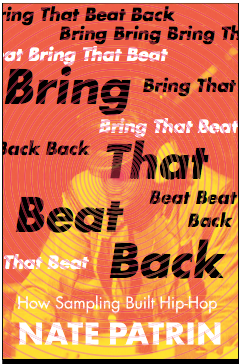
  • And Bring That Beat Back: How Sampling Built Hip-Hop by music writer Nate Patrin, published last May by University of Minnesota Press, and named to many best-of-2020 lists, which will be an audio book in 2021. 

Also in 2020, five books we had earlier sold to publishers were issued. These were:

The Twenty-Ninth Day: Surviving A Grizzly Attack in the Canadian Tundra by Alex Messenger (Blackstone Publishing, trade paperback edition 2020, following 2019 hardcover edition)
The Investigator: Justice and Demons of the Balkan Wars by Vladimir Dzuro (Potomac Books)
The Last Days of Sylvia Plath by Carl Rollyson (University Press of Mississippi, hardcover; Blackstone, audiobook)
Blood Royal: A Sequel to The Three Musketeers by Alexandre Dumas, translated by Lawrence Ellsworth (Pegasus Books)
Bring That Beat Back: How Sampling Built Hip-Hop by Nate Patrin (University of Minnesota Press, also named above)

This month marks my eleventh year as an independent editor and literary agent, and I am more energized than ever by the opportunities to work more closely with authors than I did during my latter years in corporate publishing. Even with the many challenges the book industry is facing, such as bookstores now open for only limited, distanced hours due to the lingering pandemic. I am optimistic about the book business, as readers are eager to have the companionship of books, and writers are driven to tell their singular stories.

We work on a wide range of material, with special affinity for imperative books that really matter in people’s lives. I’m always interested in first-person work from authors who’ve passed through some crucible of experience that leaves them uniquely equipped to write their book. If you have a project you’re developing, or a personal essay, and want to discuss your work, or a project you think may be ready to offer to publishers, please don’t hesitate to contact one or both of us.

Ewan can be reached at ewanmturner [@] gmail [.] com, while my contact info is philipsturner [@] gmail [.] com.
“Bring that Beat Back: How Sampling Built Hip-Hop”—Making the Best Books of 2020 Lists

Delighted to see that my author client Nate Patrin‘s hip-hop book Bring that Beat Back: How Sampling Built Hip-Hop (University of Minnesota Press, May 2020; Tantor Media audio book coming in 2021) has been named in several Best Books of 2020 roundups. These are:

1) One of Rolling Stone‘s Best Music Books of 2020: “Curious about the genesis of all of the earworm hooks you hear across every subgenre of hip-hop? Nate Patrin has the goods. Cleverly organized around four pioneering figures in the world of sampling — Grandmaster Flash, Prince Paul, Dr. Dre, and Madlib — this musicological study is never dry, always enthusiastic and appreciative, and groundbreaking in its analysis of the art of sampling as just that: art. Featuring plenty of entertaining cultural history, this is a significant contribution to hip-hop studies.”

2) In the UK, in NME (New Music Express): “Sampling is an enormous force in music – and the genre of hip-hop pioneered it. Digging deep into the record crates of early DJs and focusing on Kool Herc, Grandmaster Flash, Prince Paul, Dr Dre and Madlib in forensic depth, Nate Patrin delves into its pick’n’mix artistry, and also contextualises the spiralling popularity of sampling against a rush of nostalgia in the later 20th century, which arguably continues to influence the greats today.”

3) On the blog of music retailer Rough Trade: “A deeply informed, eminently readable account of a facet of pop music as complex as it is commonly underestimated.”

4) The book is longlisted for the Minnesota Book Award, named by the St. Paul Public Library.

5) One of Kirkus Reviews’ Best Music Books of the Year: “No one wants a dry hip-hop book, and Patrin’s work is thoroughly engaging from first needle drop to last.”

6) And here’s a podcast with Nate on Maximum Fun with music host Oliver Wang.

Since May, the book has also been covered in Arts Fuse, Scratched Vinyl, Reverb, We Are the Mutants, and numerous other outlets.

John Le Carré RIP + How the Cold War Began

Dec 24, 2020—After putting up the post below in tribute to John Le Carré, I began reading his first novel Call for the Dead, which I had photographed copies of for the post. Right away, on page 7, I was sorta stunned to find a reference to a key historical episode, often overlooked or forgotten nowadays, that had been documented in a book I acquired and published fifteen years ago. The narrator of Le Carré’s compact, 128-page Cold War thriller explains why protagonist George Smiley, a British intelligence officer from just after the end of WWI to 1943, emerged from retirement just as WWII was ending. The reason was “The revelations of a young Russian cypher-clerk in Ottawa [which] had created a new demand for men of Smiley’s experience.” That cypher-clerk was Soviet defector Igor Gouzenko, whose defection author Amy Knight wrote about in her 2005 book, How the Cold War Began: The Igor Gouzenko Affair and the Hunt for Soviet Spies. Her nonfiction book tells an amazing story of how Gouzenko, with his wife and children in tow, left Soviet quarters intending to defect, but  struggled to find an embassy that would give him asylum. He was the first defector of the Cold War, and it was still in 1945! He became something of a media sensation in Canada, and would later appear in media there with a hood over his face to disguise his identity, as seen on he cover of the edition we brought out.

Amy Knight has since become a client of my literary agency; I sold her book Orders to Kill: The Putin Regime and Political Murder to St Martin’s in 2017, and we will be working to sell another Russia-related book by her in 2021.

Original post below from Dec 15:
—–
In honor of the late spymaster John Le Carré, who passed this week at age 89, I was happy to take these handsome copies off a bookshelf in my library. Call for the Dead is a particularly fine copy, a first US edition of his first novel that I found in a Maine antique store in the 1990s, published here by Walker & Company in 1961. By happenstance I was an editor at Walker in 1987, where I had the mantle of publishing espionage fiction, which is when I learned that Walker was Le Carre’s first US publisher, later bringing out The Spy Who Came in from the Cold.

The copy of Tinker, Tailor, Soldier, Spy pictured here published in 1974 by Knopf,  is also a first edition, and the copy of the book that my late brother Joel and I read of the book.

In 2004, a book business friend George Gibson, then publisher at Walker, now with Grove Atlantic, harked back to Walker’s early days by reissuing Call for the Dead with a Foreword by P.D. James, and The Spy Who Came in from the Cold with Joseph Kanon providing the Foreword.


#espionage #books #spies

Sold: Pedro Mendes’s “Ten Garments Every Man Should Own: A Practical Guide to Building a Permanent Wardrobe”

Delighted to report another sale I’ve made to a publisher from the literary agency side of my business, Philip Turner Book Productions. The sale is to Canadian publisher Dundurn Press for a useful nonfiction book titled  TEN GARMENTS EVERY MAN SHOULD OWN: A Practical Guide to Building a Permanent Wardrobe. The book, by my author client Pedro Mendes, is described in a Deal Memo I placed in Publishersmarketplace.com on Monday:

Men’s style journalist, editor of Toronto’s The Hogtown Rake menswear blog, and veteran CBC Radio producer Pedro Mendes’s TEN GARMENTS EVERY MAN SHOULD OWN: A PRACTICAL GUIDE TO BUILDING A PERMANENT WARDROBE, an illustrated guide to dressing well by building a classic wardrobe, an approach to identifying sustainable apparel that aligns with 21st-century environmental values, to Scott Fraser at Dundurn Press, in a nice deal, in a pre-empt, for publication in fall 2020, by Philip Turner at Philip Turner Book Productions (Canada).
philipsturner@gmail.com

For more background on the book, the author, and Canadian creatives I count among my friends please visit my other blog, Honourary Canadian. While we now have a Canadian publisher, I am still working to place the book rights in the States, so please reach out if you know of a US publisher who may be interested in the book.


An Award from the Peace Corps for Amb Vicki Huddleston’s “Our Woman in Havana”

As I learned when I edited Tales of a Muzungu, a memoir by former US Peace Corp worker Nicholas Duncan (Uganda, 2010-12), there’s a tight community of Peace Corps veterans who support each other’s work and cheer their colleagues’ career achievements. The latest example of this relates to a book I developed with Ambassador Vicki Huddleston, which I also represent as literary agent, Our Woman in Havana: A Diplomat’s Chronicle of America’s Long Struggle with Castro’s Cuba. Huddleston launched her foreign service career when she was a Peace Corps volunteer in Peru from 1964-66. Her book has been awarded the Special Peace Corps Writers Award for 2019, with the citation below. Her book, and her whole career, has been a testament to the foreign service. I’m proud of her for winning this award from her peers, and pleased to congratulate her here on my blog. If you want to read a great book about Cuba and the history of US policy toward the island nation, I heartily recommend her imperative book. You may also visit the author’s website.

https://peacecorpsworldwide.org/vicki-huddleston-wins-special-peace-corps-writers-award-for-rpcvs-2019-peru/

Our Woman in Havana: A Diplomat’s Chronicle of America’s Long Struggle with Castro’s Cuba
By Vicki Huddleston (Peru 1964-66)

Ambassador Vicki Huddleston (Peru 1964-66) served under Presidents Clinton and George W. Bush as Chief of the U.S. Interests Section in Havana. She also served as U.S. Ambassador to Madagascar and Mali. Her report for the Brookings Institution about normalizing relations with Cuba was adapted for President Obama’s diplomatic opening with Raúl Castro in 2014. She has written opinion pieces in the New York Times, Miami Herald, and Washington Post. She lives in Santa Fe, New Mexico.

Our Woman in Havana chronicles the past several decades of US-Cuba relations from the bird’s-eye view of State Department veteran and longtime Cuba hand Vicki Huddleston, our top diplomat in Havana under Presidents Clinton and George W. Bush. After the US embassy in Havana was closed in 1961, relations between the two countries broke off. A thaw came in 1977, with the opening of a de facto embassy in Havana, the US Interests Section, where Huddleston would later serve. In her compelling memoir of a diplomat at work, she tells gripping stories of face-to-face encounters with Fidel Castro and the initiatives she undertook, like the transistor radios she furnished to ordinary Cubans. With inside accounts of many dramatic episodes, like the tumultuous Elián González custody battle, Huddleston also evokes the charm of the island country, and her warm affection for the Cuban people. Uniquely qualified to explain the inner workings of US-Cuba relations, Huddleston examines the Obama administration’s diplomatic opening of 2014, the mysterious “sonic” brain and hearing injuries suffered by US and Canadian diplomats who were serving in Havana, and the rescinding of the diplomatic opening under the Trump administration. Huddleston recounts missed opportunities for détente, and the myths, misconceptions, and lies that have long pervaded US-Cuba relations. With Raúl Castro scheduled to step down in 2018, she also peers into the future, when for the first time in more than six decades no one named Castro will be Cuba’s leader. Our Woman in Havana is essential reading for everyone interested in Cuba, including the thousands of Americans visiting the island every year, observers who study the stormy relationship with our near neighbor, and policymakers navigating the nuances and challenges of the US-Cuba relationship.