NYC Sandhog Trapped in Quicksand Rescued from Treacherous 2nd Avenue Subway Tunnel

MTA photoFirefighters and emergency workers went to extraordinary lengths to rescue the construction worker I tweeted about earlier, mired as he was in a veritable pool of quicksand 100 feet under Second Avenue and 95th Street in Manhattan. In addition to the NY Times article by reporters Matt Flegenheimer and Marc Santora, the latter also appears in a video at the Times site discussing the incident, and there’s a graphic (below) that shows the unusual configuration below ground that led to the peril for the worker. From the article:

[Joseph Barone] became trapped midway between two entrance points used by construction workers, a distance of about 150 feet.
The situation was complicated by the fact that Mr. Barone was pinned at an awkward angle beneath plywood that had sunk into the mud with him. While some stretches of tunnel south of 96th Street have been poured over with concrete, according to the authority, the area where the worker lost his footing remains muck-filled.
Above him were two heavy bars used to brace the walls of the tunnel.
“The first units who got there were concerned about him slipping down more, so they got him roped up,” Chief Hayde said.
With the ropes slung over the struts, initial attempts to simply pull Mr. Barone out of the muck failed.
“There was a tremendous amount of suction pulling him down,” Chief Hayde said. . . .
Rescue workers considered using a cofferdam—essentially a plywood box, which would be constructed around Mr. Barone—but decided that in order to do so, they would have to detach him from the ropes, which they feared could result in his sinking entirely.
So firefighters also dug by hand, trying to scoop out two handfuls of muck for each one that seeped back in.
All the while, Lieutenant Goyenechea tried to keep Mr. Barone talking. He asked about his family, his favorite sports team and how he had come to be stuck.
Mr. Barone said he had simply lost his footing, and once his leg was trapped, there was little he could do.
The Rev. Stephen Harding, a chaplain with the Fire Department, said he was summoned to the scene to provide support to the emergency workers. But after spending over three hours above ground, he said, he asked to be escorted into the tunnel.
There were scores of emergency personnel, he said, covered in grime as they struggled to free Mr. Barone in the dim light. Mr. Harding approached, carefully, and extended his hand to grasp Mr. Barone’s. He could barely make out the worker’s face, which was caked in mud, he said. But a voice emerged.
“He said, ‘I’m hanging in,’ ” Mr. Harding recalled. “And I just held his hand.”

Subway graphic

Joel Plaskett–A True Troubador–Unplugged & Loving It

Plaskett 2On one of the snowiest nights of the winter, I took in one of the year’s best rock shows. It was a mostly acoustic set by Joel Plaskett, who began rocking out as a teenager twenty years ago in Halifax, Nova Scotia. Eight albums later, under such band names as Thrush Hermit and the Joel Plaskett Emergency, plus a near-score of notable albums he’s produced for other artists, Plaskett is a highly developed songwriter who flashes great rhyming instincts and an instantly likable and charismatic performing style. Following a great warm-up set by young band, The Great American Novel, a denim-clad, lanky Plasket stepped on stage in the Studio at Webster Hall by himself, playing a bright-sounding Gibson four-string tenor guitar. This weathered instrument, which to my ear shared tones and sonic qualities with  hammered dulcimer and autoharp, jibed beautifully with Plaskett’s bright pop melodies and voice, resting as it does somewhere in the upper register. After a bit, he was joined on stage by Peter Elkas, who played a Gibson acoustic fitted out with de luxe pickups patched in to a Fender amp with plenty of fuzz and reverb, providing a sonic counterweight to Plaskett’s treble tones. Peter is a hot lead guitar player, so though this performance had no full band, it had more than full enjoyment of chops, and a real rock feel. The duo worked comfortably through a full sampling of Plaskett material, “Through & Through & Through,” “Let Me Down Easy,” “North Star” (my personal fave of the whole evening), “Love this Town,” and “Deny, Deny, Deny.” At one point during these offerings Plaskett invited to the stage female artist Ana Egge, whom I had heard sing back-up with Rose Cousins last year. Now a trio, the harmonies became more enveloping and the tunes even sweeter.

Plaskett had an easy familiarity with the boisterous Monday night crowd, bantering back at folks after their many song requests. This was an audience that knew much of his repertoire. He was funny about it, and diplomatic, as he’d say something like, “Now that’s a very interesting request, and maybe I’ll play it later, but right now I had this one in mind.”  He explained how he comes to play a 4-string tenor guitar this way (lightly paraphrased): “One time in a store I saw this tenor guitar, first one I ever saw, but I didn’t have the money to buy it (150 bucks). So I said to my dad, ‘Hey, Dad, there’s this really nice guitar downtown.’ So he bought it and I got to play it.” After what by my count was the 16th song of this generous set, the musicians all left the stage, though a round of lusty clapping soon brought Joel back to the mic for what became a quite funny interlude before his encore. He took an IPhone out of his Cowichan vest and proceeded to sample some of his music library for us through the house sound system, with him miming the romantic vocal stylings of R&B artist Bobby Womack. Then, he played a version of his own “Fashionable People,” which has been widely seen because of a video he made of him dancing with leggy models, only in this new version the lyrics had been rewritten with goofy kids’ lyrics, making it into a suitable nursery school song. Joel acted out all the parts–funny, clever stuff. With that, his bandmates Peter and Ana returned to their places and he launched into the true encore, a love song to Canadian geography of the land and heart, “On the Rail,” with evocations of the scenic Cabot Trail, trans-continental train rides, sailing ships, and the stars in the sky.

As the musicians packed up, opportunities for conversation and mingling arose. Joel was just as personable off-stage as on, meeting and greeting many fans, including or two drunk ones. Earlier in the day the two of us had exchanged a tweet about set times, so he recognized me and we shook hands as I thanked him for the great show. I bought his CD, “Three,” and then wandered over to where Peter Elkas was winding up some cables. He’s a really nice-looking guy, and he was just as nice to meet. I told him how much I’d enjoyed his guitar tone and he explained how lucky he had been to find a scarce pick-up–mounted in the center hole of his instrument in the pics below–that allowed him to get those sounds from what is after all still just a Gibson acoustic.  It sounded more like Neil Young’s Old Black than a simple acoustic. I added that I enjoy the R&B sound he gets in his own recordings, and joked that I think of him as the “Boz Skaggs of Canadian R&B,” and we had a laugh about that. Seriously then, I recommended to Peter my favorite Boz Skaggs album, “Moments,” a classic record from 1971. Getting ready to go back into the sleeting night, I spotted the guys from opening act, Great American Novel, and introduced myself to them and handed out a few of my cards. They’re a fun bunch, and really replete with bookish associations, from their band name to their songs. I appreciated that and told them of my own book background. I learned that one of them, drummer Aidan, is the son of notable American fiction writer Jim Shephard, author of You Think That’s Bad. I’m going to keep an eye out for gigs of theirs and hope to hear them again. I said good night to friend Ontarian Nick Wynja, of Hack/Make whom I’d run in to here, a fellow member of the #R3NYNJ, a hashtag that signifies the CBC Radio 3 fan group of New York and New Jersey.

I had a great time at this show, a veritable “Joel Plaskett–Unplugged,” with him singing about 18 songs and playing almost 90 minutes. My first time seeing him–what a fun, passionate performer, full of banter and creative juice. He’s also a really great writer. Below are pictures I took last night.Please click here to see pictures I took last night.

Update on Alamo Drafthouse Cinema–They’re Really Coming to Manhattan!

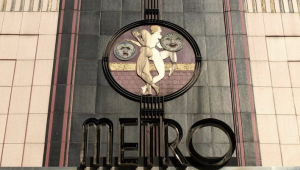
Alamo MetroIn the past year I’ve blogged twice about the announcement and expectation that Austin-based Alamo Drafthouse Cinema is really going to renovate the Metro theater in my Manhattan neighborhood and show movies there. However, despite press releases from Alamo that I’ve cited in my coverage, there’d been no sign of progress, leaving myself and others in the area unsure if it’s really going to happen. Finally, a banner on the old marquee I spotted the other day (pictured at the left) seems to make their plans clear at last: They’ll be opening in 2014. Here’s what I wrote about Alamo last summer:

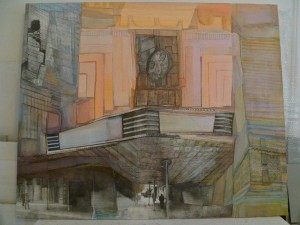
[They’ve] begun seeking the city permits required to begin gutting the interior and renovating the space to accommodate the five screens and viewing spaces they envision for the theater which first opened to the public in 1933. For readers unfamiliar with the site, the classic Art Deco marquee–[seen below] in a photograph and below in a painting by my wife Kyle Gallup–has landmark status and will be preserved as is, though the interior has no similar exemption. I’m very pleased with this news, and look forward to having them in the neighborhood, perhaps in 2013, or the next year.
Metro-Theater-marquee-Kyle-GallupMetro-Theater-Alamo-fb-page

Celebrating the Year’s Best Books with the National Book Critics Circle

March 6 Update: Pleased to see that the NBCC blog Critical Mass has included my coverage of their annual awards in their latest news round-up.

1 Full programAfter the superb readings from 21 finalists on Wednesday night, the NBCC awards ceremony Thursday night was an inspiring close to the week of literary observances. On the earlier evening, more than 2/3 of the thirty nominated books were represented, while oddly, it turned out last night that of the six final recipients, only two of the authors were in the house to acknowledge the recognition. It was just the luck of the draw that four of the winners were unable to attend. Most of the audience, myself included, had read less than a handful of the finalists, whereas the NBCC critics, amazingly, read all the finalists. Each year that I attend their events I am struck again by their industry and their devotion to the critical enterprise.

The first two awards were announced prior to the ceremony. These were:

Nona Balakian Citation for Excellence in Reviewing: Recipient William Deresiewicz gave a lovely acceptance speech about criticism. He observed that critics have always drawn the enmity of artists and that criticism seems always called upon to justify its existence. He invoked Waiting for Godot, where the worst insult that Estragon can fling at Vladimir is “critic.” He quoted Stravinsky’s turnabout of Voltaire’s  ode to free speech, “What a reviewer said may be inconsequential, what I protest is his right to say it.” Throughout his talk, Deresiewicz reflected on the seclusion of writing about books, which nonetheless contrasts with the mutuality of reading them, in which we animate or re-animate the author’s work. Citing the New Yorker‘s Arlene Croce, his most affecting line was, “If art gives voice to our experience of life, criticism gives voice to our experience of art.”

Ivan Sandrof Lifetime Achievement Award: Sandra Gilbert and Susan Gubar, authors of The Madwoman in the Attic: The Woman Writer and the Nineteenth-Century Literary Imagination (1979) and editors of the Norton Anthology of Literature by Women, and a host of other trailblazing books. Gilbert and Gubar, though unable to attend, had each filmed splendid presentations that were screened for the audience at the New School, and can be viewed via this youtube link.

These were the awards in the NBCC’s six book categories:

Poetry: At the reading on Night One, of the three poets who read I had particularly enjoyed David Ferry’s reading from Bewilderment and A.E. Stallings’ rhymed poems from Olives. On Thursday night we learned from chair of the poetry panel David Biespiel that D.A. Powell’s Useless Landscape, or A Guide for Boys, published by Graywolf Press, was the top choice. Powell was not present, so his editor Jeffrey Shotts went to the podium and read a brief statement from the poet. It happened that Shotts and I had met the night before over drinks at Cafe Loup, and so were seated together in a row near the front of the auditorium as the awards began. Just before the event kicked off, Jeff told me that he might need to sneak past me if his author won. When the moment came, I clapped him on the back and let him out of our row.

Criticism: Like all the categories, this one was filled with standout titles. At the reading, Paul Elie, (Reinventing Bach), had read a fascinating passage about the blockbuster album of 1968, “Switched-on Bach,” for which Walter Carlos had played Bach on the recently invented moog synthesizer. Elie quoted Glenn Gould on the fusion of Bach and the new electronic instrument, where the Canadian pianist heard an ideal match. Gould relished the moog’s absence of vibrato and inflection, which I imagine probably had an aural quality for him akin to a harpsichord. Kevin Young (The Grey Album: On the Blackness of Blackness) read a passage about rappers and love songs, which fascinatingly play against type. The winner was Stranger Magic: Charmed States and the Arabian Nights by Marina Warner who was at home in England. Unfortunately, no one was present from her publisher Harvard University Press to accept the award.

Autobiography: On Wednesday night finalists Rena Grande (The Distance Between Us, a memoir of her Mexican family’s passage in to the United States) and Maureen N. McLane (My Poets, on the role of Gertrude Stein and Elizabeth Bishop in her reading life) had each read brilliantly. Likewise, an emotional moment came when George Hodgman, longtime editor for the late journalist Anthony Shadid read a moving passage from  House of Stone: A Memoir of Home, Family, and a Lost Middle East. The panel for this prize gave their nod to Swimming Studies by Leanne Shapton, who we learned has recently had a baby. Her publisher, David Rosenthal of Blue Rider Press, accepted in her place.

Biography: Wednesday night I had been enchanted by finalist Tom Reiss’s reading from The Black Count: Glory, Revolution, Betrayal, and the Real Count of Monte Cristo, a biography of novelist Alexander Dumas’ father. I had not known of the fascinating life led by Dumas pere, and I very much enjoyed later meeting and talking with him. And yet, it was hardly a surprise that the award was bestowed on Robert Caro for The Passage of Power: The Years of Lyndon Johnson, the fourth volume in his epic work on the 36th president. Kathy Hourigan of Knopf, accepted for Caro who had been prevented from attending because of an earlier scheduled speech.

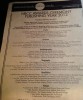
Nonfiction: While all the categories were filled with extremely strong books, this category took the ribbon for some of the most amazing books of all, as a glance at the program below will confirm for you, too. Seated near me were Andrew Solomon, author Far From the Tree: Parents, Children, and the Search for Identity, and his editor Nan Graham of Scribner.  It was a pretty electric moment when Andrew’s book was given the award. He got a big laugh when reaching the podium he remarked with wit worthy of Oscar Wilde, “It’s obviously very unfashionable to show up. I hope you won’t think less of me for actually being here.”  The audience was plainly very glad for him, as was I.

Fiction: In this category, everyone who came for the readings the night before had been wowed by the regal Zadie Smith’s inspired animation of her own work, when like a ventriloquist she had given voice to her array of  characters in a gritty scene from a London park. The recipient of the award turned out to be Ben Fountain for Billy Lynn’s Long Halftime Walk. Fountain gave a moving talk. Along with thanking his agent Heather Schroeder of ICM, and staff at Ecco Books, his publisher, he acknowledged all the writers who’d been finalists, observing that “We’re all on the same team . .  on the team of beauty, truth, justice, love–all the corny reasons why we got in to this line of work. Let’s just keep remembering that.” He closed by thanking his family for their love and commented starkly “without that love I’d be lying in a ditch somewhere.”

With that the program ended, and many in the audience walked a block uptown to continue their conversations and celebrate at a jubilant reception benefiting the NBCC. You can view the program hear on my site in the window below. You may also view and listen to interviews that were done with all the finalists by students at the New School Graduate Writing Program, hosted at this site and co-sponsored by the NBCC and the New School. To begin, just click on one of the NBCC’s six nomination categories. I will add that if you love books and criticism, you can become a friend of the NBCC by joining the organization as an associate (non-voting) member. I relish my status as a friend of the NBCC. Likewise, if you live in NYC, or will be here visiting next year when they hold their annual readings and awards ceremony, I urge you to attend. Remarkably, the events are free of charge and open to the public. The only event for which there’s a cost is the benefit reception. You can find more information at the NBCC website, bookcritics.org. I invite you also to view the pictures I took, below the video window, and read about the night of readings, at this link, where I’ve posted another 20 photos.

  Please click here to see photos from the awards ceremony.

NBCC Finalists Read from Their Books

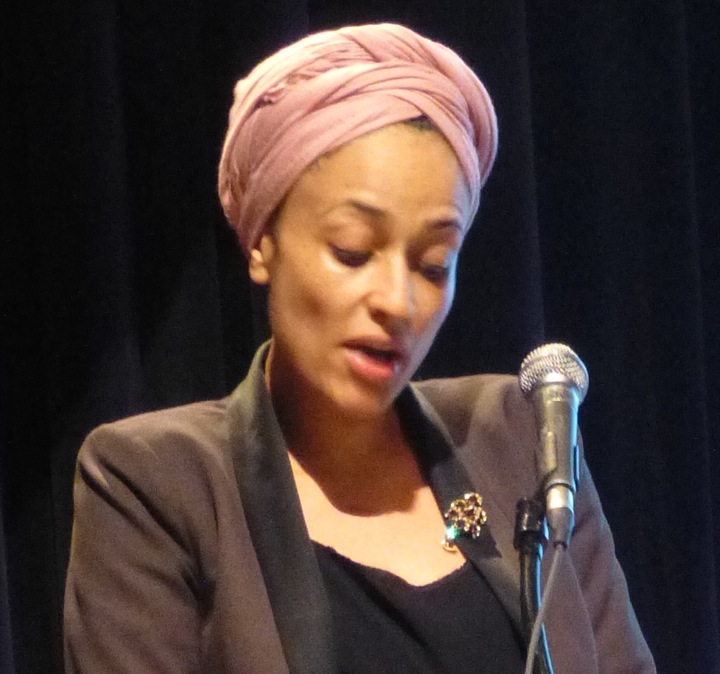
P1040029NBCC photoThis week brings the annual awards from the National Book Critics Circle (NBCC). The ceremony, to be held tonight, Thursday, Feb. 28, was preceded last night by a program in which more than 20 of the finalists read from their work. I’ll be going back to the New School tonight for the finale. Meantime, you can check out the finalists at this feature on galleycat.com, where they’ve assembled samples from all the honored titles. You may also peruse the program from last night listing all the readers and their books. Here too are the photos I took, such as this one of the elegant Zadie Smith, many of which show the author and their book cover projected alongside. I will post again after the ceremony tonight.
Saturday Update: The NBCC has now posted video of the readings night on their website:


Please click here to see all photos.

“Oh, No, Google, Don’t Pull a Hiring Bait & Switch!”

Despite the wording of the above tweet @GoogleLocalNYC is not really hiring, and it’s very unfortunate they’re making this claim anywhere, particularly in social media. Having been selected as a Google NYC Neighbor last spring, and after hearing a lot about community managers the past few days during NYC’s annual Social Media Week, it struck me this could be a position I’d be good at, so I clicked on their link, only to discover that while there are indeed positions to be filled, Google isn’t really doing the hiring. This is the first thing to be read when you visit the site with hiring info.

Important Notes:
Most positions are Temporary, Contract roles ( ~6 months to begin), hired via 3rd-Party staffing agency (i.e., not working directly for Google). We cannot make any guarantees about full-time Google employment opportunities at the conclusion of the Temporary contract, however the Local CM team is a great way to grow your career.

I find this a classic bait & switch, HR-style, contrasted with the literal message of the tweet. I note also that their final sentence, extolling the virtues of this experience for prospects,even though you may not end up working full-time at Google, is the arrogance that many hiring mangers display nowadays. The implicit message is

“Just remember–you’re lucky to have any work at all.”

I know it’s a hirer’s market, with job-seekers lacking leverage, but is it too much to expect that dishonesty–or at best, or carelessness–be banished from corporate hiring practices? The whole thing is unworthy of Google. I hope they take note of my reply, delete their original tweet, and revise any similar messaging they’re putting out. I’ll note it here if they do, and whether I get any kind of reply.