Books I’ve brought out as publisher; essays and reviews I’ve published

A Vanished Young Chess Master

Last winter, publishing reporter Sarah Weinman–who works for PublishersMarketplace.com and who writes for a number of other publications–asked me if I would try to help her with a story she was working on. Having learned that I attended Franconia College in the 70s, Sarah wondered if I had ever known fellow FC student, Peter Winston. he began in ’75, I began in ’73. His name didn’t ring a bell for me, but Sarah continued and told me about more him, ultimately asking if I would put the word out among the old College community for anyone who might’ve known him. I agreed readily. Sadly, there was a dark and tragic background to her queries, and to the story. She explained that Winston, for a time a promising talent in competitive chess, burdened with a history of mental health problems, had in 1978 simply vanished, never to have been seen since. Foul play or misadventure were of course suspected by his family and authorities, but no trace or record of him has ever been found. He was a kind of modern-day Judge Crater.
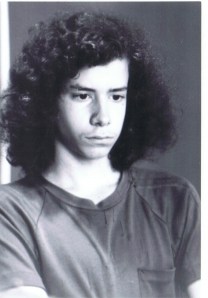
I put the word out on the Franconia College Facebook page, a 366-member strong group of former students, faculty and extended community members. Unfortunately, my request for information yielded not a single lead, which I told Sarah last March. She thanked me for trying to help, and went back to reporting the story through other means, and I made a mental note to watch her byline for the piece on Peter Winston. Yesterday, the result of her efforts appeared in the New York Observer, a fascinating 3,000 word article that was the last thing I read before falling asleep last night. Sarah also’s blogged about the writing of the piece on her excellent tumblr, Off On a Tangent. The Observer article is haunting and sad–kind of a nonfiction counterpart to Queen’s Gambit, the novel by Walter Tevis*, whose protagonist is a troubled female chess prodigy. Though Sarah’s piece can answer few questions about Winston’s disappearance, it asks many and is compelling reading, folding in a portrait of the chess scene in NY in the 70s, the milieu that produced Winston, and a character sketch of him. Publication of the piece may also produce some leads for Sarah, so I’m recommending that you read her story and share it widely among your contacts. Any Franconia College people who may not have seen my earlier call for information, please take note. If you knew Peter, or remember him, please let me know and I will put you in touch with Sarah.

I must say now as I keep looking at this photo, I believe I must have seen him at the College, his face and demeanor are somehow familiar, but I know I never spoke with him.

* Tevis clearly had a gift for writing about troubled, alienated protagonists, sometimes young. In addition to the chess novel, his last book, he also wrote the SF novels, The Man Who Fell to Earth (a classic film with David Bowie) and The Steps of the Sun (which I happened to publish in 1989), and the pool hall novels The Hustler and The Color of Money, also great movies with Paul Newman in both, and Jackie Gleason in the first. In 1983, when Tevis was on tour for Queen’s Gambit he happened to stop in my Cleveland bookstore, Undercover Books and my brother and sister and I talked with him for an hour, on a blizzardy day. He died just a year later, in 1984. The Peter Winston mystery is one to which he would have definitely related–had it been reported in local news outlets, but according to Sarah Weinman, Winston’s disappearance barely registered in local media, or even with NYPD, who she writes have “no record of anyone by his name disappearing from the city.” Records for her piece were very sparse, with open requests to police and city authorities officially unanswered at this point.

This Week at The Great Gray Bridge

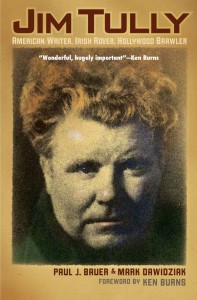
In the past week I’ve blogged about an urban skunk I encountered in Riverside Park;  a great new espionage novel called The Double Game by Dan Fesperman; the shameful lack of recognition for women in tech, as revealed by Change the Ratio’s Rachel Sklar; a well-deserved honor for Jim Tully: American Writer, Hollywood Brawler, Irish Rover, my fave biography of 2011; the lack of public transportation for wage-earners which means they often can’t get to jobs they would otherwise be able to fill; a new genetics study that may shed light on how the Americas were peopled in prehistoric times; a personal essay I’m contributing to a new book called Rust Belt Chic: The Cleveland Anthology; Mitt Romney’s most secret offshore investment, Mitt and Ann’s Jet-Ski vacation, and a NY Times Editorial that hit Mitt. I also put up a guest post by my son Ewan Turner, a blended short story that fuses an actual incident from Bob Dylan’s career with an imagined episode involving the singer.

Over at The Great Gray Bridge tumblr, my site for quick hits and diverting photography, I put up a photo of Donald Trump that the Scots must find hilarious (h/t TPM and Zuma Press/Newscom and a post about the personal effects of lawman Eliot Ness, which have been put for auction.

Contributing an Essay to “Rust Belt Chic: The Cleveland Anthology”

I’m pleased to have been invited to submit a contribution to the upcoming  Rust Belt Chic: The Cleveland Anthology, a book that is being assembled and edited by Anne Trubek and Richey Piiparinen. With several dozen contributors, it will be published in September as a trade paperback and an ebook. I completed my piece and submitted it yesterday, a personal essay titled “Remembering Mr. Stress, Live at the Euclid Tavern,” on a venerable Cleveland bluesman and the venue where he played for many years, which proved personal gateways to my lifelong enjoyment of live music. A bit closer to publication I will cross-post the entire essay here on this blog. For now, here are some lines from it.

“The club included a central music room with a low stage for the band and a dance floor, an outdoor area in back, plus a basement bar. It was a veritable cruise ship of nightlife. During breaks between sets I often made new friends in my ambles around the lively deck. In the room opposite the stage was the main bar, a long hitching post of a drinks station where multiple bartenders pulled beer taps and poured liquor. Behind and above them was a sign that became a watchword in my life: “It’s hard to soar like an eagle when you’re on the ground with the turkeys.”

Clevelander or not, if you’re eager to support this exciting self-publishing initiative in cultural urban renewal, you can pre-order copies of the book via this link. You can also support the effort by

–Following us on twitter at @rust_belt_chic

–Liking the Facebook page: http://www.facebook.com/pages/Rust-Belt-Chic-The-Cleveland-Anthology/385206038193184

–Bookmarking the website: http://www.rustbeltchic.com. The site will be updated frequently.

Please help us spread the word.

In the weeks to come I will post more information and additional links related to the anthology and its contributors. For now, here’s a current photo of the Euclid Tavern taken by my sister Pamela Turner along with shots of the artwork and sleeve from the LP that Mr. Stress released in the early 1980s, the period covered in the piece.

“The Bus Does Not Go Where the Paychecks Are”

An excellent column by Peter S. Goodman at Huffington Post highlights the fact that in many American municipalities unemployed workers cannot get to jobs simply cannot get to jobs where they might otherwise be able to be working again. He cites the example of 49-year old Lebron Stinson of Chattanooga, TN, who does not own a car and has had to forego several jobs because he can’t get to the workplace every day. I have earlier written on my 2009 layoff and the way that unemployment can descend into the even worse phenomena of ‘disemployment,’ and here a statement by Stinson makes clear the erosion these forces exert on his self-esteem:

“’That’s the thing that hurts me the most, having experience and qualifications, but you can’t get to the destination,’ Stinson says. ‘It’s a painful situation here. I’ll tell you, I’m not one to give up hope, but, man, it makes your self-esteem drop. Your confidence disappears. Sometimes, I just can’t think about it. You get so it’s all that’s in your head. I need a job, but I can’t get there. I just want to feel like I’m back, like I’m part of the world again.’”

Citing statistics that show the low percentage of the population with access to adequate public transportation, Goodman writes,

“On top of the most catastrophic economic downturn since the Great Depression, the continued impact of automation, and the shift of domestic production to lower-wage nations, here is a less dramatic yet no less decisive constraint that limits opportunities for many working-age Americans: The bus does not go where the paychecks are.”

H/t Melanie Hamilton who posted this piece on Facebook where I first saw it.

An Honor for Jim Tully’s Biographers

I am very pleased for authors Paul Bauer and Mark Dawidziak that their biography Jim Tully: American Writer, Irish Rover, and Hollywood Brawler has won a Gold award  in Foreword Magazine‘s annual recognition of the best books of the past year. Winning books were selected by a panel of librarians and booksellers.

I had put the book on my best list for 2011, blogging about in a foundational post called Lost American Writer Found: Jim Tully and again after the authors gave a presentation at NYU last April when I posted A Book Talk on Jim  Tully. In the first post I wrote that the authors,

steep the reader in Tully’s lifelong struggle to make himself into a significant person; glimpsing his continual act of self-creation is what I found thrilling about this book. The authors chronicle how even in relatively prosperous years, he continued striving to create himself and forge his work. Family agonies–his son Alton served several jail terms for brutal assaults on women–sapped Tully’s energies and darkened many of his latter days. Sadly, he lived along enough to see his reputation and book sales decline, leaving him to ponder what kind of country no longer cared to read about the travails of its have-nots, even while America roared ahead into the second half of the century. I felt Tully’s sorrow as his reputation ebbed and editors no longer kept him in demand for assignments.

It’s a great book and along with the judges at Foreword Magazine, I recommend it highly.

Dan Froomkin on Patrick Fitzgerald’s Legacy as a Federal Prosecutor

Dan Froomkin, Senior Washington DC Correspondent for Huffington Post, has long been one of my favorite news aggregators and commentators. I first got to know his work in the early 2000s, when he wrote and edited the must-read, “White House Watch” at washingtonpost.com. WHW was a daily news digest entirely made up of news about the Bush White House, with Dan’s pithy commentaries about the stories he selected for his readers. I used to wait avidly each day until mid-morning when each new column would appear online. If I had a lunch date I had run to, I would print out the pages and take them with me on the subway.

This is Dan’s awesome archive of all the WHW columns he did–plus all the live chats he did–before his employment at the Post was ended in January 2009, one of the worst decisions, among many bad calls, that that newspaper made in the 2000s.

I got to know Dan personally shortly after I began working with Ambassador Joseph Wilson on the manuscript that would become his 2004 book The Politics of Truth: Inside the Lies that Led to War and Betrayed My Wife’s CIA Identity.* Dan and I haven’t been in touch the past few years, but I continue to enjoy reading him.

Yesterday Dan published a provocative column in which he laments the fact that federal prosecutor Patrick Fitzgerald only charged VP Cheney’s Chief of Staff Scooter Libby for obstruction of justice in the disclosure of Valerie Plame’s CIA identity, ultimately choosing to not put Karl Rove and/or Dick Cheney on trial. Froomkin reminds readers that

“Fitzgerald was appointed as a special prosecutor in late 2003 to investigate the July 2003 leak of Plame’s identity, which came during a White House effort to discredit her husband, former U.S. Ambassador Joe Wilson [who] was trying to expose how the administration had twisted intelligence to make its case for the war in Iraq, launched a few months earlier, and the White House was desperate to prevent that narrative from establishing itself before the 2004 elections. The evidence that came out at trial clearly established that Cheney was the first person to tell Libby about Plame’s identity and that Cheney wrote talking points that likely prompted Libby and others to raise Plame’s role with reporters.”

As is often the case with prosecutors, his decision may have come down to a calculation of what he could prove at trial, and what a jury would accept, beyond a reasonable doubt:

“In a subsequent court filing, Fitzgerald wrote that ‘there was reason to believe’ the leak had been coordinated by Cheney and that the vice president may have had a role in the cover-up. ‘When the investigation began, Mr. Libby kept the vice president apprised of his shifting accounts of how he claimed to have learned about Ms. Wilson’s CIA employment,’ Fitzgerald wrote. But Cheney was never charged. ‘I think the chances of it being a show trial and losing really weighed heavily on him, in terms of the political fallout,’ said Michael Genovese, director of Loyola Marymount University’s Institute for Leadership Studies.

Froomkin goes on to point out,

“For reasons he has never publicly explained, Fitzgerald ultimately chose not to indict Rove either for the leak or for obstruction of justice. While much could have been gleaned from key investigative documents requested by a congressional committee, the Bush White House wouldn’t let Fitzgerald release them.

Dan gives the last word in his column to one of the reporters who was most dogged about this case, Marcy Wheeler, whose commentary and reporting was then at firedoglake and can nowadays be found at Empty Wheel.

“Wheeler. . . one of the foremost chroniclers of the Libby trial, said Fitzgerald’s investigation didn’t go far enough. ‘The FBI agents believed that they had the case against Rove nailed down,’ Wheeler said. And Fitzgerald ‘actually had Dick Cheney in his teeth.’”

When Fitzgerald recently announced that he’s retiring from the corps of federal prosecutors, I expected to see postmortems of his career, though Froomkin’s is the first I’ve read. It seems that the last decade is already dim and distant in Americans’ memory, and in the minds of members of the media, even though so much of what happened in the terrible Bush years still hangs over us like a black cloud. What I’d really love to read, or even better edit, would be a manuscript by Fitzgerald, though I fear that’s unlikely from this career government lawyer, generally known for his circumspect nature. Still, he did let it all–or nearly all–hang out in one public statement about Cheney’s role in the Plame matter. Quoted here by Froomkin,

“In his closing arguments in the Libby case, Fitzgerald famously declared: ‘There is a cloud over what the vice president did that week. … That cloud remains because the defendant has obstructed justice and lied about what happened.’”

*Along with Wilson’s book, which became in part the basis for the movie, “Fair Game,” I also brought out the book The United States v. I. Lewis Libby, edited and with reporting by Murray Waas, the only published transcript of Scooter Libby’s trial. I recommend it along with Wilson’s book, and former Bush press secretary Scott McClellan’s What Happened: Inside the Bush White House and Washington’s Culture of Deception.