Books I’ve brought out as publisher; essays and reviews I’ve published

Would a Lawyer Today Dare Send Such a Funny & Profane Letter?

If it’s Sunday, it must be football, right? In keeping with the day, Shaun Usher, the British proprietor of the always-splendid website Letters of Note has reposted on his site’s Facebook page a funny exchange of correspondence that I chuckled over when he first shared it last February. It gave me another good laugh today. Shaun’s placed the 1974 letters under the heading Regarding Your Stupid Complaint. They were between Dale O. Cox, Esquire, a persnickety Cleveland Browns season ticket holder, and the Browns’ team office.

As readers of this blog may recall, from pieces such as How to Enjoy Sports Even When Your Teams Have a History of Failure, and a Personal History essay, I grew up following the ups and (often the) downs of Cleveland sports teams. With my late father and brother, I had the great good fortune to attend the last professional sports championship of a Cleveland team–when in the 1964 NFL title game the Browns upset the Baltimore Colts, 27-0. As the scanned copy of a grade school composition of mine will attest, the season ticket holders we sat near in the upper deck in Section 42 were a colorful bunch, like “Bert, a lover of wine” who “often fixe[d] himself a Diet-Rite and wine cocktail,” and Eddie, who “As soon as the first half ends, breaks out [a] thermos of chili . . . he shares with John, while John splits one of his many bottles of wine with him.” (See bottom of post for the whole piece.)

In the summer of 1977, after I was graduated from Franconia College, I worked as a beer vendor at Cleveland Indians’ baseball games. I enjoyed walking the wide open grandstands of cavernous Municipal Stadium, calling out such pitches as “Beer Here!” and “Get Your Cold Ones!”. My happy run as a vendor ended though when I worked a Cleveland Browns pre-season game, and was appalled to discover that the placid beer-drinking Indians fans I’d come to enjoy serving had morphed into, as I wrote in that personal history essay, “an unruly, inebriated mass. . . I was lucky I didn’t have my rack of beers stolen along with all my earnings.

With these recollection of public drinking and intoxication at Municipal Stadium, you can see why I derive such a good laugh from the correspondence between Mr. Cox and the Browns (headings and signatures abridged):

November 18, 1974

The Cleveland Browns
Cleveland Stadium
Cleveland, OH

Gentlemen:

I am one of your season ticket holders who attends or tries to attend every game. It appears that one of the pastimes of several fans has become the sailing of paper airplanes generally made out of the game program. As you know, there is the risk of serious eye injury and perhaps an ear injury as a result of such airplanes. I am sure that this has been called to your attention and that several of your ushers and policemen witnessed the same.

Please be advised that since you are in a position to control or terminate such action on the part of fans, I will hold you responsible for any injury sustained by any person in my party attending one of your sporting events. It is hoped that this disrespectful and possibly dangerous activity will be terminated.

Very truly yours,

Dale O. Cox

The Browns’ reply, from their General Counsel and cc:d to team owner Art Modell, was written only three days later:

Dear Mr. Cox:

Attached is a letter that we received on November 19, 1974. I feel that you should be aware that some asshole is signing your name to stupid letters. 

Very truly yours, 

CLEVELAND STADIUM CORP. 

James N. Bailey,
General Counsel

cc: Arthur B. Modell
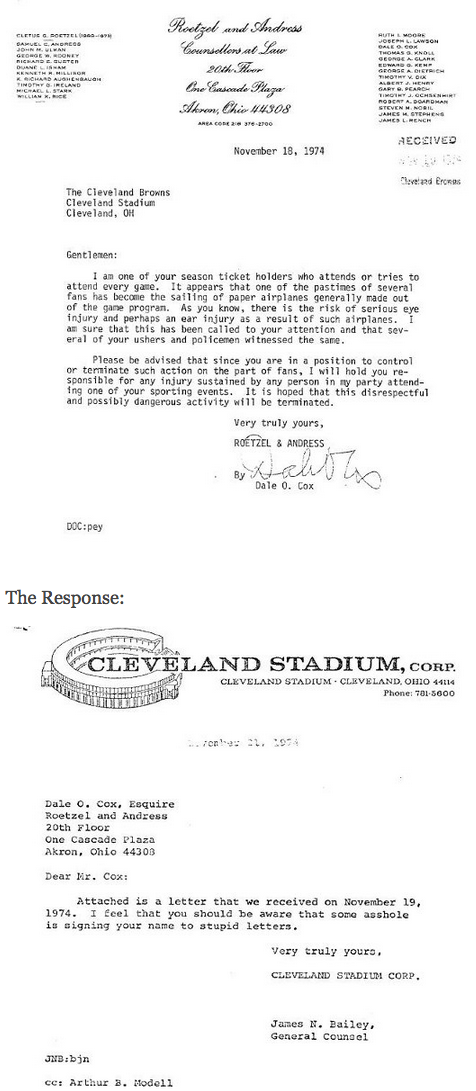
Cleveland Browns letters

In the years following the exchange with Mr. Cox, Art Modell–who died this past September at age 87–would later be tagged with infamy among many Cleveland sports fans for relocating the Browns to Baltimore in 1996. Yet it’s plain to me that at least in 1974 he was still a stand-up guy, or he wouldn’t have condoned his team attorney sending such a funny, profane letter to a customer who was himself a lawyer, and one who included in his letter an implied threat of litigation–“I will hold you responsible for any injury sustained by any person in my party attending one of your sporting events.” Would any caution-ridden lawyer today dare to send such a letter in response? If you have thoughts on this and would like to continue the conversation, please let me know what you think in the comments field below. A final point on Mr. Usher’s Letters of Note presentation for this exchange. He uses a photo in it of a Cleveland stadium, but it is the new Browns stadium, built and opened in 1999, on the site of the old Municipal Stadium, where I attended games as a boy and worked in 1977.

A grade school essay of mine on the fans I sat near at Cleveland Browns’ games.

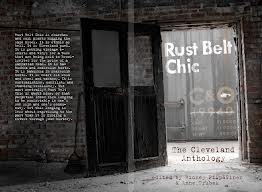
Latest Coverage of “Rust Belt Chic: A Cleveland Anthology”

Delighted to see that Rust Belt Chic, the book to which I contributed an essay, “Remembering Mr. Stress, Live at the Euclid Tavern,” is getting lots of coverage. One of the best parts of writing the essay has been that it’s put me back in touch with the venerable Cleveland bluesman, Mr. Stress, whom I followed avidly for many years.

This week, Andrew Sullivan’s blog at The Daily Beast website, The Dish, wrote about Rust Belt Chic in a piece called “Between Ruin and Rebirth,” citing the book and Roger Ebert’s review of a new documentary, “Detropia.” Fitting, with the Tigers beating the Yankees on Thursday and advancing to the World Series. Relatedly, Friday’s NY Times brought a smart essay by Bill Morris, on the recent rejuvenation of Detroit’s downtown. It seems that the topic of urban decline and rebirth is never far from the collective mind.

Rust Belt Chic has also been covered by Karen D. Long, Book Editor at the Cleveland Plain Dealer in a weekend piece, “‘Rust Belt Chic’ warms to scruffy, problematic Cleveland”. Long writes that the community enterprise that fueled the book “resembled a pop-up civic action.” Typifying this approach, co-editors Anne Trubek and Richey Piiparinen asked all the contributors–in the event that the book sells well enough to make back its expenses and reaches profitability–if we would want an honorarium payment, or prefer to plow our earnings into another indie project to be chosen from among book ideas presented by the contributors, with one (or if we’re really fortunate, more than one) project being chosen for funding. I have a ready book idea–a new volume to be culled from the Guinness Book of World Records-recognized diary of Edward Robb Ellis, whose A Diary of the Century: Tales from America’s Greatest Diarist, I edited and published in 1995. I am happy to have chosen the latter option.

In case you missed an item I put up last month, one of my fellow Rust Belt Chic contributors is Connie Schultz, the Pulitzer Prize-winning columnist and author. In the past year, she left the Plain Dealer while for her husband Sherrod Brown’s run for re-election to the US Senate from Ohio. A few weeks ago, on the Rust Belt Chic Facebook page, I saw this note from Ms. Schultz:

“Sherrod didn’t get home until after midnight last night, but as soon as he saw my newly arrived stack of ‘Rust Belt Chic: The Cleveland Anthology,’ he had to pick up a book and take a look. ‘Wow,’ he said, over and over, as he recognized one writer’s name after another, read aloud some of the titles and marveled at the photos.” Here’s my whole piece, “Senator Sherrod Brown ♥s “Rust Belt Chic”.

I hope you buy the book as a print or a digital edition, or get one of each, not simply because you want to support this communal effort, but because it offers thirty-five fine examples of narrative journalism, chronicling a distinctive part of the country that is too often overlooked on the literary and cultural map. I also urge you to follow the book’s Twitter feed, @rust-belt-chic. On my own Twitter feed, @philipsturner, I’ve started a hashtag, #MrStress. You may also ‘like’ the Rust Belt Chic Facebook page. Thank you for supporting this exciting experiment in cultural urban renewal.

Finally, I got word today that there will be a public event with Rust Belt Chic contributors in Brooklyn, NY, on January 3. I hope to be there, reading from my essay on Mr. Stress. More details when I have them.

10 Years Later, Michael Bell Still on the Trail of New England’s Vampires

One of the most unusual and fascinating books I edited and published in the seven years I was an editorial executive with Carroll & Graf (2000-07) was Food For the Dead: On the Trail of New England’s Vampires by folklorist Michael Bell. Over more than 20 years of research at the point the book was published in 2001, Michael had identified more than a dozen New England gravesites where, beginning in the late 1700s and continuing for at least 100 years, the relatives and neighbors of people who’d died from tuberculosis handled the cadavers and conducted their burial in a way that they imagined might diminish the chances of the disease being passed on to others. These funerary practices, at first inexplicable to moderns living with 20th century medicine, possessed a clear logic in an era when the notion of contagion was sensed but not formally known. They included burning some of the fleshly remains and inhaling the smoke from the resulting fire; feeding some of the burnt byproducts to the ill; and arranging the limbs of the dead in such a way as to thwart transmission of illness. Clearly, the grieving and anxious survivors hoped they could somehow inoculate themselves by taking these steps.

The book is a readable synthesis of fascinating stories combining literary lore from such authors as Edgar Allen Poe, H.P. Lovecraft, Amy Lowell, and Robert Frost, who retold and reimagined these vampire stories; medical anthropology; and travel tales, with Michael wandering from one corner of New England to another, always in search of more folklore on this surprising topic.

Though Michael’s book came out more than ten years ago, his investigation didn’t end with publication. In fact, according to a comprehensive article by Abigail Tucker in this month’s issue of Smithsonian, Michael has now documented more than eighty examples of these burials and exhumations, ranging beyond New England and stretching as far west as Minnesota. According to Tucker,

“Hundreds more cases await discovery, [the author] believes. ‘You read an article that describes an exhumation, and they’ll describe a similar thing that happened at a nearby town,’ says Bell, whose book, Food for the Dead: On the Trail of New England’s Vampires, is seen as the last word on the subject, though he has lately found so many new cases that there’s a second book on the way. ‘The ones that get recorded, and I actually find them, are just the tip of the iceberg.’”

I remain fascinated by this topic, and am excited to have Smithsonian‘s update on Michael’s research, and to be reminded of the book that Michael Kenney in the Boston Globe described as an “Absorbing account [that] is neither Halloween fantasy nor tabloid frenzy, but a major contribution to the study of New England folk beliefs.” I’ll be interested to learn about the more recent cases that Michael has discovered in the decade since I published Food For the Dead with him, and eager to learn about the next book. Below are images of the front and back cover of the 2002 paperback edition.

Senator Sherrod Brown ♥s “Rust Belt Chic”

So glad to be one of the 35 contributors to Rust Belt Chic: A Cleveland Anthology, with my essay, “Remembering Mr. Stress, Live at the Euclid Tavern,” on a venerable bluesman I followed avidly for years when I lived in Cleveland. Among the writers in the book is Connie Schultz, the Pulitzer Prize-winning columnist who for many years worked at the Cleveland Plain Dealer. She has recently left the paper while her husband, Sherrod Brown, runs for re-election to the US Senate from the State of Ohio. Today, on the Rust Belt Chic Facebook page, I saw this, a note from Ms. Schultz:

“Sherrod didn’t get home until after midnight last night, but as soon as he saw my newly arrived stack of ‘Rust Belt Chic: The Cleveland Anthology,’ he had to pick up a book and take a look. ‘Wow,’ he said, over and over, as he recognized one writer’s name after another, read aloud some of the titles and marveled at the photos.”

Nice, huh?
—-

At the time of Rust Belt Chic’s publication earlier this month, I cross-posted my essay on Mr. Stress and wrote these paragraphs to introduce the book to readers. Allow me to quote myself:

As a sign of just how community-oriented the book really is, editors Trubek and Piiparinen asked all the contributors, in the event that the book sells well enough to make back its expenses and reaches into profitability, would we want an honorarium payment, or would we choose to plow our earnings into another indie project to be chosen first from among book ideas presented by us contributors, with one (or if we’re really fortunate, more than one) project being chosen for funding. I have a ready book idea–a new volume to be culled from the Guinness Book of World Records-recognized diary of Edward Robb Ellis, whose A Diary of the Century: Tales from America’s Greatest Diarist, I edited and published in 1995. I was happy to choose the second option offered.

With all that said, I’ll continue this preamble by saying I hope you buy the book as a print or a digital edition, or one of each, not because of charitable intentions (though that’s okay too) but because it offers more than fifty fine examples of narrative journalism, chronicling a distinctive part of the country that is too often overlooked on the literary and cultural map. I also urge you to follow the book’s Twitter feed, @rust-belt-chic. On my own Twitter feed, @philipsturner, I’ve started a hashtag, #MrStress. You may also ‘like’ the Rust Belt Chic Facebook page. Thank you in advance for supporting this exciting experiment in cultural urban renewal.
—-
Thanks for your support of Rust Belt Chic: A Cleveland Anthology, and I hope you enjoy reading my essay on Mr. Stress, cross-posted here on The Great Gray Bridge.


“Life is a Carnival”*

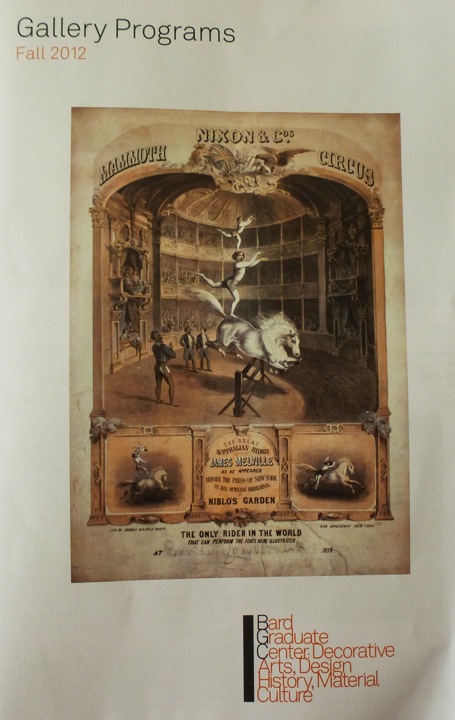
The Bard Graduate Center on West 86th Street is a gem of a small New York museum. On my birthday last Saturday, Kyle asked me what I wanted to do for fun. I suggested we go view Bard’s current exhibit, “Circus and the City: New York, 1793-2010.”

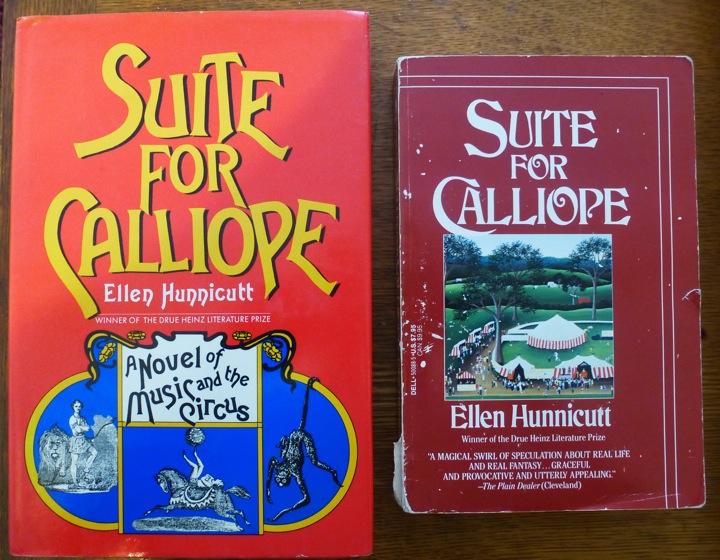
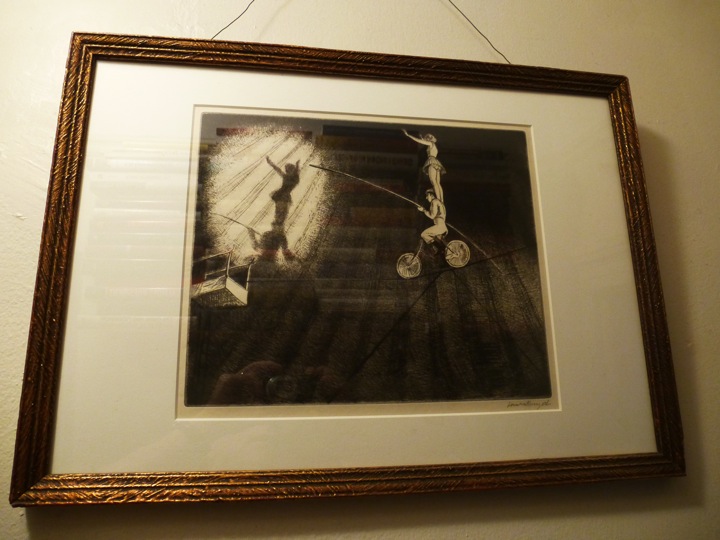
I’ve loved the circus for years, and have even collected artwork on it, like the print below of high-wire artists on a bike, by Dame Laura Knight. I bought it  in 1987 from my late art dealer friend Robert Henry Adams when I was editing and publishing the splendid circus novel, Suite for Calliope: A Novel of Music and the Circus, by Ellen Hunnicutt, who won the Dru Heinz Literature Prize that same year for her short fiction collection, In the Music Library. Ellen’s novel centers around a young female protagonist who’s a runaway from a bizarre custody battle in her family. Holed up in the safe harbor of the Florida winter quarters of a circus troupe, throughout the novel she’s using their calliope to compose a musical work in memory of her late mother. The novel’s theme is how we may turn our mourning and loss to the service of art and creativity. For the record, Ellen passed away in 2005. I hope some day to republish her novel.

Much as I’ve read about circus lore, I had not understood a key aspect of the historical record as documented by the exhibit: the central role that NYC played in the growth and development of the circus throughout North America. Many of the biggest promoters were headquartered in Manhattan, the continent’s entertainment capitol. Once the circus began moving from town to town via train cars, Gotham’s status as a rail hub, as well as its large, diverse population, made it the essential city for promoters and performers alike.

The 20th century was covered on the third floor of the exhibit, with great photographs by Weegee, best known for his lurid crime scene photography, here depicting circus audiences enthralled by performances. There was also a video monitor showing a film of female stunt artist Tiny Kline performing the “Slide for Life,” in which she clamped down on a kind of leather bit she’d placed in her mouth, then slid on a cable for a 1,000 feet hanging above Times Square.

Along with the exhibit, which comprises more than 200 works displayed on three floors of the museum, there will be nine public talks given beginning October 11 and stretching into 2013, ending on January 31, discussing female equestrians; performance photography; the design and typography of circus posters; P.T. Barnum and Ralph Waldo Emerson; Alexander Calder; clowning; and the circus of the future. I hope to be there for one or more of these presentations. Meantime, here is a gallery of images from the exhibit. Please click through to view art and images from the exhibit.

*Thanks to The Band, for use of the title of their song, “Life is a Carnival, written by Rick Danko, Levon Helm, and J.R.R. Robertson, from their 1971 album, “Cahoots.”

#FridayReads, Sept. 14–“Rust Belt Chic” & “The Scarlet Ruse”

My belated #FridayReads is for the new book, Rust Belt Chic: A Cleveland Anthology, edited by Richey Piiparinen and Anne Trubek, to which I’ve contributed “Remembering Mr. Stress, Live at the Euclid Tavern,” an essay on the bluesman I followed devotedly for the many years I lived in Cleveland. I just got my own copy of the book yesterday and have begun reading my way through the more than 50 other entries in it, with pieces on legendary rock n’ roll scribe Jane Scott, poet hart Crane, graphic novelist Harvey Pekar, urban decay and renewal, and many other topics. It’s a thrill to be in this book with so many other terrific writers.

Before Rust Belt Chic‘s arrival in the mail yesterday I was reading one of John D. MacDoanld’s gripping Travis McGee novel’s The Scarlet Ruse, which I’m continuing to enjoy this weekend. If you too enjoy MacDonald’s work, please note I’ve blogged about his novels a number of times, and I learned this week there’s a Facebook group page in his honor, which I invite you to check out and consider joining. It’s always fun to have such great nonfiction and fiction on the boil.