Books I’ve brought out as publisher; essays and reviews I’ve published

Appreciating Ruth Gruber’s Lifetime of Humanitarian Activism and Photojournalism, at the JCC til Feb 25
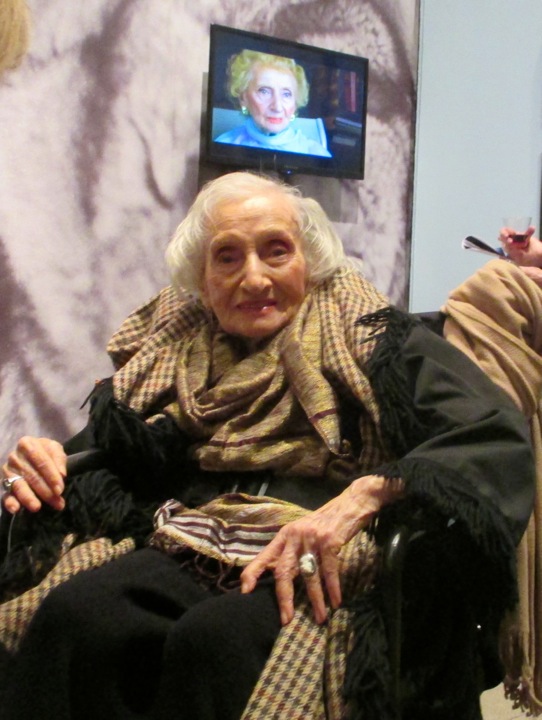
Ruth at JCC, Dec 9, 2014Kyle, Ewan, and I had a great time last night at the opening reception for an exhibit of Ruth Gruber’s photojournalism at the JCC. This is essentially the same exhibit that was mounted in 2012 at the International Center of Photography, the year that Ruth was awarded the ICP’s Infinity Award. If you’re unfamiliar with Ruth’s work, this show is a great way to begin. If you’re not in NYC to go see it, this link will lead you to many of the images. If you’re not familiar with her remarkable career, here’s a primer:

Born in 1911 in Williamsburg, Brooklyn, Ruth was always precocious. She received her B.A. from NYU at age sixteen; an M.A. in German language and literature from the University of Wisconsin at eighteen; and at twenty was offered a fellowship to participate in an exchange program at the University of Cologne. Early in her studies there, in 1931, she was asked by a professor if she would consider reading the work of Virginia Woolf, and writing a doctoral thesis about her. I’ve imagined that Ruth’s professors must have realized they had this bright female student in their midst, a reader of English and German who could tackle the Englishwoman’s books and write about them, asking themselves when they might again have such an opportunity, especially with the inter-war years—which they turned out to be—increasingly fraught by international peril? Ruth demurred—she had not yet read Woolf’s work, she could afford to be in Cologne only one year, her parents would not let her stay longer, the work would surely take more than a year—but soon, though she hadn’t read any of Woolf’s books when the professors asked her, she said, “I’ll try.” Taping up a picture of Woolf in her room, she undertook to read all of Woolf’s books then published, pondering their meaning and the significance of Woolf’s creative enterprise.

Despite the notoriety that her youthful doctorate brought her (she was heralded in the NY Times as the “World’s Youngest Ph.D.”), the Depression was in full swing and Ruth found little work upon her return to the States. She continued traveling and trying her hand at journalism and photography. In 1935, she was delighted when the thesis on Woolf was published as a book in Germany by the Tauchnitz Press, which had a list of English-language titles, including Woolf’s The Waves. Ruth sent a copy of her thesis to Woolf in London, thus beginning a lengthy correspondence between the two women that culminated in Ruth paying a visit to Woolf at her Bloomsbury home in 1936 or ’37. For more on this period of Ruth’s life, including the meeting between the two women, you can also read my post, Virginia Woolf and Ruth Gruber, Driven to Create as Women her on this blog.

After her experiences in Germany, she won a Fulbright scholarship, which included attending a rally at which Hitler spoke, where the foreign students were seated very near him, she devoted an extended period of independent study to the examination of “women under democracy, fascism, and communism.” She became the first Western journalist to tour the Soviet Arctic, and in 1937 published her second book, I Went to the Soviet Arctic, which she parlayed in to a new career as a public lecturer. In 1940, Ruth continued her association with the peoples of the polar regions when she became a member of the FDR administration, under Interior Secretary Harold Ickes who named her his special field representative for the territory of Alaska. She is doubtless one of the Roosevelt administration’s eldest surviving staffers. She worked for the government off and on during and immediately after WWII, leaving at times to work as a foreign correspondent for the New York Post and the Herald Tribune. In 1944, Ickes assigned Ruth a mission she urged him to give her, that of escorting nearly 1,000 WWII survivors from Naples, Italy, on the Henry Gibbins, a ship that also carried wounded American troops back to the US. In 1947, she was working as a foreign correspondent when she covered the fate of the Exodus ship, and chased its thousands of stateless passengers all over the Mediterranean and central Europe the summer of that year.

To read more about Ruth Gruber’s lifetime of humanitarian activism I recommend any of the six books I published with her, five of which are currently available in new editions from Open Road Integrated Media, whose executives Jane Friedman and Philip Rappaport were also on hand at the JCC. The titles I published with Ruth are 1) Exodus 1947: The Ship that Launched a Nation, Introduction by Eleanor Roosevelt biographer Blanche Wiesen Cook; 2) Haven: The Dramatic Story of 1,000 WWII Refugees and How They Came to America, which was adapted for a TV movie in 2000 (Foreword by Dava Sobel, author of Longitude, and Ruth’s niece); 3) Raquela: A Woman of Israel, winner of the Jewish Book Award in 1978 (Introduction by novelist Faye Kellerman); 4) Ahead of Time: My Early Years as a Foreign Correspondent (also the title of a documentary on Ruth), Introduction by Vanity Fair writer Marie Brenner; 5) Inside of Time: My Journey from Alaska to Israel: My Journey from Alaska to Israel; and 6) Virginia Woolf: The Will to Create as a Woman.

I have written about Ruth several times on this blog, posts that are all illustrated with photographs by Ruth or of her: 1) Ruth Gruber’s Photojournalism at Soho Photography; 2) My Friend Ruth Gruber, Pioneering Photojournalist; 3) Virginia Woolf and Ruth Gruber, Driven to Create as Women; 4) Celebrating Photojournalist & Author Ruth Gruber’s 102nd Birthday With Her; and 5) Marking Photojournalist Ruth Gruber’s 103rd Birthday. Below are photos I took at last night’s reception, and photos I’ve taken of her book jackets.
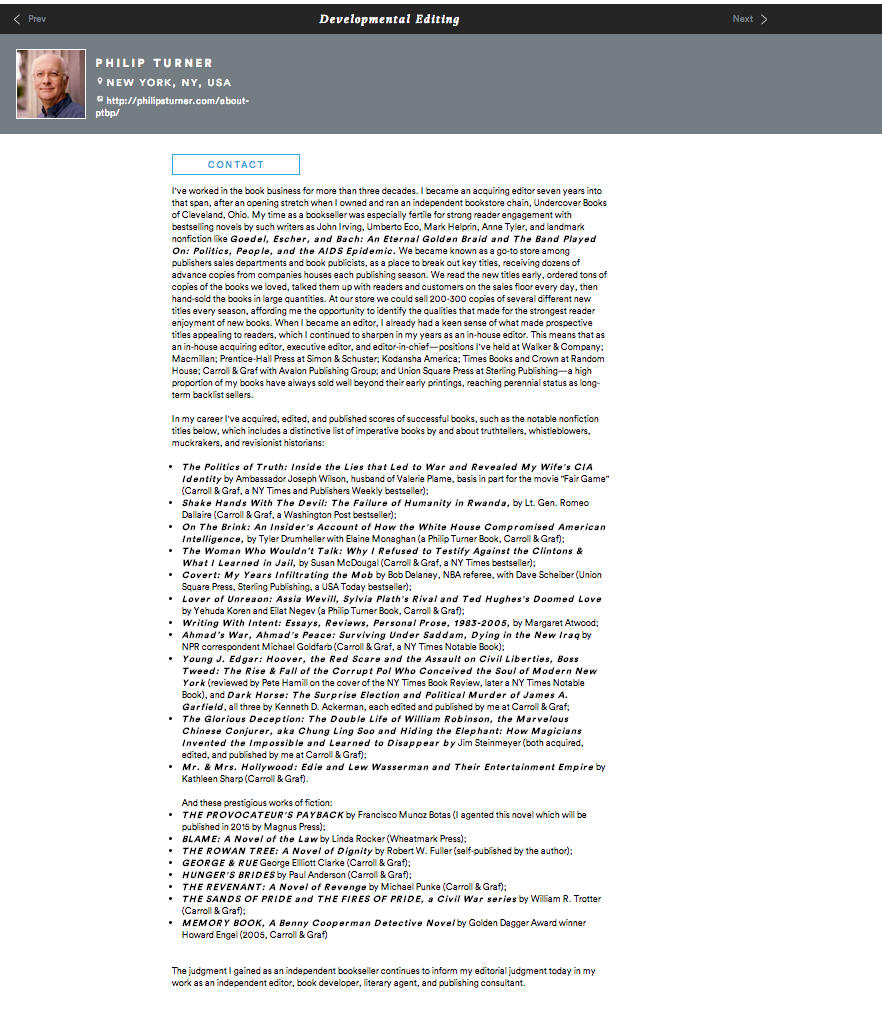
Happy to Be Part of Blurb, Platform Connecting Writers with Quality Editorial Services

Glad to be a collaborator with Blurb, a new Web space where writers can find editors to help them hone their work, and other publishing services, including design. There’s a nice, clean look to editors’ profiles, like mine linked to here, and shown in the screenshot of it below. If you’re an author looking for editorial help, or know a writer who is, please have a look and get in touch.PST Blurb profile

Looking for a Laugh

The Unexpected Joys of Synchronous Reading

I love it when I find unexpected correlations and thematic continuities among the books I’m reading, especially when there are really no circumstantial connections among the authors and the books.

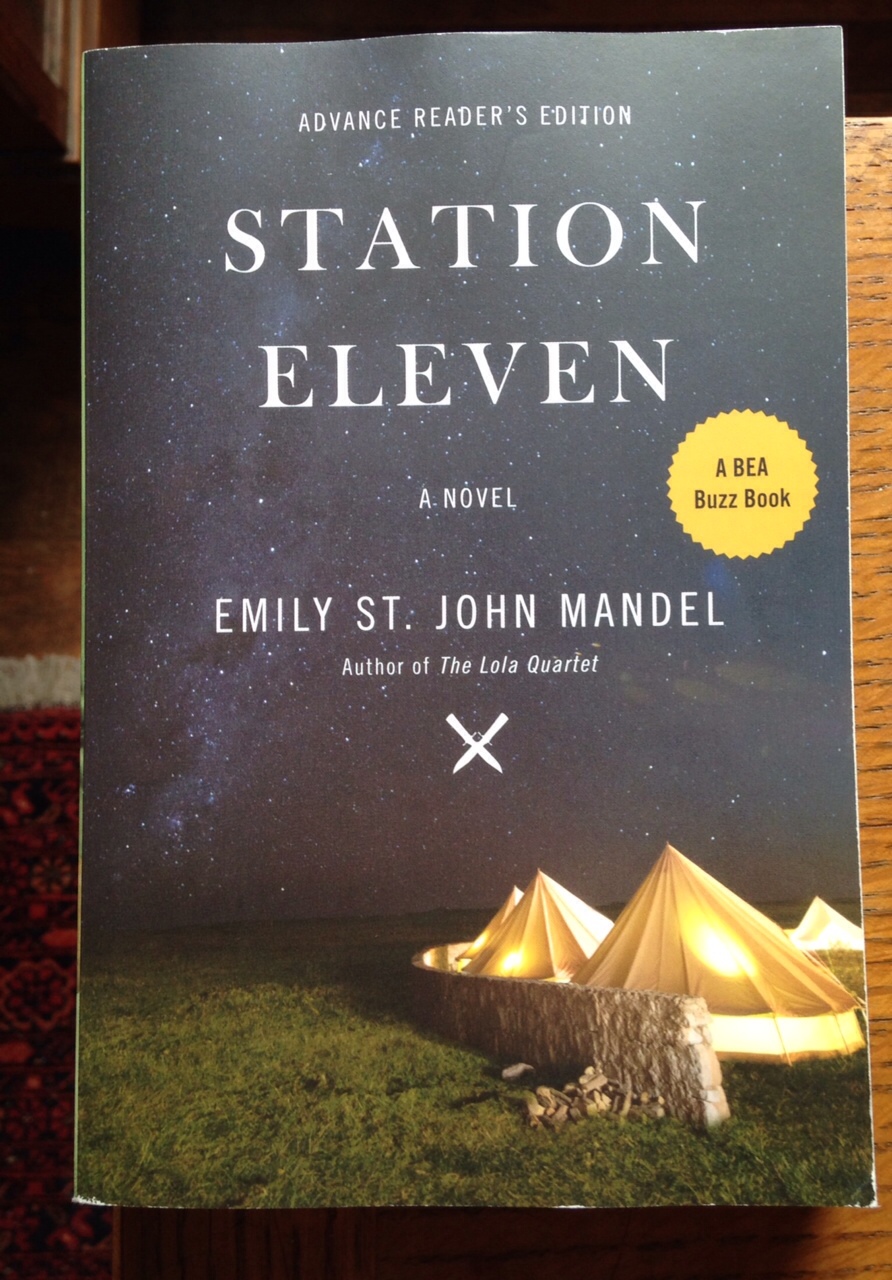
I’m traveling these twelve days (August 7-19) from NYC to St. Louis to Chicago to Cleveland and back to NY, and so have a number of good books with me. First book I finished during the trip was Emily St. John Mandel’s wistful Station Eleven, a post-apocalyptic novel set in a future that might be not too distant from our own, when a deadly flu has driven the world’s inhabitants in to a tenuous existence, with familiar communities splintered and new ones reconstituted around survival, with safety from brigands and cults their paramount goal. Grim as that may sound, it’s really a sweet book as Mandel uses flashbacks to skillful oscillate between the pre- and post-disease worlds, devoting much of the narrative to memorializing things we’d miss from today if the world suddenly fell in to chaos. Amplified music, electric guitars, buying gas at the pump, surfing the Internet, ordering a meal in a restaurant—these are a handful of the quotidian details suddenly subtracted from the lives of her characters. She imagines that surivivors have retrofitted automobiles and trucks so that, in the absence of petrol, they can be pulled by horses. In fact, the symphony/theater troupe at the center of the story moves itself in the Lake Michigan region this way, with musicians and players in tow, and young or vulnerable members stowed in the back, in what I imagine as modified Conestoga wagons supplying cover.

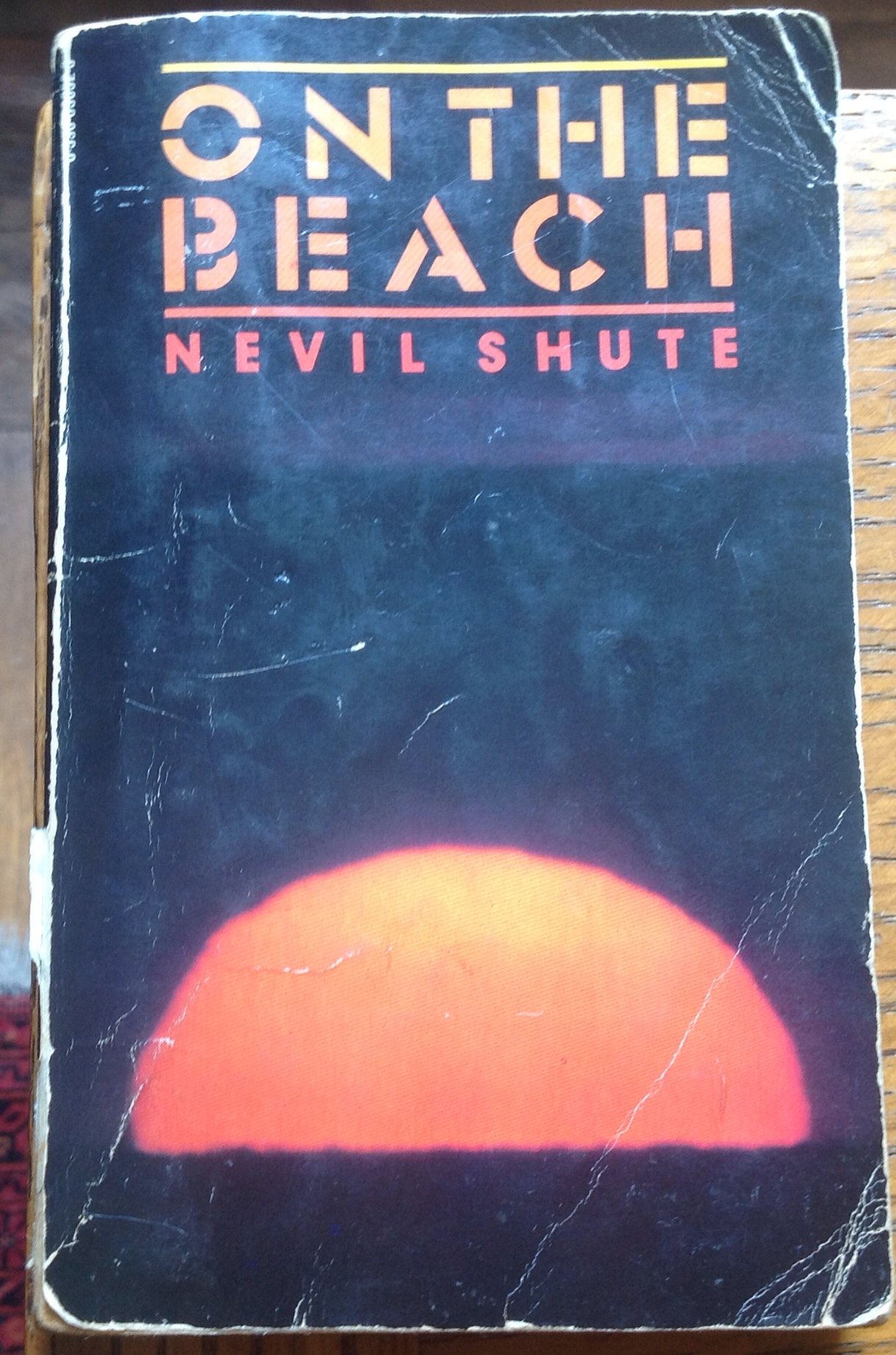
Prior to Mandel’s novel, which will be published next month, I was reading Nevil Shute’s On the Beach, a post-nuclear event novel published in 1957. I met Mandel in July, at a Fall Book preview sponsored by NAIBA, and mentioned Shute’s book, which she told me she hadn’t heard of was. It’s set in Australia, after the Cold War nations have traded atomic bomb attacks, leaving the world above the equatorial line a death zone. An Australian submarine crew is tasked with traveling, submerged beneath the ocean, to assess the radioactivity of the post-incident world and determine if there might be habitable zones elsewhere. Shute’s novel is told in a measured, even laconic style, a bit less literary than Mandel’s. Like her though, he imagined that the inhabitants of his wrecked world would need some mode of land transport, and so they’ve retrofitted their cars and farm vehicle so they can be pulled by horses.

Now it’s not surprising that the authors of two post-apocalyptic novels would each employ common elements, like the retrofitted vehicles. What’s more surprising is when the author of two entirely unrelated books—one historical nonfiction, the other a thriller—share a thematic unity.

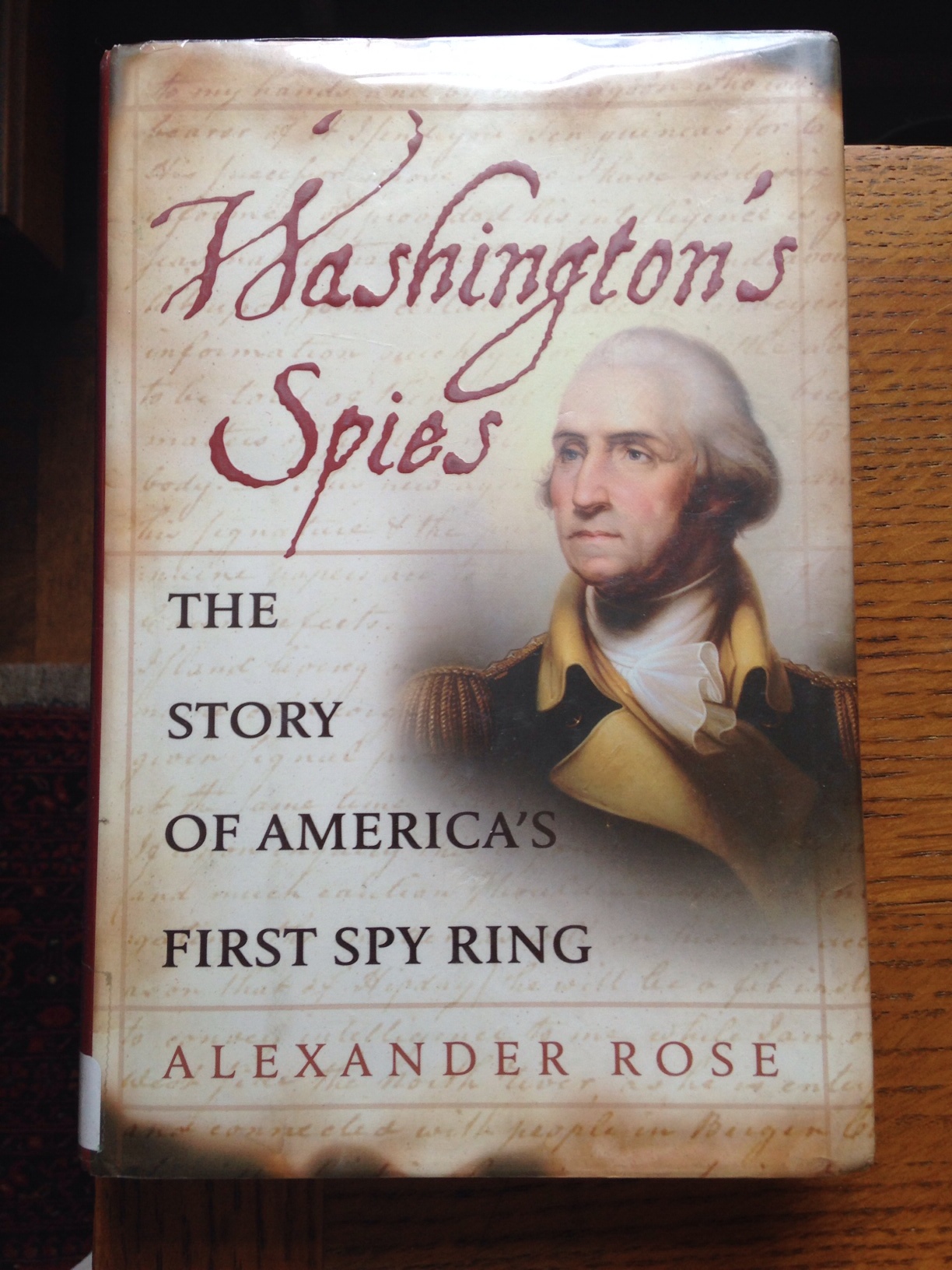
While reading Mandel’s novel I’d also been enjoying Alexander Rose’s Washington’s Spies: The Story of American’s First Spy Ring, a history of espionage during the Revolutionary War published in 2006 that’s the basis of the current AMC TV series, “Turn,” which I had made one of my #FridayReads last month. It’s fascinating, and using the letters that General Washington’s spies sent to him, covers aspects of American’s war with Britain that are entirely new to me. One of these side stories is how the British army flooded Boston, NY, and Philadelphia with “hundreds of thousands of fake dollars,” counterfeit money they hoped would undermine confidence in Colonial currency, reduce its value, and motivate local populations to avoid using it.

According to Rose, British generals arranged for prolific counterfeiters from English prisons to be released, who were then pressed in to service printing bogus dollars, some of them with their engraving tools and printing presses aboard ships floating in New York harbor. Rose writes that disinformation efforts were undertaken with “Royalist papers like…New York Gazette and Weekly Mercury print[ing] public ‘editorials’ noting, by the by, that ‘there has lately…been a large distribution in the country of counterfeited Continental bills, so admirably executed, as not easily to be discerned from those issued by order of the Congress. This has contributed not a little to lower their value, and will be one effectual bar to their repayment or liquidation.'” Rose even discovered that classified ads were run in some papers, seeking people who would be willing to pass the currency in Colonial cities.


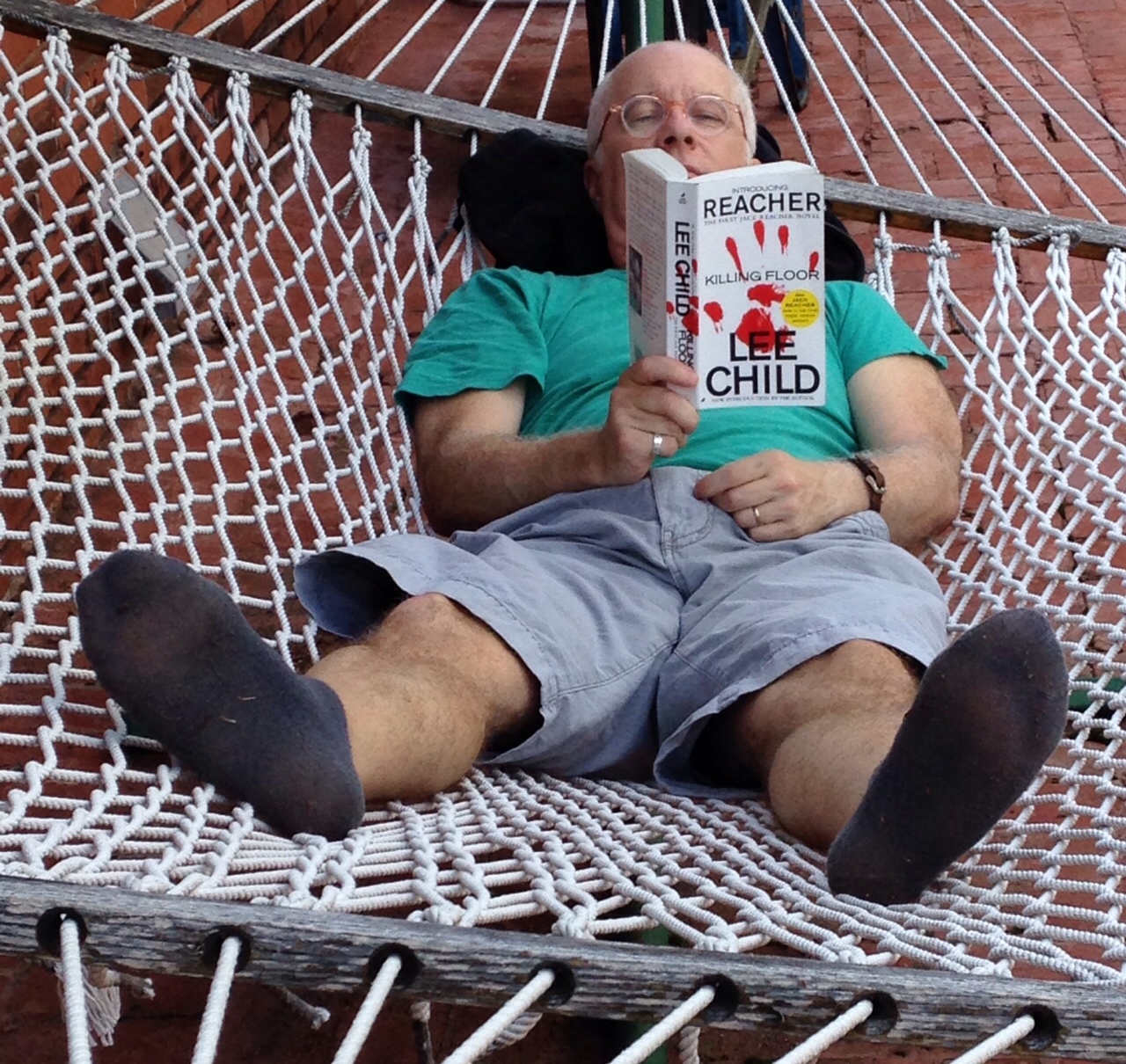
While still reading and enjoying Washington’s Spies I was ready for another novel to read, and so browsing in Left Bank Books, St. Louis’s well-known indie bookstore, last weekend, I was delighted to discover that the very first Jack Reacher suspense novel, by Lee Child had been reissued. I love the Reacher novels, an enjoyment that only grew after meeting him at a book party for Valerie Plame’s first novel in October 2013. The only reason I sometimes hesitate in picking up a Reacher novel is that I often can’t recall which ones I’ve already read. But I knew I hadn’t read Child’s inaugural entry, from 1997, so was happy to buy it that day, especially as it included a new preface by Child, explaining how he came to create the character of Jack Reacher, a former MP in the US Army who since leaving the service has lived a rootless life, rambling from town to town, and inevitably, encountering bad guys in his path, harming innocents whom he chooses to protect. It’s called Killing Floor and with lots of leisure time the past week, I’m deep in to it now. The plot centers around Margrave, Georgia, a small town that Reacher drifts in to, idly, in search of the legacy of a bluesman named Blink Blake who his brother Joe, his only living relative, once told him had spent time in Margrave. After only a few hours in town, Reacher is arrested on suspicion of murder, and even though he’s quickly cleared in the case, his sense of moral indignation is aroused when he glimpses all the corrupt things going on in the town, so he sticks around to try and straighten things out.

Imagine my surprise when in my reading I discovered that the rotten underside at the heart of the story is a counterfeiting ring that his brother, a federal agent, had been investigating. At one point, Reacher meets an elderly professor who tells him of his own countefeitiung exploits, though more of the wartime Washington’s Spies sort than the typical criminal kind, bearing more than a passing resemblance to that done by the British against the Colonies: “During the Second World War, young men like…me ended up with strange occupations….Considered more useful in an intelligence role than in combat….We were handed the job of attacking the enemy with economics. We derived a scheme for shattering the Nazi economy with an assault on the value of its paper currency. Our project manufactured hundreds of billions of counterfeit reichsmarks. Spare bombers littered Germany with them. They came down out of the sky like confetti.”

The congruities among historical events described in Alexander Rose’s history of Revolutionary War espionage and Lee Child’s contemporary thriller are pretty striking, aren’t they?

[NB: This post was written in the excellent Blogsy app on my iPad on an Amtrak train traveling from St. Louis to Chicago.]


Taking a Page from Honourary Canadian

As readers of this blog may have noticed, I started a second blog in 2013, called Honourary Canadian: Seeing Canada From Away. After starting this blog in 2011, I was often posting about Canada, and a couple years in, decided to start a second site devoted to Canadian topics, where I’d offer my views of Canada for Canadians and others interested in the country. I aspire to the perspective and the work of Alistair Cooke, who broadcast and wrote knowledgeably and sensitively about America, after moving to the US from England. Like this site, at the new blog I write about Canadian books, publishing, live music, media, and politics, with the cross-cultural perspective of a respectful outsider. I’ve been sharing HC links here from time to time and integrating the two sites one with another, for instance setting up a feed so the latest posts from each site are readily visible and linked to on the other. The two blogs are sort of like siblings, with this one the older brother.

I’m posting here today to let Great Gray Bridge readers know I recently published a new entry at Honourary Canadian called Why I Started This Blog and Call It Honourary Canadian, which explores my lifelong interest in the neighbor to the north. I invite you to read it. It’s a memoiristic piece that chronicles many trips I’ve made in Canada since childhood, beginning with Expo ’67 when I was just twelve years old; authors whose books I’ve read and published; bands I’ve seen live and become friendly with; and reflections on differences between the US and Canada, and the media in both countries. Along with the essay, I’ve included dozens of scenic photographs, book covers, band photos, and scans of letters I received from Canadian novelist Robertson Davies, with whom I had a lengthy correspondence when I ran Undercover Books in the 1980s.

At the top of this entry is a shot of that new post, which will give you a sense of what the new site looks like if you’ve not visited yet. Just as I found a visual touchstone for this blog from a scenic landmark—the George Washington Bridge, aka the Great Gray Bridge, and the little red lighthouse—I found visual inspiration for the new site in a true wonder of the world, the majestic Percé Rock (aka le rocher percé or ‘pierced rock’), a huge rock face on eastern Quebec’s Gaspé Peninsula, a veritable lobster tail jutting in to the Gulf of St. Lawrence where it meets the Atlantic Ocean. Below is a pic of what that post looks like. If you enjoy awe-inspiring scenery, I recommend you check out the whole post, which includes many photos I took during a visit there in 1988. In fact, I invite you to visit Honourary Canadian, and have a look around. 

#FridayReads, April 25, Robert Palmer’s “Blues & Chaos”