Tag Archive for: Ruth Gruber

Spurred by a 1928 Walker Evans Photo, Barbara Scheiber Publishes Her 1st Novel at Age 92

Amazing Washington Post story by Richard Leiby on 1st-time novelist Barbara Scheiber, 92 years old, who in a 1928 Walker Evans photograph saw what she and other family members believe is her father, with his mistress. From this, and much more, she’s written a novel, We’ll Go To Coney Island, published last month by Sowilo Press. Evans was from what I’ve read unabashed about photographing unsuspecting people. he famously did it on NYC subways, with a camera secreted in the folds of his coat. He noted on the print, “Couple at Coney Island, N.Y., 1928.”Walker Evans

Congratulations to my friend and longtime author of mine Dave Scheiber, and his mother Barbara. Dave, a veteran journalist, co-authored former NBA referee Bob Delaney‘s two books, the memoir Covert: My Years Infiltrating the Mob (2008) and Surviving the Shadows: A Journey of Hope into Post-Traumatic Stress (2011). I edited and published the former and co-agented the latter.

In Barbara Schieber’s bio I was interested to learn she grew up in the Washington Heights section of Manhattan, “where one of her joys was writing and putting on plays with neighborhood friends. She graduated from Vassar shortly after Pearl Harbor, joining two classmates in a plan to organize local community support for the war effort. Their work led them to Clarion, Iowa, where her writing about the success of their innovative project came to the attention of Eleanor Roosevelt, who invited the young women to dinner at the White House to describe their experience to President Roosevelt. She went on to write news reports and radio plays on the war’s progress for United Press Radio, and later, produced a prize-winning series of radio plays for the Jewish Theological Seminary, broadcast on NBC.”

Scheiber’s intrepidity reminds me of the same trait exhibited that decade by my author and friend Ruth Gruber, who in 1940 was working as FDR’s Interior Secretary Harold Ickes ‘special representative in Alaska. For Gruber–who had become the world’s youngest Ph. D. in 1931 at age 20 after writing the first doctoral dissertation on Virginia Woolf, and who had traveled to the Soviet Arctic in the late 1930s–one of her assignments in Alaska was to study the feasibility of the territory as a haven for American homesteaders. Later, when the FDR administration began promoting homesteading in the vast space as a serious option for Americans, Ruth was the person who answered the large volume of mail addressed to Eleanor Roosevelt about Alaska. Later, after Ickes selected Gruber to escort 1,000 WWII refugees and Holocaust survivors from Italy to the US by ship–history that Ruth covered in her book Haven, which was dramatized in a CBS miniseries in 2000, with a tie-in edition I brought out the same year–she hosted Eleanor at Fort Ontario in Oswego, NY, where the refugees were housed until the war ended. Ruth lives in New York City today. At 102, I suspect she is probably the oldest surviving member of the FDR administration.

Reading Leiby’s story I was also reminded of another book about an inconstant father, The Duke of Deception by Geoffrey Wolff. Geoffrey’s brother Tobias Wolff wrote his own memoir of the same family, from his perspective, This Boy’s Life. Leiby’s story makes We’ll Go To Coney Island seem fascinating and I’m eager to read it.

Wrapping Up a Week of NY Celebrations & Great Reading

It’s been a celebratory week in NYC and an active one on The Great Gray Bridge, so here is a summary of recent highlights for interested readers who may have missed any of them.

Ruth Gruber & Philip Turner1) Celebrating Photojournalist & Author Ruth Gruber’s 102nd Birthday With Her
2) Word of an Important New Book on Bob Dylan By a ’60s Confidant
3) Celebrating Valerie Plame’s “Blowback”&Recalling Tumultous Events of a Decade Ago
4) 
#FridayReads, Oct. 4–Katie Hafner’s Exquisite Memoir “Mother Daughter Me”

Celebrating Photojournalist & Author Ruth Gruber’s 102nd Birthday With Her

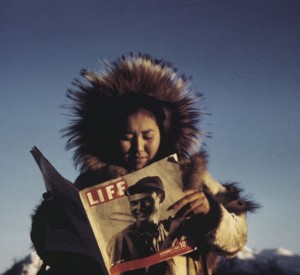
LIFE magAs some readers of this blog may know, I’ve had the personal and professional privilege to edit and publish photojournalist and author Ruth Gruber’s books over the years. I’ve done six of her eighteen books. Her first publication was a thesis on Virginia Woolf, written in Cologne, Germany in 1931, while an exchange student there. She was then just 20, a young woman from Brooklyn on the verge of what became an amazing career as a refugee advocate, chronicler of the displaced, humanitarian, and journalist. She met with Woolf in London around 1935, a story she’s told in her book Virginia Woolf: The Will to Create as a Woman, which I wrote about at this link on The Great Gray Bridge.

In the early 1940s, Ruth was a member of the FDR administration, under Interior Secretary Harold Ickes as his special field representative in Alaska. She is doubtless one of the administration’s eldest surviving staffers. To read Ruth Gruber’s work I recommend any of the six books I worked on, five of which are currently available from Open Road Integrated Media. The titles are Haven: The Dramatic Story of 1,000 WWII Refugees and How They Came to America; Ahead of Time: My Early Years as a Foreign Correspondent (also the title of a documentary on Ruth); Inside of Time: My Journey from Alaska to Israel; Raquela: A Woman of Israel; the Virginia Woolf book named above; and Exodus 1947: The Ship that Launched a Nation (the only one of these not available from Open Road, it’s currently published by Union Square Press).

There is also this link to a post I wrote when the International Center of Photography (ICP) gave her their lifetime achievement award in 2012. After a stop in Alaska, the ICP’s exhibit of Ruth’s photojournalism is now traveling the country. The picture above, of an Inuit girl reading LIFE Magazine with Ted Williams on the cover, is part of the ICP exhibit. It is one of her most whimsical; by contrast, she also photographed Holocaust survivors in DP camps after WWII. Those pictures are also part of the ICP exhibit. Here are a dozen pictures from a birthday party that my son Ewan and wife Kyle Gallup attended with me yesterday. (Most pictures by Kyle.) You may click here to see all images.

Suzzy Roche’s Sensitive Reading of Edith Wharton

Kyle and I took the bus to Bryant Park yesterday to hear singer, musician and novelist Suzzy Roche* lead a discussion of Edith Wharton’s House of Mirth in the Park’s long-running Reading Room series. We arrived just in time to corral two chairs near the front of the outdoor space and settled in as Suzzy was tuning her guitar for what would later be an original song to close the program. Suzzy began by sharing some notes and interesting facts she had learned about Wharton.

She said that 2012 marks the 150th year since Wharton’s birth in to a wealthy family in New York City. The family name was Jones, and some believe their conspicuous upper-class status may be the origin of the phrase “keeping up with the Joneses.” Early on, Edith’s mother forbade her from reading novels, lest her daughter’s intellect expand in ways that would make it harder to ensure a proper marriage for her. Suzzy reminded everyone how fitting it was to be in Bryant Park with a view of the main branch of the New York Public Library, since the novel we were discussing includes a scene set in the lovely park. From her youthful days, Wharton exhibited a high degree of sensitivity, and Suzzy read a quote she found in Wharton’s autobiography: “The owning of my first dog woke in me the long ache of pity for animals and for all inarticulate beings which nothing has ever stilled.”

Wharton’s first full-length piece of fiction, a novella finished at age 18, was accompanied by several passages of self-criticism where she assessed what she judged to be the weaknesses of her own work. Suzzy quoted this early comment of Wharton’s on the subject of criticism: “After all, one knows one’s weak points so well it’s rather bewildering to have the critics overlook them and invent others.”

With these details of Wharton’s life in our minds, Suzzy turned the discussion to the novel itself. After reviewing contemporary critical reaction to the book, which often emphasized Wharton’s gender, she asked “Does this book have something to say to us right now about the place of women and money in society? She pointed out that just this year, Jonathan Franzen ignited a controversy when he wrote in the New Yorker about “Edith Wharton’s looks.” Suzzy continued that Franzen wrote “it was hard for him to warm to her novels because she had every advantage of wealth and privilege and was extremely socially conservative. But, he said, ‘she did have one potentially redeeming disadvantage: she wasn’t pretty.’  On the surface, there would seem to be no reason for a reader to sympathize with Lilly; she’s profoundly self-involved and incapable of true charity.  She pridefully contrasts other women’s looks with her own. She has no intellectual life to speak of. She’s put off from pursuing her one kindred spirit because of the modesty of his income. She’s basically the worst sort of party girl, and like Wharton, she didn’t even try to be charming.” There was a gasp among the Bryant Park crowd as Suzzy read the remarks of the award-winning novelist, which whether said about Wharton or Lily Bart, struck many of us as chauvinistic. Please click through for rest of post and all photos

The Recorded Voice of Virginia Woolf, 1937

This is an amazing audio recording of Virginia Woolf, as heard on the BBC in 1937, with her speaking about the properties and subtleties of the English language. Thanks are owed to whoever put the pictorial slides together. This was recorded two years after she and Ruth Gruber met in London; Ruth had earlier written her doctoral dissertation on Woolf, the first feminist interpretation of her work, with an essay called “Virginia Woolf: The Will to Create as a Woman.” I wrote about their relationship in April, with a blog essay called Virginia Woolf and Ruth Gruber, Driven to Create as Women. H/t to Suzanne Marie Queen-komerous for sharing the audio on Facebook.

Ruth Gruber’s Photojournalism at Soho Photography

To mark Jewish American Heritage Month, Open Road Media–which has recently brought out five ebooks by my longtime author Ruth Gruber–has published a celebratory post on the Open Road Blog. In addition, Ruth’s photojournalism, for which she’s received the International Center of Photography’s Infinity Award, is on exhibit through June 2 at the gallery Soho Photography on White Street in Tribeca. Among Ruth’s mentors was Edward Steichen, who exhorted her to “Take pictures with your heart.” I recommend you read Ruth’s inspiring books and go see her photographs, including the two accompanying this post. The image above was taken when Ruth was sent to Alaska in 1940 by Secretary of the Interior Harold Ickes, her boss in the FDR administration; the one below was taken aboard the prison ship Runnymede Park, on which the refugees from the Exodus were forcibly sequestered during the summer of 1947, a chronicle that Ruth tells in her book Exodus 1947: The Ship That Launched a Nation, which is illustrated with more than 100 of her photographs. I published it with Ruth in hardcover in 1999, and in trade paperback in 2008. It is still only available in hard copy, and is not yet among the ebooks from Open Road. For the record, the titles available as ebooks are Haven: The Dramatic Story of 1,000 WWII Refugees and How They Came to AmericaInside of Time: My Journey from Alaska to IsraelRaquela: A Woman of Israel; Virginia Woolf: The Will to Create as a Woman; and Ahead of Time: My Early Years as a Foreign Correspondent (also the title of an excellent documentary covering mostly the first four decades of Ruth’s life). For readers’ handy reference, I’ve previously blogged about Ruth Gruber, here and here.