Another Good “Ride” with Marc Berger & Band

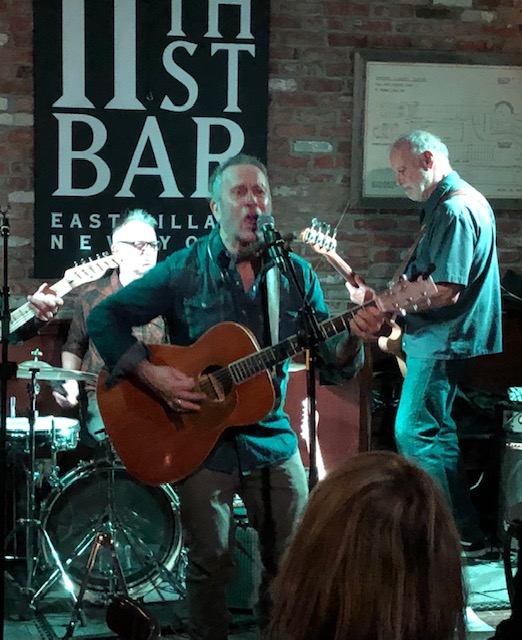
Marc Berger, 11th St BarMore than six years ago, at a now-shuttered music venue called The Living Room on Manhattan’s Lower East Side, I was lucky to hear singer/songwriter Marc Berger for the first time, a live show that I wrote about then for this blog. I made friends with Marc and have stayed on his email list so earlier this week was delighted to see that he’d be playing at another LES venue, 11th St Bar, with no cover charge on Thursday night. I made a point of turning up.

Marc always assembles a good band. On acoustic guitar and vocals, he was flanked by four good players, mandolin, electric bass, drums, and electric guitar—the bass and mandolin players had been on hand earlier occasions. They played two full sets in the intimate room—a donation bucket was passed around twice among the appreciative audience—and a piano player came on for the late set when Marc switched from acoustic guitar to an electric of his own.

I believe the songs were all his compositions, several coming from his 2013 album “Ride,” along with some newer numbers. If you enjoy acoustic and roots music drenched in the American West, and artists like Ian Tyson and Tom Russell, you ought to listen to Berger and his richly themed album. On Berger’s website, he writes about the setting that inspired the music: “Clouds that forever stampede the endless sky, shadows gliding over canyon walls–the West is a vast expanse of magic and mystery. American artists from John Ford to Frederick Remington to A.B. Guthrie have used film, canvas and the printed page to convey the essence of its unique landscape and mythology.” To those visual associations, I’ll add the 1962 black & white Kirk Douglas film, ‘Lonely Are the Brave,‘ where he plays a latter day cowboy unable to conform to modern society. The movie was based on a novel, Brave Cowboy,  by legendary iconoclast of the American West Edward Abbey. Relatedly, Kirk Douglas also played the lead role in the 1952 adaptation of the aforementioned Guthrie’s modern classic about the frontier west, The Big Sky.

Here’s an old video of Berger and band playing his song “The Devil Came Down from Idaho” at the much-missed Living Room. Jeff Eyrich, here on acoustic bass, also played at the 11th St Bar gig, with nice chunky bass parts. Berger definitely keeps good musicians around him. Rob Meador, the mandolin player, is a rhythmic rock. And Berger’s a good performer, with lots of energy and easy banter between songs.

https://youtu.be/Zb8z_8HlVQ4

Marc Berger and band

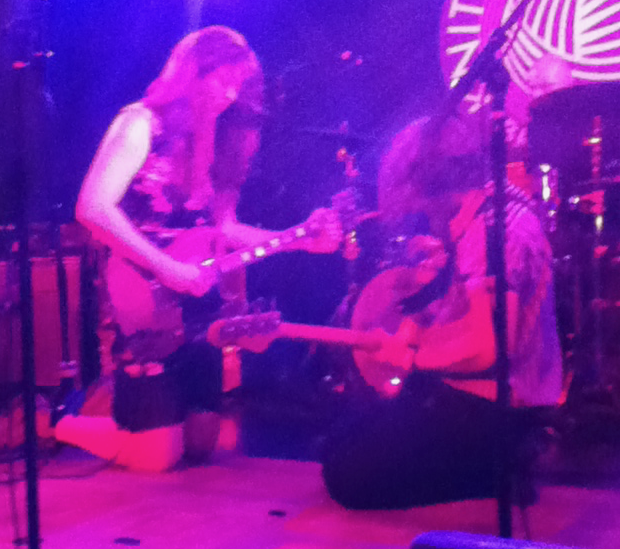
Among the sideplayers at 11th St Bar was a well known music producer, Steve Addabbo, who played tasty lead guitar throughout the evening. That’s him in my photos with the halo of white hair. During the break between sets I saw him talking with another member of the audience, a woman who had a friendly dog with her. We began conversing and when Steve went back to play the next set, I properly met the sweet coffee-colored Labradoodle, Bertie, and his audience member owner. Turns out she is a gifted musician herself, the singer/songwriter Diana Jones, whose catalog I’m now exploring. That’s New York for you—you really never know who you might meet when you walk out your door. Her songs are Appalachian-infused ballads with a strong social conscience. She told me of a song of hers performed by Ana Egge and Iris Dement, “Ballad of a Poor Child.” Here’s a video of Jones singing her poignant song, “Pony.”

https://youtu.be/eilcel_OzHk

It was a treat hearing Marc Berger’s songs inspired by the American West and his lifetime of experiences on our vast continent, and meeting Diana Jones and discovering her soulful music. 11th St Bar is a comfortable venue that I hope to return to soon. They have a traditional Irish music session on Sunday nights that runs from 10pm-2pm, which must be lots of fun.
Matt Mays and Terra Lightfoot Raisin’ the Roof in Brooklyn

Matt Mays and Terra Lightfoot played a great show at the Knitting Factory last Monday night. It was good to re-meet ace music producer Gus Van Go in the audience. I look forward to hearing him play at the same venue with his band Megative on Oct 13!

Sold: Music Critic Nate Patrin’s Forthcoming “BRING THAT BEAT BACK: How Sampling Built Hip-Hop”


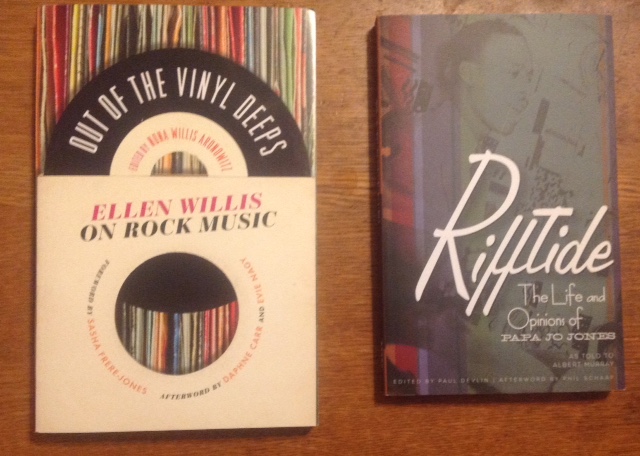
Nate Patrin’s new book will explore many aspects of the growth and development of hip-hop, especially how sampling began in an analog world, with recording tape being cut, spliced, and matched with new sounds, then in later years evolving in to the digital production environment the music thrives in today. Patrin is a St Paul, MN native who’s written for Stereogum, Pitchfork, and City Pages. This book, his first, will be published on the superb music list of the University of Minnesota Press, which features such outstanding titles as Out of the Vinyl Deeps, the collected music criticism of Ellen Willis, awarded the 2011 National Book Critics Circle Prize, and Rifftide: The Life and Opinions of Papa Joe Jones, as told to Albert Murray, edited by Paul Devlin, afterword by Phil Schaap. Patrin’s book is scheduled for publication in 2020. 

Appreciating the CBC’s Grant Lawrence for his Evocation of Felix Mendelssohn’s 1829 Visit to Fingal’s Cave

CBC Radio’s Grant Lawrence is for the second consecutive August filling in for three straight weekends as guest host for the Vancouver weekend morning show, “North by Northwest,” which airs from 6am-9am in British Columbia, and a very civil 9am-noon in NYC. I’ve been listening to, and enjoying Grant on the radio since 2009, when he was hosting “Grant Lawrence Live,” a three-hour show most weekday afternoons on CBCRadio 3, the Internet-only outpost for homegrown indie rock n’ roll on Canada’s national broadcasting service. For the devoted audience of which I was a part, we listened to the station as often as workdays, employers, and connectivity would allow. And Grant wasn’t the only popular host—there were many others avidly listened to, and musicians who did guest-hosting. The blend of infectiously enjoyable programming combined the best Canadian indie rock n’ roll; crackling wit, from Grant especially; good heart from all; regular podcasts that supplemented the daily programming; and a lively communal blog on the Radio 3 website where listeners, hosts, and musicians occasionally, were all on line together, sharing thoughts and info on topics-of-the-day, plus current events, both news from the public sphere, and from people’s lives. It made for great radio, a close virtual community, and music, art, and friendship that enriched many lives over several years.

In 2015, the CBC, what’s known in Canada as a “crown corporation”—already under strain for several years due to severe budget cuts under the misrule of Prime Minister Stephen Harper, plus questionable management by CBC appointees who didn’t, and still don’t know broadcasting—ended live daily hosting on Radio 3, with emotional final shows by all the hosts still there, with Grant and another, Lana Gay, among the last remnant. The programming became taped promos, intros, outros, pre-produced musician featurettes, and a livestream of music, much of it by the same artists as before, but lacking the personal touch. The blog was still available to us then, and many of the core still hung out there in virtual space; I continued to visit the blog occasionally, but much less often listened to the live stream. Even though Justin Trudeau came in to office as Canada’s new PM in November 2015, with a promise to restore funding to the CBC, the same management is still in place, and the privation of the service has not noticeably improved yet. Finally, last month even the Radio 3 blog was folded up, too. And, mysteriously, the music content on Radio 3 has been geo-fenced, so it can only be heard within Canada’s borders, even though Radio 3 had long had fans and listeners from the US, Mexico, Britain, Australia, New Zealand, and all over the world.

I’ve drafted a letter that as a lifelong friend of Canada I’ll be sending to the Honourable Mélanie Joly, 
Minister of Canadian Heritage, who has purview over the CBC. It reads in part,

I am personally and professionally invested in the work of sharing Canadian culture and spreading word of it all among appreciative cultural consumers in New York City, the US, and the wider world, among music lovers, readers, and among people who appreciate what a good country Canada is, with so many creative people.

I am writing to express my sincere hope that you and your colleagues will seriously consider restoring live hosting to CBC Radio 3; the daily live blog; and continue to provide the music service that has introduced myself and many other non-Canadians to the rich treasure house of talented Canadian musical performers.

I very much appreciate your attention to this letter from a non-Canadian. I remain a friend to Canada and to Canadian artists. Thank you for your consideration.

I hope she and her staff will read this and consider reversing course in many areas with regard to CBC Radio. Some of the Radio 3 people have moved on to jobs elsewhere, like Lana Gay who is on-air at Indie 88 in Toronto. For his part, Grant Lawrence has stayed at the CBC, working in social media and digital marketing for CBC Music, the larger entity in to which Radio 3 was folded, then swallowed up and made in to just another of their many live streams.

This is all stated as prologue to explain that I’m pleased when, from to time, Grant does a guest-hosting stint on one of CBC Radio One’s many programs, such as the one mentioned above, on “North by Northwest,” as he has the past two weekends, and coming up again this weekend (August 13-14). On his first weekend in the hosting chair, he aired a fascinating interview with American-Canadian blues legend, Jim Byrnes. He’s also done a segment with Chris Nelson, a First Nations man who acts as custodian of 5,000-year old petroglyphs on the BC coast. Then, last weekend, he broadcast a segment about composer Felix Mendelssohn’s fateful tour of Scotland in early August 1829, when he toured the scenic Hebrides, also known as the Western Isles, located off the mainland of Scotland, 187 years ago this month. Among many majestic sights, the composer visited the isle of Staffa, which is composed of vertical basalt stacks, formed it is said from a volcanic blast that also created the Causeway of the Giants in County Antrim on the northeast coast of Northern Ireland. On Staffa, seven miles distant from the larger island of Mull, Mendelssohn visited Fingal’s Cave, a remarkable setting that inspired him to create new melodies after he experienced its uncannily acute acoustics, with the sea rushing in and out of the sheltered space. Last Sunday, Grant played the splendid orchestral overture “The Hebrides,” and a section from Mendelssohn’s Scottish Symphony.

All this reminded me of a visit Kyle Gallup and I made to Scotland in 1992, when we also toured the Hebrides and visited Fingal’s Cave on a boat ride that landed us at the edge of the island, permitting us to take a brief walk inside the cave, using guiding ropes and metal stanchions sunk in the rock to keep visitors from sliding in to the water. The stanchions looked as if they were fixed in place almost 187 years ago! I’m glad I can share my photos here from our remarkable day, just as Mendelssohn shared his through his music. The first three photos (including the one at the top of this post) show us approaching Fingal’s Cave, the middle two show us after we landed for our brief visit, and the last was taken from inside the cave itself. Thanks to Grant Lawrence for the reason to remember the glorious music of Felix Mendelssohn and our visit to Fingal’s Cave almost 25 years ago! I’ll be listening to him on “North by Northwest” again this weekend, and you can too, right here via the Internet.

From inside Fingal's Cave

A High Point for the Concept Album—Procul Harum’s “A Salty Dog”

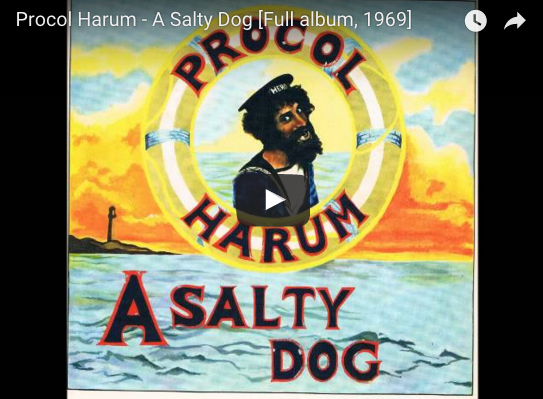
Rock music of the late ’60s and early ’70s may’ve been the Golden Age of the concept album—The Kinks’ “Arthur (Or the Decline and Fall of the British Empire),” The Who’s “Tommy,” and David Bowie’s “The Rise and Fall of Ziggy Stardust and the Spiders from Mars.” Amid so much amazing music, one of my favorites from the period was Procul Harum’s “A Salty Dog,” with a theme drawn from the Age of Sail when English ships plied the seas, filled with songs like “The Milk of Human Kindness,” The Wreck of the Hesperus,” and the eponymous “A Salty Dog,” songs about mariners and ships. I just listened to it again last night, and it still sounds great. I found someone had put it up on youtube, so if it’s new to you or an old fave, I hope you enjoy listening to it here!


New Year’s Tribute to Mr Stress, Jan 1 1943-May 18 2015, RIP to a Great Bluesman

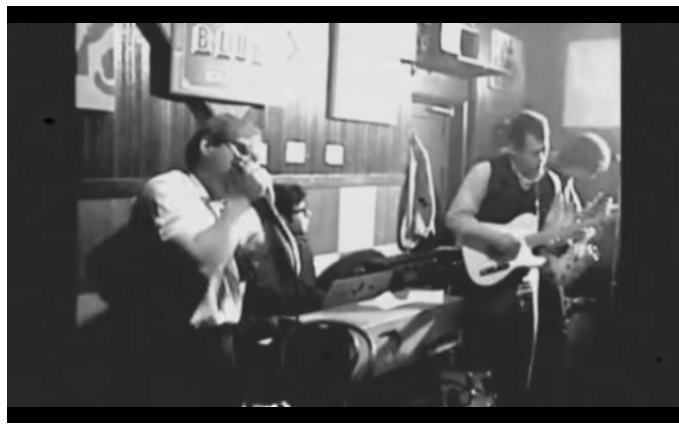
As a New Year’s gift to all my fabulous friends, readers and Internet acquaintances, I’m glad to share memories, an essay, and a few links about Cleveland’s Bill Miller—aka Mr Stress—a great blues harmonica player, singer, and leader of bands who died this past year, on May 18. I followed him avidly from 1972, when I turned 18, old enough to go to bars, to 1985 when I moved to NY. I think of him today, not only because his passing came this year, but because he was the first baby born in Cleveland in 1943, a bare minute after midnight. He was feted on the front page of the next day’s newspaper as the city’s first firstborn—a fitting birth for a bluesman when you consider Muddy Waters singing about the fabled blues character ‘born on the 7th son of a 7th mother on the 7th day.’ Clearly, Mr. Stress had an auspicious pedigree for a bluesman. He would’ve been 73 when the clock & calendar turn tonight. In 2012, I contributed an essay about Stress for the book Rust Belt Chic: The Cleveland Anthology, linked to here. Happily, I reconnected with him after I published the essay. Also, here’s Cleveland Plain Dealer reporter Chuck Yarborough‘s appreciation of him, published two days after his passing; and tributes by Cleveland musician Alex Bevan; and audio of Stress in performance (one and two).