2025 was another banner year for Philip Turner Book Productions, the editorial services consultancy joined to a literary agency that I established in 2009, where I was joined by my adult son Ewan as full business partner in 2020. Before listing the business’s milestones last year, I want first to catalog what Ewan, who publishes as M. G. Turner, accomplished in the past twelve months.
 1) I sold his first full length short story collection City of Dark Dreams: Tales from Another New York to DarkWinter Press, a Canadian publisher that specializes in horror and gothic fiction, with great distribution in the U.S. Incorporating the mysterious and the macabre, the 25 tales—selected from a larger body of work M. G. calls the Neighborhood Legendarium—explore life and death, ponder whether mortality can be circumvented, imagine dreams impinging on reality, and find the uncanny in the everyday. Melding the collection into a unified whole is the setting, the Upper West Side of Manhattan and a fictional college, Hudson University, which introduces a dark academia motif. The characters populating this world intersect and influence each other’s lives, akin to the storytelling in David Lynch’s “Twin Peaks.” It will be released in January 2027.
2) M. G. published three chapbooks. Dreams of the Romantics, a story cycle that was inspired by the fateful gathering during the Year Without a Summer at Villa Diodati in 1816, when Lord Byron challenged each of his friends to write a scary story and Mary Shelley began writing the manuscript that would become Frankenstein; Roman Visions, stories inspired in part by The Aeneid, in which M. G. imagines a recovered last chapter of Virgil’s epic; andReader Faustus, a novella-in-verse, which zeroes in on today’s zeitgeist as a young poet exchanges his soul with the devil for the opportunity to read every book ever written; this chapbook includes two other Faustian-themed stories by M. G., and an essay I wrote in my college days, “Faust, Man and Myth,” all of which make this a veritable museum of Faust.
The three chapbooks books range in page count from 96 to 116 pages, and the suggested list price of each is between $18-$20. However, as a New Year’s deal, we’re offering them at a special price of $11 each, or the 3-book bundle for $30. For ordering information, please contact us at ptbookproductions[@]gmail[.]com.
3) The chapbooks were reviewed four times. Two reviews were from the excellent Canadian publication The Seaboard Review of Books, which wrote generously about all three titles. Dreams of the Romantics was also reviewed favorably by Weird Fiction horror critic S. T. Joshi in his periodical Spectral Realms, and by Vermont folklorist Joseph A. Citro in his social networks.
4) Two of the chapbooks, Dreams of the Romantics and Roman Visions, are available in NYC bookstores: Book Culture on Broadway near 114th St and Westsider Books on Broadway near 79th St.
5) Dreams of the Romantics was purchased by Old Dominion University for their book collection, The Perry Library, with the possibility of it being used as teaching material.
6) M. G.’s gothic short story “The Apparatus” was selected for The Promethean Archives an anthology published in July by indie press The Words Faire of Dayton, Ohio.
7) A personal essay by M. G. on movie special effects pioneer Ray Harryhausen was published in the Winter 2025 issue of Videoscope Magazine.
8) M. G.’s successes this year were highlighted in the block association newsletter for our Manhattan neighborhood (page 11).
9) M. G. also completed a novella, his longest individual work to date, along with numerous short stories.
10) To cap off this exciting year, quite by happenstance, on December 30th a candid photograph of M. G. browsing in a Barnes & Noble bookstore was published in the New York Times’ year-end summary of publishing and bookselling.
11) Essays and stories by M. G. can be found via this link on our website. 
—
On the editorial side of our business, we worked with 16 authors, editing their manuscripts and book proposals, and consulting with writers on a number of book ideas. For the Mayo Clinic Press, I was contracted to edit the manuscript of Face in the Mirror: A Surgeon, a Patient, and the Remarkable Story of the First Face Transplant at Mayo Clinic by Jack El-Hai, which was published in 2025; El-Hai’s excellent book The Nazi and the Psychiatrist, was recently adapted into the major movie “Nuremberg.”
On the agency side, in addition to City of Dark Dreams: Tales from Another New York cited above, we made multiple deals with book publishers for titles that will be published in 2026 and beyond; in addition, we received royalty income from past sales for 15 authors, and are currently submitting to publishers several of the book proposals and manuscripts that we edited. These are some of the books we licensed in 2025:
• Home equity expert, small business owner, and bank executive Sue Pimento’s Your Retirement Reset: How to Convert Home Equity into Financial Security, giving Canadian seniors and near-seniors the resources and confidence they need to navigate many complex decisions as they plan for and execute a comfortable retirement, to Jennifer Anne Smith at ECW Press, for publication in Fall 2026.
 • First Great Sorrow: My Years with Senator Robert Kennedy, a memoir by Donna Chaffee, sold to Usher Morgan of Library Tales, to be published in June 2026.
Deep Story: A Practitioner’s Guide to Creating Transformative Attractions, Destinations, and Guest Experiences—A Guide for Leaders, Creators, and Teachers by Bob Rogers a business book by America’s foremost designer of themed and historical attractions, the manuscript for which we also had a hand in editing; to Peter E. Randall Publishers, for publication in 2026
• John McGraw: The Tumultuous Life and Times of Baseball’s ‘Little Napoleon’ by Daniel R. Levitt. This will be the first full biography of the New York Giants’ legendary player-manager in two decades, sold to University of Nebraska Press for their stellar sports list.
And we are currently submitting a number of proposed books to editors at publishing houses, including a narrative history of surgery going back to the ancient world; a book about the aftermath of the JFK assassination; a natural history book about butterflies and music; and a novel by a Ukrainian emigre writer now living in Ireland. 
—
 In November 2025, we were thrilled with the publication of our agency client Todd Goddard’s superb biography, Devouring Time: Jim Harrison, a Writer’s Life, published in hardcover, audio, and ebook by Blackstone. The author undertook a vigorous national book tour with numerous stops at bookstores in Montana, Michigan, Mississippi, and Utah, with more appearances coming up in 2026 including Florida and New York City. The book received stellar reviews, including this one from Isaac Randel of Foreword Reviews, who wrote in part, “Drawing on intimate gossip and rigorous critical scholarship…Devouring Time is the first full-scale biography of Jim Harrison, the mold-breaking and large-living man of letters who transformed the literary landscape of his time….A meticulous, loving biography of one of the twentieth century’s most exuberant literary personalities.”
Todd Goddard and I have also licensed the rights for a feature documentary based on Devouring Time to the excellent filmmaker Matthew Miele, who’s made earlier films on Paddy Chavesky and the Carlyle Hotel. Philip Turner Book Productions looks forward to continuing to represent Todd Goddard on future literary projects.
—
Other books we’d licensed in previous years were published last year, including
• Man in the Iron Mask (Pegasus Books, April 2025), a new translation of Alexandre Dumas by Lawrence Ellsworth. The culmination of Dumas’s swashbuckling saga, set at the glittering court of King Louis XIV, with adventures ranging from the grim fortress of the Bastille to battles on the wild coast of Brittany, in which the Musketeers intrigue, romance, and fight alongside each other. Ellsworth has translated a number of titles in the Musketeers Cycle including The Three Musketeers.
• Shakespeare Theatre Company: The History of a Classical Theatre (September 2025, Peter E. Randall Publisher) by Alexis Greene. A history of one of America’s great classical theaters, the Shakespeare Theatre Company of Washington, D..C., whose roots stretch back to the Folger Shakespeare Library and colonial America. Greene is also author of Emily Mann: Rebel Artist of the American Theater (Applause Books, 2019). To Peter Randall Publishing.
 • Scared by the Bible: The Roots of Horror in Scripture (Morehouse Publishing, October 2025) by Brandon Grafius. A practical and spiritual guide to reading the horror stories in the Bible which builds on the author’s illuminating readings of challenging texts from scripture, to Church Publishing, Grafius is also the author of Lurking Under the Surface: Horror, Religion, and the Questions that Haunt Us (Broadleaf Books, 2019).
• The Pot Thief Who Studied Calvin, the tenth book in the popular POT THIEF mystery series by J. Michael Orenduff, our longest-tenured agency client who we’ve been representing since 2010, was published by Open Road Media in January 2025. With Open Road, Orenduff, also published his first nonfiction book, The Ten Commandments: Updated, Condensed, and Improved, which provides readers with a fresh look at a familiar text.
Additionally, two audiobooks of books by our authors were published last year:
Our Woman in Havana: A Diplomat’s Chronicle of America’s Long Struggle with Castro’s Cuba, by Vicki Huddleston, which we licensed to Overlook Press in 2018; the audiobook came out from Tantor Media,
The Baby Thief: The Untold Story of Georgia Tann, the Baby Seller Who Corrupted Adoption, a revelatory book by Barbara Bisantz Raymond. Working from her mis-named Tennessee Children’s Home Society, Tann stole, bartered, and brokered more than 5,000 children from unwed mothers and poor Appalachian families from the 1920s through the 1950s, selling them to wealthy clients around the country including in Hollywood, where actors Dick Powell, Lana Turner, and Joan Crawford were among her clients. I edited the manuscript while an editor with Carroll & Graf Publishers in the mid-2000s. It was a Publishers Weekly Best Book in 2007, and changed the face of adoption, leading many states to open their adoption records. The book was awarded an “Angels in Adoption” citation from the US Congress. After Lynn Franklin, the author’s longtime agent, died a few years ago, the author asked Philip Turner Book Productions to be her new agent. We’re also aiming to license a new trade paperback edition in the future.
—
A number of books we’ve licensed in previous years are set to be published in 2026 or 2027, including
 • The Ice On The Lake, a debut novel by Alex Messenger, about a late middle-age man haunted by past tragedies, mistakes, and the children he’s pushed away. After a medical diagnosis prompts him to begin making amends with his estranged daughter, he goes missing while ice fishing on Lake Superior; a story of redemption and survival set in the wild environs of the frozen north, to Blackstone Publishing, by the author of the Wall St Journal bestseller, The Twenty-Ninth Day: Surviving a Grizzly Attack on the Canadian Tundra (Blackstone, 2019). Messenger’s novel has already received this enthusiastic endorsement:
“Alex Messenger is a sensational writer, and The Ice on the Lake is a mesmerizing tale of loss, love, and redemption. Equal parts survival story and psychological reckoning, this book manages to thrill even as it gets to the heart of what it means to be alive. It’s also a magnificent portrait of Lake Superior and all her many moods and depths. I couldn’t put it down, and I already can’t wait to read whatever Alex writes next.”—Peter Geye, author of A Lesser Light
• Feeling Our Way Through the Bible: Interpreting Scripture with Emotions (Baker Academics) by Brandon Grafius, author of the above-named Scared by the Bible. This book for students and scholars will demonstrate how emotional responses to a biblical text can help readers understand difficult passages in the Bible.
• Versions and Subversions: The Cover Songs That Changed Music by Nate Patrin (University of Minnesota Press). A wide-ranging examination of the place the cover version holds in popular music. Starting from the premise that the rise of the singer-songwriter in 1960s pop music put a renewed emphasis on the potentially transformative relationships between a song’s author and its performer(s), Patrin’s new book takes a kaleidoscopic and unpredictable view of the way musicians both renowned and obscure have found new means of expression through the works of others. Examples include Aretha Franklin’s cover of Otis Redding’s “Respect”; Run-D.M.C.’s genre-bending revival of Aerosmith’s “Walk This Way”; and Johnny Cash’s world-weary cover of Nine Inch Nails’ “Hurt.” Patrin is previously author of Bring That Beat Back: How Sampling Built Hip-Hop and The Needle and the Lens: Pop Goes to the Movies from Rock’n’Roll to Synthwave, published by UMP in 2019 and 2022, so the new book should be seen as the third in a trilogy of books by Patrin about the surprising ways in which songs are given additional life through new contexts.
• “I’ve Got the Shakes”: Performing Richard Foreman by Shauna Kelly (Applause Books). A sparkling curation of interviews and writings from cast and crew discussing their experiences working with Richard Foreman (1937-2025), who wrote and directed award-winning plays for forty-five years at the Ontological-Hysteric Theater (OHT) in SoHo, the East Village, at the Public Theater, and around the world, exploring Foreman’s philosophy, legacy, creative methods, and artistic values, and providing insight about the careers of theater artists such as Willem Dafoe with roots in off-off Broadway. The Foreword to the book is by Helen Shaw, recently named Theater Critic of the New York Times.
• Wallace Terry: A Reporter’s Journey from Selma to Saigon toBloods (High Road Books, University of New Mexico Press) by Ray E. Boomhower, out in October 2026. The first-ever biography of Terry (1938-2003), who spent his life smashing barriers as a Black journalist, first in his hometown of Indianapolis, all the way to the nation’s capital at the Washington Post and Time magazine (becoming the first Black correspondent working for a major U.S. news magazine) and then overseas during the Vietnam War, where he chronicled Black service members as no one ever had before him. With University of New Mexico Press Boomhower is also author of Richard Tregaskis: Reporting Under Fire from Guadalcanal to Vietnam and The Ultimate Protest: Malcolm Browne, Thich Quang Duc and the News Photograph that Stunned the World.
• Who’s To Blame for Putin? Reassessing Russia’s Lost Chance for Democracy (Reaktion Books, London) by Amy Knight. Thirty-five years ago many in the West hoped that Russia was embarking on a future of unprecedented political freedom. Today the countries of Eastern European that were under the Soviet yoke are democracies and members of NATO and the EU, while Russia has retreated to a form of governance that echoes the Stalin era. Knight’s new book will examine how this occurred. Amy Knight is also author of Orders to Kill: The Putin Regime and Political Murder (St Martin’s Press, 2017) and The Kremlin’s Noose: Putin’s Bitter Feud with the Oligarch Who Made Him Ruler of Russia (Cornell/Northern Illinois University Press, 2024).
• And the above-mentioned City of Dark Dreams: Tales from Another New York by M. G. Turner, which DarkWinter Press of Ontario, Canada, will publish in January 2027. We’ve already received this endorsement of the collection:
“Anyone who enjoys Poe, Robert Chambers, M.R. James, and other 19th-century writers will enjoy this collection; those who have been put off by the sometimes archaic language of some gothic writers will find M. G. Turner’s work more accessible. Don’t look for splatter, though, as these tales aim to disturb the mind and the heart rather than the stomach. American horror fiction would be immeasurably better off, in my opinion, if more writer’s followed Turner’s example.”—Graeme Davis, editor Colonial Horrors: Sleepy Hollow and Beyond (Pegasus Books, 2017, an anthology we licensed to the publisher on behalf of the editor)
—
I want to also note with sadness the passing in September of my longtime author and good friend, Elaine Dewar, age 77. Elaine was a very accomplished journalist and author who specialized in reporting on and writing about challenging subjects, especially cutting-edge science as it intersected with culture, business, and society. I had the privilege of working with her on four of her seven books. Beyond our strong professional links, she was a tremendously steadfast friend—having my wife and I stay in a comfortable bedroom in her home numerous times when visiting Toronto, always reminding us that it was there for a getaway when needed. She also had my back after 2009, the year that I became an independent editorial provider in the book business, with me no longer holding an in-house publishing position. I will always think fondly of Elaine, and her husband Stephen Dewar (d. 2019), seated at the breakfast table in their cozy kitchen, CBC Radio program Metro Morning on the dial, newspapers open, when I came down for a morning meal, and they each greeted us with humor and charm.
I also note the passing last year of my longtime close colleague Herman Graf (1933-2025), who founded the publishing company Caroll & Graf, where I worked with him from 2000-07. As he was remembered in the NY Times, Herman was “A raconteur with a booming voice [and] a bibliophile who loved the works of Stendhal and Thomas Mann. His apartment in Queens was filled with books, many of them first editions. And he was a relentless, and boisterous, salesman for Grove Press, where he spent the better part of two decades.”
Last, among people I admired who passed last year, I want to note David Pryce-Jones (1936-2025), a true person of letters, the like of which there are few examples today. Foreign correspondent, memoirist, essayist, novelist, devoted letter writer, and biographer of Unity Mitford, one of the five Mitford sisters, who had a notorious romance w/ Adolf Hitler in the 1930s. For writing about her life some members of the Mitford family sued Pryce-Jones for libel, intent on suppressing the book, while some upper crust Brits inveighed against Pryce-Jones for spotlighting deep currents of anti-semitism in British society; he was Jewish, and as a three-year old had been evacuated from France when WWII began. Pryce-Jones was faced with a decision to halt publication, or go forward, despite the threat of significant money damages if he lost in court. He didn’t back down, and was vindicated; the book is still in print today. I eulogized him a post last month: A True Man of Letters Whose Work Revealed Anti-Semitism in the UK.
—
Please be in touch if you want to discuss your book ideas! Contact us at ptbookproductions[@]gmail[.]com.


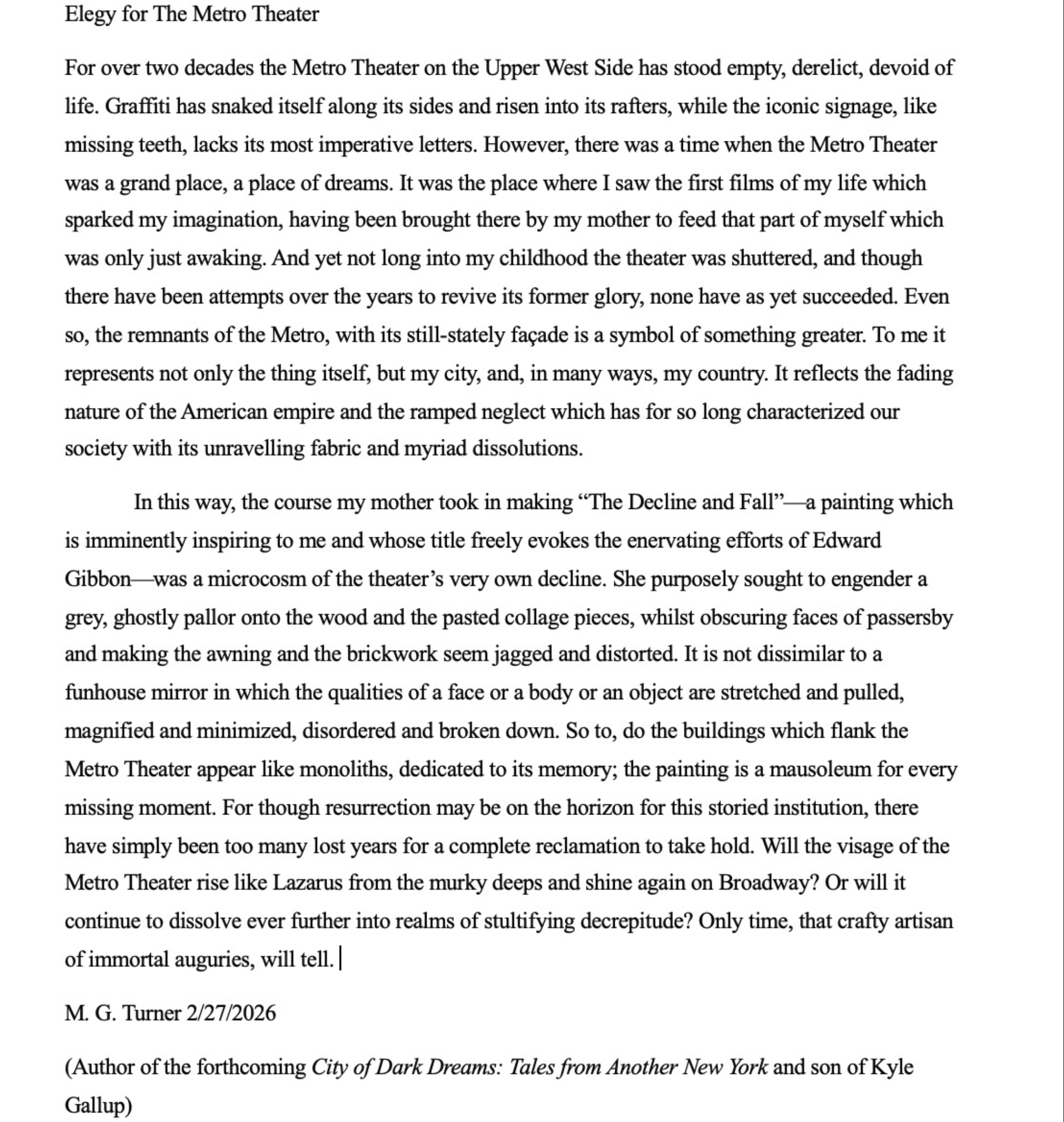
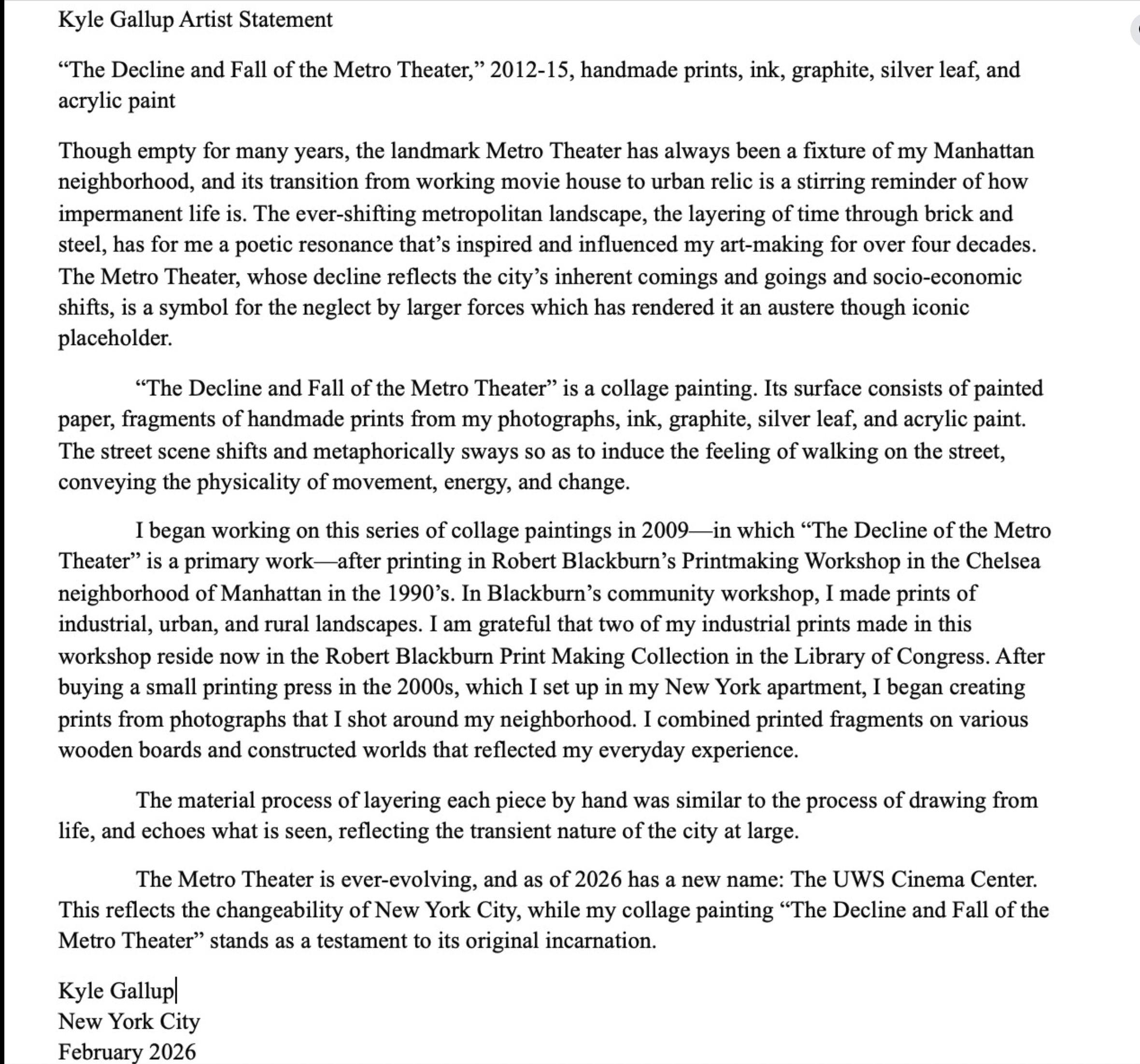 will be published in January 2027 by DarkWinter Press.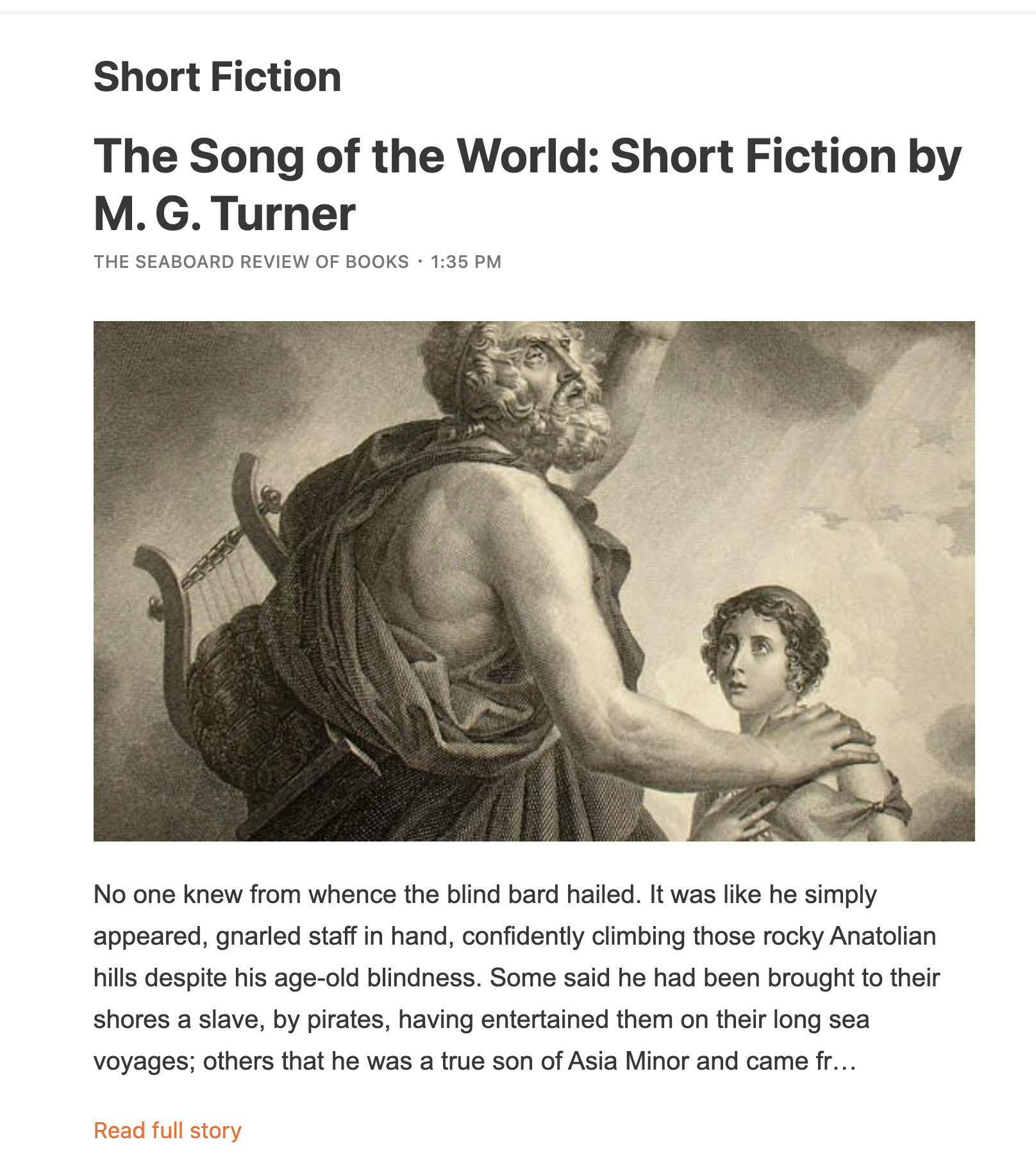





 I want to be clear: I am not writing this piece to disparage The Iliad while concurrently celebrating The Odyssey, but rather to examine whether the poem’s inherent value lies in its irony or its realism. Each gruesome death is realistic given the nature of the time period and the nature of the conflict, but what struck me as so off-putting was the utter lack of breathing room, at least in terms of narrative storytelling. “The heart must pause to breathe,” as Lord Byron wrote, who himself died during a martial folly when he volunteered to fight a war on the shores of Greece and which resulted in his ignoble malarial death. And yet we get few respites during this supposed ten-years war, the decade-long siege of Troy, an Anatolian kingdom that would have had little contact with mainland Greece otherwise.

